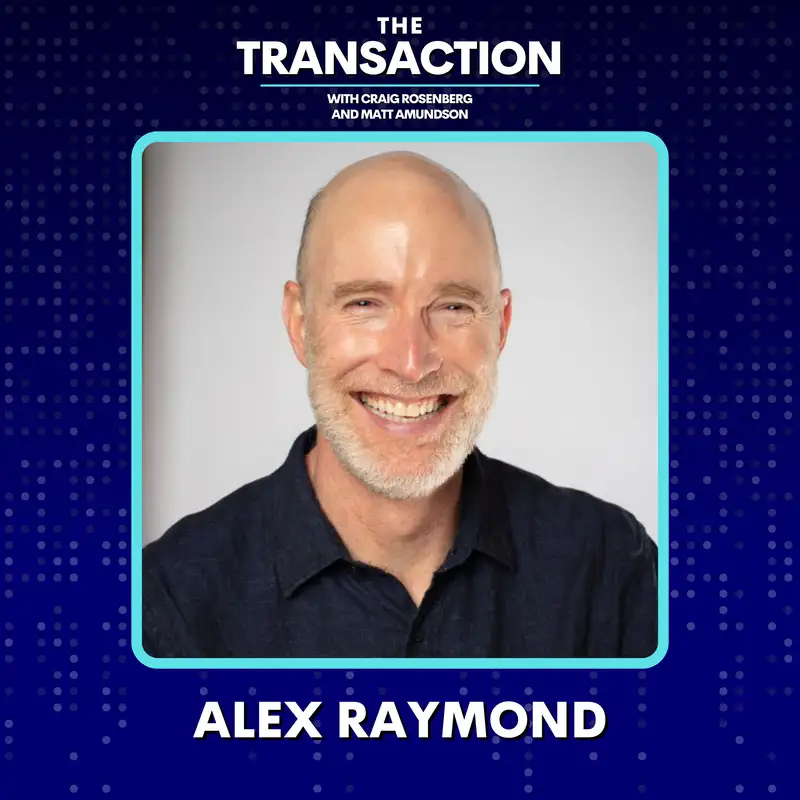
Account Management is Your Startup’s Growth Department with Alex Raymond, Founder of AMplify - Ep 69
TT - 069 - Alex Raymond
===
[00:00:00] The job of the account management team is to help the organization to win. [00:00:05] We've gotta do the work of asking radically curious questions, our assumptions. [00:00:10] Are killing us. The best thing that an account management leader can be doing today is get [00:00:15] in the mode of talking about what you do. As the growth department for the company, [00:00:20] land and expand has never been more important than it is right now.
Account managers deliver profitable revenue back to the company [00:00:25] by keeping our customers. Growing our customers and making sure there are no [00:00:30] surprises. Talk to your customers, share the results, share your knowledge, provide some insights. It [00:00:35] all leads back to revenue. Account management is an incredible career path for a mature B2B company.
[00:00:40] 71% of their revenue comes from existing customers. That means that 29% comes from new [00:00:45] sales. New sales gets 80% of the Go-To-Market budget in return for 30% of the [00:00:50] revenue. I believe that we should therefore have a. VP sales and a VP growth [00:00:55] from existing customers. A CRO should be managing the entirety of their revenue cycle, not just some [00:01:00] slice of it.
Craig Rosenberg: Dude, I was supposed to buy, uh, my family tickets [00:01:05] to the Zach Bryan, uh, show today at Golden Gate Park. [00:01:10] And, um, so my strategy, uh, [00:01:15] for major events is to wait until. It's about to start, [00:01:20] right and buy the take because the, the, the prices drop. But sometimes I [00:01:25] forget that only works when it's me and the boys or me and a buddy.
Craig Rosenberg: When you have a wife that [00:01:30] wants to go, she does not want that strategy.
Craig Rosenberg: And I'm like, dude, I can. [00:01:35] Yeah, I, and, um, her friends are like, oh, they're 80 bucks [00:01:40] on Craigslist. And I'm like, dude, okay, the guy's selling it [00:01:45] for like 40% of the cost and he hasn't sold it. There's like. [00:01:50] 15 listings with the 80 bucks per, I'm like, that is a [00:01:55] scam.
Craig Rosenberg: a
Craig Rosenberg: A full blown scam.
Craig Rosenberg: So anyway, the other thing is I [00:02:00] don't know anything about this type of music, so I didn't know that there's multiple guys with the last name, [00:02:05] Brian.
Craig Rosenberg: So I spent a couple minutes going to God, this Luke Bryan Guy,
Craig Rosenberg: he's not [00:02:10] playing at the Golden Gate party. So I'm like looking at these other, yeah, [00:02:15] I mean, just in case people
Craig Rosenberg: are
Craig Rosenberg: wondering Luke Bryan,
Alex Raymond: tonight. That shows tonight.
Craig Rosenberg: yeah.[00:02:20]
Craig Rosenberg: It's gonna be all, all their buddies are going. So, uh, which is a new thing [00:02:25] for me, which is, you know, they're almost 14, so the, they're doing those types of things [00:02:30] now. So it should be fun. I mean, I
Craig Rosenberg: don't, I don't know anything about the guy, I mean, but, uh, [00:02:35] but I also don't think I would take my kids to the Metallica show when that comes to town.
Craig Rosenberg: But [00:02:40] maybe, Matt, your thoughts on that or.
Matt Amundson: Um. I mean, [00:02:45] music was a big part of my life when I was growing up, so it
Alex Raymond: I, I went, I went to see three Phish shows [00:02:50] over the 4th of July weekend in Boulder. I
Alex Raymond: hadn't seen Phish in like 10
Alex Raymond: years, but they were playing [00:02:55] two, they were playing two and a half miles from my house. So I'm like, sure, I'll go.
Craig Rosenberg: Well that's good [00:03:00] because normally do the Phish shows still clog up interstate
Craig Rosenberg: highways for days. [00:03:05] 'cause my brother used to go and the pictures were hilarious. They're just like cars [00:03:10] going into the Phish show and like he would be like, dude, it takes like six hours to
Craig Rosenberg: [00:03:15] get in fe,
Alex Raymond: some of the festivals do. Yeah.
Craig Rosenberg: Yeah. That's amazing.
Craig Rosenberg: [00:03:20] [00:03:25] [00:03:30] [00:03:35] [00:03:40] Alright, so, um, let's get going. I, I, I'll give [00:03:45] the, the background setup here. 'cause I think, um,
Craig Rosenberg: this is a [00:03:50] new topic
Craig Rosenberg: for us,
Craig Rosenberg: but it's one of the most important [00:03:55] ones. So here's why. Alex Raymond is on the show. I'm not doing the [00:04:00] full, I have to actually lead, normally I lead it all up and then say, here's the guest.
Craig Rosenberg: But on this [00:04:05] one I want
Craig Rosenberg: to lay this out. No rock pull. No, no, [00:04:10] no. Lead in, man. We, because, alright, so I actually, uh, met Alex like, [00:04:15] you know, three or four years ago. He's always been passionate about, [00:04:20] I'd say strategically, you know, retention, upsell. [00:04:25] Cross sell account growth
Matt Amundson: Mm-hmm.
Craig Rosenberg: specifically. He's one of the [00:04:30] only dudes. In the world who's [00:04:35] focused and dedicated his research and his services and his life [00:04:40] to this account management function, as he likes to say, when he is talking [00:04:45] to me, isn't this one of the most important things you're supposed to be doing? [00:04:50] And what we both realized together is it is, but that nobody. P puts the [00:04:55] strategy, people process technology together to go do it.
Craig Rosenberg: Right? [00:05:00] It's, and so I was like, so I did his show and I was, he was trying to ask me [00:05:05] questions and I was asking him questions. 'cause I think it's a really, it's an amazing [00:05:10] topic that we don't spend enough time on. So I'm like, well if we're gonna do that, let's go get 'em on [00:05:15] the transaction. So ladies and gentlemen, I [00:05:20] will repeat myself and welcome Alex Raymond to the transaction.
Craig Rosenberg: [00:05:25] Alex, welcome.
Alex Raymond: Awesome.
Alex Raymond: Hey, thanks so much Craig. Great to see you guys.
Craig Rosenberg: [00:05:30] Um, because you're new to Matt, you, and we don't normally do this, but in ca cases, like [00:05:35] you, can you just spend four sentences telling, [00:05:40] uh, the audience and Matt and Sam kind of, you know, how, you know what your li you know, [00:05:45] your business life is like, how do you help people and what are you focused
Craig Rosenberg: on? And it could be more [00:05:50] or less than four sentences. No Why don't over, you went over the top on
Craig Rosenberg: me [00:05:55] Yeah, I did indeed. I did Let's see, let's
Alex Raymond: see, uh, let's see how compact I can get this.
Alex Raymond: Uh, I [00:06:00] was the founder and CEO of CAPTA for, for 10 years. CAPTA is a software company in
Alex Raymond: the account management [00:06:05] space. And so during that time I worked with literally hundreds of companies [00:06:10] and thousands of individual account managers to help them figure out how do we. Lower [00:06:15] churn, increase advocacy, increase growth from our existing customers, [00:06:20] and frankly get the recognition that we deserve. And when I left
Alex Raymond: CAP last summer, I [00:06:25] started a new venture called Amplify. Amplify is a growth [00:06:30] community for account managers. So people come there when they want to learn proven systems and [00:06:35] tools.
Alex Raymond: They want to do all the things in account management. An account manager does, they want to connect with their peers around [00:06:40] the world. They want to help their career, maybe they're in transition, all this stuff. And so [00:06:45] I've just gone deeper and deeper down this rabbit hole, if you will, of of account management [00:06:50] to realize that, like Craig said, so many people consider this an afterthought [00:06:55] and yet, and yet it drives a huge part of every B2B [00:07:00] company's revenue. And of course their profits.
Craig Rosenberg: All right. That [00:07:05] was c Matt. It's possible.
Matt Amundson: That was like seven
Matt Amundson: sentences.
Alex Raymond: It [00:07:10] depends on where you put the colons, the semicolons, you know, stuff like
Craig Rosenberg: M dash. M dash. Okay. Wait, [00:07:15] Matt, you're re Let's start with this. Alex, I just, 'cause um, I kind of popped [00:07:20] you on, Matt, so I just, Matt, your reaction to, to like what [00:07:25] Alex is working on. Interesting,
Craig Rosenberg: right? What's super valuable and
Matt Amundson: I mean, I think Craig, [00:07:30] you set it up well. It's like, it's one of those things that you know you should do and you kind of always [00:07:35] put
Matt Amundson: off, and I think in a lot of cases, operators of a [00:07:40] company are usually put in a position where, hey, we've gotta go Make this happen,
Matt Amundson: Figure it out. [00:07:45] And there's usually not
Matt Amundson: budget for technology. There's usually [00:07:50] not necessarily
Matt Amundson: headcount specific to managing the process, building [00:07:55] process, et cetera. It's one of those things that like oftentimes comes up, maybe [00:08:00] last in an ELT meeting and hey, just go make this [00:08:05] happen is usually the strategy, or figure it out.
Matt Amundson: And, uh, you know, I've worked in
Matt Amundson: [00:08:10] organizations like when I was at tibco, um, where, you know, [00:08:15] so much of the company's revenue came from this type of practice, whether that was
Matt Amundson: selling [00:08:20] additional
Matt Amundson: services, selling additional
Matt Amundson: SKUs, renewing
Matt Amundson: re-upping, [00:08:25] increasing
Matt Amundson: usage, et cetera. And I've seen it work. And
Matt Amundson: in businesses like that, it's [00:08:30] very well thought out.
Matt Amundson: Specific teams, specific technology specific [00:08:35] scoring within like a CRM around it. Uh, All kinds of data
Matt Amundson: being collected to ensure [00:08:40] that this process runs as smoothly as possible.
Matt Amundson: But what I can tell you just from my own experience,[00:08:45]
Matt Amundson: in startup world, uh, that's often just
Matt Amundson: not the case. And [00:08:50] basically everywhere else I've ever
Matt Amundson: worked, it's not been the case.
Craig Rosenberg: worked.
Alex Raymond: Yeah.
Alex Raymond: that, I think that's a [00:08:55] fair point. Uh, what, what I would,
Alex Raymond: what I.
Alex Raymond: would offer there is. You need to reach a certain level [00:09:00] of maturity
Alex Raymond: before this becomes a problem worth
Alex Raymond: solving. So if you're at whatever [00:09:05] million bucks, 5 million bucks, 10 million bucks, you're not there yet because you're probably just chasing growth and you're [00:09:10] chasing top line growth as opposed to all the mechanics of figuring out who's [00:09:15] profitable, where's the actual money coming from, and and stuff like that.
Alex Raymond: So I certainly would agree with that and [00:09:20] say that this only becomes something that gets to the top of the priority list once you are. [00:09:25] You know, at least 10 million in, in revenue, if not, if not larger. Um, of [00:09:30] course, really, really big companies. Then they've got whole teams associated to, to do this, and they bring in consultants who [00:09:35] charge tons of money to,
Alex Raymond: to solve these problems for them. Um, but there's kind of a sweet spot [00:09:40] of companies say between sort of 10, 10 ish million to a hundred to 200 million where. [00:09:45] They know they Have a problem.
Alex Raymond: Churn is a big deal. Uh, losing customers not [00:09:50] only hurts them in the moment when it's happening, but it starts to affect company valuation. And that's when [00:09:55] everyone's like, oh, we need to go do something about this.
Matt Amundson: Well, one of the things that I would say, just given the [00:10:00] current environment where the exception to this rule, at least in the [00:10:05] market might be happening right now. As companies transition
Matt Amundson: from
Matt Amundson: being SaaS [00:10:10] businesses to being AI first, even though they're technically like AI second [00:10:15] businesses, the the need for them to be able to actually go into their install base and [00:10:20] sort of resell maybe a new solution or whatever their AI [00:10:25] version 1.0 is gonna be as they transition off a SaaS product and onto an AI product.[00:10:30]
Matt Amundson: Seems like right now a lot of companies are struggling
Matt Amundson: with it. And this could be [00:10:35] a, like a perfect opportunity to start instituting some of the stuff that you're talking about for a slightly more [00:10:40] mature company in a slightly younger or smaller a RR business.
Alex Raymond: Yeah, for [00:10:45] sure. Uh, in, in fact, that exact use case is something I, I just had someone on, on, on the [00:10:50] podcast, Mike Rapp from in Inteper, and they're basically saying. We have this huge install base. Now [00:10:55] we have this AI product. We're going to pitch them on this stuff and we need therefore to get really good [00:11:00] at selling to existing customers and ex expanding existing accounts.
Alex Raymond: So
Alex Raymond: yeah,
Matt Amundson: Yep.
Craig Rosenberg: [00:11:05] Look at
Craig Rosenberg: that? like that,
Matt Amundson: You
Alex Raymond: look at that. We agree right off the
Craig Rosenberg: it. Yeah.
Alex Raymond: [00:11:10] Yeah,
Craig Rosenberg: I mean, all
Craig Rosenberg: right. So that, that actually, I figured he would, by the way, it, it's a [00:11:15] really, I mean, you're, you're, you're tackling a, a really important topic that, that [00:11:20] isn't being tackled
Craig Rosenberg: enough. So let's just say that. Um, all right. [00:11:25] So, um, there's two key questions in the show. [00:11:30] Um, I'll, I'll go through 'em and then I'll ask you. So one is we ask everyone to. [00:11:35] Lead with a, a story. Uh, it could be anything on your side. [00:11:40] Hopefully there's a business lesson from it. We can always, you can always tell us something crazy and we [00:11:45] can create a business lesson like, uh, Brett Adamson talked about, uh, [00:11:50] maggots on a plane.
Craig Rosenberg: Um, actually I'm still not sure the business moral of the story on that. [00:11:55] Um, but, uh, it was a really good story. Um, and then, um, you [00:12:00] know, Sam gave you a couple other examples. We're open to anything there. Okay. Then the [00:12:05] second one, we're just gonna ask you like one to three things that, uh, people, [00:12:10] uh, are doing today that work.
Craig Rosenberg: Um, part of the reason we started the show [00:12:15] was we saw that the playbooks that. Previously have sort of been [00:12:20] smashed and like we're, we're trying to use the show to help rebuild it. And so the, the key question for [00:12:25] us at that point is like, what are the things that work? Okay, so the first one [00:12:30] is, are you ready, Alex?
Craig Rosenberg: 'cause I, I think this might be one that, uh, I might have [00:12:35] popped on you at midnight last night. So
Craig Rosenberg: tell us a [00:12:40] story.
Alex Raymond: All right,
Alex Raymond: so, so quick story. I've been an entrepreneur for a long time, [00:12:45] so I have not taken a p, taken a paycheck from anyone else since 2008.[00:12:50]
Alex Raymond: And along that way I've built companies. I, I, I lived, uh, in, [00:12:55] in Hong Kong, I lived in China. So I've been an entrepreneur there and I've lived in Boulder, Colorado [00:13:00] where I'm today for a long time. And, uh, I, I wasn't ready when I [00:13:05] became an entrepreneur for the. For the emotional toil, the up and downs of actually [00:13:10] running a
Alex Raymond: business. And. um, I found that it hit me pretty hard. Like I got a [00:13:15] lot of this like imposter syndrome thinking, why would anybody care to know what I think and who am I to be [00:13:20] doing this stuff?
Alex Raymond: And I would feel out of place in a room with all these fancy, you know, CEOs who've [00:13:25] raised a lot of money or had great exits or, or what have you. And, uh, I realized [00:13:30] that that was starting to affect my ability to go out there and get stuff done. So my story [00:13:35] is, uh, four years ago I started a community and event for [00:13:40] entrepreneurs.
Alex Raymond: I call it the Conscious Entrepreneur Summit.
Alex Raymond: And, uh, this is, is, [00:13:45] is a, is a pure labor of love side gig for me. But every year [00:13:50] in, in Colorado, we get together, depending on the year, 150 to 200 entrepreneurs. [00:13:55] And we work on the inner journey of entrepreneurship. So we just had our fourth year, uh, [00:14:00] in, in May. It was incredible. And what, what I wanna share there is, uh, an [00:14:05] idea that has really been resonating with me and sticking with me. Our keynote [00:14:10] speaker, like the main guy this year. His name is Ben Hardy, Dr. Benjamin Hardy. [00:14:15] He, he co-wrote a really well known book called 10 X is Easier Than Two X with [00:14:20] this guy Dan Sullivan, and then he recently wrote a book called The Science of Scaling. Now, Ben's a [00:14:25] super, super nice guy. And, uh, he, he's, he's, he's younger [00:14:30] than me. He is like in his, I don't know, probably like mid thirties or something like that. He's a young guy, very sweet [00:14:35] guy, but he's very aggressive and, you know, he's like, why aren't you growing faster? Why aren't you doing [00:14:40] more? Why aren't you getting more stuff done? And
Alex Raymond: the the idea of his that really stuck with me that I [00:14:45] wanted to share here with you and your audience is. He really turned me on to the [00:14:50] idea of exponential thinking versus incremental
Alex Raymond: thinking and how that relates [00:14:55] not just to, uh, me as a person, but also how it relates to my [00:15:00] businesses. And then I started to think, how can I incorporate this into. Amplify my current [00:15:05] business so that the mindset around thinking bigger is something that's at the heart of what we [00:15:10] do. And so I've incorporated his work first. I've, I have a mastermind that I'm running of [00:15:15] about 18 other CEOs where we're going through this and like really pushing ourselves. But on top of that, [00:15:20] within the account management community, I've picked up on this and been like, why aren't we talking way, way [00:15:25] bigger about our impact and what we can be doing?
Alex Raymond: So I bring all [00:15:30] that together to say that. Uh, first I've learned a ton from being an entrepreneur. I love it. I think I'm, [00:15:35] at this point, totally unemployable by anybody else. Uh, no one will hire me, but [00:15:40] I'm trying to find ways to support other entrepreneurs as we go. And this 10 [00:15:45] x thinking is something that like, really, really hit me.
Alex Raymond: And I've been, I've been wanting to find more ways to [00:15:50] get it out into the world.
Matt Amundson: Man.
Matt Amundson: Love a built in moral. Yeah. [00:15:55] All right. So that, that was easy. Matt and I don't have to do any analysis on that. I
Alex Raymond: Did you like that.
Alex Raymond: Was that one [00:16:00] okay? Yeah.
Craig Rosenberg: Well, first a couple things. good one. That was a very
Matt Amundson: good one.
Craig Rosenberg: [00:16:05] Very, really good. So one is Boulder called the call called Colorado.
Craig Rosenberg: [00:16:10] Yeah. Boulder, Colorado. Yeah. And Colorado, depending. [00:16:15] Uh, yeah. Why can't in Colorado when we go out there for business [00:16:20] more, uh, we need more people in Boulder.
Craig Rosenberg: So I can go to Boulder. That is a
Craig Rosenberg: great city. [00:16:25]
Craig Rosenberg: Not under, by the way, not underrated,
Craig Rosenberg: but just kind of a journey to
Alex Raymond: great city. Great [00:16:30] city. Yeah. Um, and
Matt Amundson: rated.
Craig Rosenberg: properly
Craig Rosenberg: [00:16:35] rated, but think highly of it, and you get there and it delivers.
Craig Rosenberg: yeah, but you can't always [00:16:40] get
Craig Rosenberg: there. It's hard to get there.
Alex Raymond: there's, there's not, there's, Boulder doesn't have a very big business community. It's a [00:16:45] small
Alex Raymond: town, and so, you know, that's, that's the thing. So people go to Denver and then even Denver [00:16:50] companies outgrow Denver. There's a lot of companies that move to the Bay Area because they sort of get to their size [00:16:55] and Denver can't grow anymore, or frankly, they just get acquired by some Silicon Valley company.
Alex Raymond: That happens a lot too.
Matt Amundson: [00:17:00] Sure.
Matt Amundson: And there's no good food. I.
Craig Rosenberg: Oh, dude, I had to go to [00:17:05] RingCentral. That was in Centennial, Colorado. That was like claim jumper, [00:17:10] Chili's Central, bro. I mean like, I was like, get me to Boulder, man. I
Craig Rosenberg: get, [00:17:15] Boulder has great get my funk. Yeah, I know. Actually downtown Denver, does it not have
Craig Rosenberg: [00:17:20] good Yeah. The Rhino area is
Alex Raymond: It does. yeah.
Matt Amundson: Yeah,
Craig Rosenberg: yeah, yeah. yeah. All right. But so Tenal, maybe not. [00:17:25] Okay. So, um, that was a great story. The other thing, the 10 x thing, just thinking [00:17:30] big, I think, uh, well, that's awesome. I'm gonna go read, read his stuff. It sounds like [00:17:35] amazing and it's cool that you're, you have a labor love helping folks trying to, [00:17:40] um, you know, build businesses. I think that's awesome.
Matt Amundson: Yeah, I you're I, I've worked with [00:17:45] so many first time CEOs and I think the, they're often not prepared for [00:17:50] the emotional toil of being a CEO. Right. It's so stressful. It's part of the [00:17:55] reason why I just never, ever want to be a CEO.
Matt Amundson: Never.
Craig Rosenberg: Yeah.
Alex Raymond: There, there's, there's certain, [00:18:00] there's a certain language among, among entrepreneurs, you know, that we all, that we talk, we all, we can recognize [00:18:05] it in each other. Uh, so when we get, when we get away from those events or those networking, we're all like chest [00:18:10] thumping and stuff like that, and we have kind of a sidebar conversation.
Alex Raymond: That's when you use all these [00:18:15] phrases and everyone like, kind of levels out and they're like, oh. This, this shit's super
Alex Raymond: hard.
Craig Rosenberg: [00:18:20] Yeah,
Craig Rosenberg: yeah, exactly. By the way, Matt's saying he'll never [00:18:25] want he, there was an operative word, never want to be a CEO, but he would, [00:18:30] he, he does a lot of things he doesn't want to do, and he does it really well. So,
Craig Rosenberg: like, [00:18:35] I, my, my, our, my bet here on the transaction is in the [00:18:40] next five years, Matt will be the CEO of something.
Craig Rosenberg: For
Alex Raymond: Let's do it,
Alex Raymond: Matt.[00:18:45]
Craig Rosenberg: Don't worry, you've got Alex to help you get through
Craig Rosenberg: this I'll have I'll, I mean, I'll have [00:18:50] two teenagers at that point. No, there's no way.
Craig Rosenberg: Oh, I dude. Okay. [00:18:55] All
Craig Rosenberg: right. We can discuss that clip that and if it ever happens, we, we got it here
Sam Guertin: first.
Matt Amundson: All
Craig Rosenberg: [00:19:00] That's right. That's right.
Matt Amundson: There's your scoop.
Craig Rosenberg: Um, and then, yeah, we'll get, [00:19:05] uh, we'll put odds out there and see if people want to lay some bets. We'll see what
Craig Rosenberg: happens. All right, [00:19:10] so let's talk
Craig Rosenberg: in, let's go back. Let's talk about this amazing topic [00:19:15] that I was talking about.
Account Management Topic Intro
---
Craig Rosenberg: And so, Alex, one of the reasons I'd, um, we're very excited to have you on is [00:19:20] not, 'cause we've, we've actually discussed the topic today, the way people [00:19:25] discuss it.
Craig Rosenberg: What we really need to know is what, what do we need to be doing today? So like, [00:19:30] let's transition there. Like if you had to give us like one to three things, um, that [00:19:35] you know, really that, that work today that, that companies should be doing, like what are those [00:19:40] things? And then, you know, we'll just ask questions.
Craig Rosenberg: We'll see how the conversation goes from there.
Alex Raymond: Awesome. So I'll take this [00:19:45] from the point of view of a, of an account management leader, right? So someone who's, who's running a team now, [00:19:50] uh, as I, as I use the phrase account management, I understand that some people's heads are going to customer
Alex Raymond: [00:19:55] success because they're thinking
Alex Raymond: post-sales. I still see a distinction between the two. [00:20:00] In my mind, account management is 100% a revenue function.
Alex Raymond: Right. The, the, this is, [00:20:05] this is 100% in customer success. It gets all a little bit squirrely about who does what, and [00:20:10] people are involved in implementation and onboarding and training and customer happiness and this, that, and the other. [00:20:15] Account managers, they may do some of that, but at the end of the day. They're there for,
Alex Raymond: for [00:20:20] driving revenue. So when I say account management, yes, some of it's gonna be CS relevant, [00:20:25] but, but it's still a very distinct set of skills and, and capabilities.
Alex Raymond: [00:20:30] Um, the the the the best thing that an account management leader can be doing today [00:20:35] is get in the mode of talking about what you do as the growth [00:20:40] department for the company.
Matt Amundson: Hmm.
Alex Raymond: Okay, so get outta this [00:20:45] mindset that's like, I'm in, I'm in reactive mode and I'm doing this, that, and the other, and I got a million things on my plate. And [00:20:50] just say the job of the account management team. Is to help [00:20:55] the organization to win. The way that we help our company win is by [00:21:00] delivering profitable revenue back to the business.
Alex Raymond: Okay, everyone's with me so [00:21:05] far. So, account managers deliver profitable revenue back to the company they have. They make an [00:21:10] operating contribution back to the organization. The way that we do that [00:21:15] is by keeping our customers. Growing our customers and making sure there are no [00:21:20] surprises along the way. So no surprises lurking in the shadows now,
Craig Rosenberg: Love number [00:21:25] three,
Craig Rosenberg: by
Alex Raymond: so, so this mindset therefore, is I'm not a reactive account manager [00:21:30] just trying to figure out what's what and, and my job is not necessarily only churn or it's not [00:21:35] only expansion, whatever.
Alex Raymond: My job is to literally grow the company. When you look [00:21:40] at some of the data associated with this, on a typical year, and by the way, this is not a [00:21:45] typical year on a typical year. From a, for a mature B2B company, 71% of their revenue comes [00:21:50] from existing customers. Okay?
Alex Raymond: That means that 29% comes from new sales. [00:21:55] New sales gets 80% of the
Alex Raymond: Go-To-Market budget in [00:22:00] return for 30% of the revenue. So imagine what would happen if as an [00:22:05] account management leader, you started talking in the phrasing I was just using, you could then go command [00:22:10] a whole lot more resources. So that's one thing. Start thinking of ourselves as as [00:22:15] the growth department. The second thing is [00:22:20] have a methodology. So Craig, you very briefly mentioned people, process, technology [00:22:25] and all this stuff. You go to any sales per, you go to a sales leader. And you corner him or [00:22:30] her at a trade show, what's your methodology? And they'll talk your ear off about Medic Med Pick, [00:22:35] spin Sandler, whatever the thing is, right?
Alex Raymond: They've got it down, they've got their playbook. It's called [00:22:40] Regimented and so on. Many parts of the business have very specific operating [00:22:45] procedures and seeing things that they're doing. You go to an account management leader and you say, what's your methodology? And they're [00:22:50] like. I don't know. I just respond to whatever's in my inbox.
Alex Raymond: I fight fires all day. I'm [00:22:55] getting pulled in a hundred directions, and so I want people to start being really [00:23:00] thoughtful about adopting a process. Right? So I've got one. Kudos to Ben Hardy, [00:23:05] who I was just talking about. Mine's called the Amplified 10 X Growth System, A 10 x for [00:23:10] short. Okay. And this is a very simple. Phil, like sort of [00:23:15] philosophical framework for people to grow, uh, to grow their accounts by solving bigger [00:23:20] problems, being radically curious and raising the floor. [00:23:25] Raising the floor means stop doing all the stupid shit that's keeping you from doing meaningful work. [00:23:30] So those are, those are two, be the growth department, deploy a [00:23:35] system, and then finally is figure out who the owner is, like step up and take [00:23:40] ownership of this stuff.
Alex Raymond: One of the reasons that account management is somewhat of a afterthought [00:23:45] or a backwater is because you can't point in the direction of someone and say, who's [00:23:50] in charge of growing my existing customers?
Alex Raymond: Right? Like the CEO can't just like point at a single [00:23:55] person. And so I, I love it when I see. Account management leaders, [00:24:00] functional heads stepping up to say, yes, this is my role.
Alex Raymond: So
Alex Raymond: those are three things [00:24:05] that I see the best companies out there doing. They're, they're thinking like the growth department. They've got a system and [00:24:10] they're putting it into place, and they've got ownership of the bigger problem.
Craig Rosenberg: [00:24:15] Cool. All right. So, oh, Matt, can, uh, I was think about diving into number [00:24:20] two a little bit, or any thoughts from you
Matt Amundson: No, I just love the, you know,
Matt Amundson: sort of [00:24:25] the grab the bull by the horns mentality here of like saying, you know, Hey, I'm a growth driver for the [00:24:30] business, and then having a mission
Matt Amundson: statement for that. And I do think that like
Matt Amundson: having
Matt Amundson: a [00:24:35] dedicated team. Is always what's most important. I've seen so many [00:24:40] instances of customer success teams suddenly trying to be transitioned to be account management [00:24:45] teams.
Matt Amundson: It's a very different skillset.
Matt Amundson: The other thing that I see is
Matt Amundson: like, oh, well [00:24:50] let's bring in some of the account executives to come in and try to close this. You know, we're gonna, [00:24:55] they, they've got an existing comp plan.
Matt Amundson: We'll give them some sort of addendum to their comp
Matt Amundson: plan to do this, [00:25:00] and then it becomes sort of an operational, uh, you know, kind of disaster.[00:25:05]
Matt Amundson: Um, we talked about like when [00:25:10] the right time for this might be, but like, let's talk about, you know, just because a lot of our [00:25:15] audience is, is smaller organizations, how do we think about that? If
Matt Amundson: [00:25:20] we're, you know, maybe we're not in a place where we can get 71% of our new [00:25:25] revenue, but maybe we want to get 30% or 40% of our new revenue from there.
Matt Amundson: Like, [00:25:30] what would you recommend for somebody smaller? Is it like. Hey, let's hire [00:25:35] a different type of skill set on the CS team. Let's engage those AEs. 'cause I've seen people kind of come [00:25:40] at it from different angles And I know, that everybody's you know, trying
Matt Amundson: to optimize [00:25:45] for staff size and whatnot and augmenting with this dedicated AM team can be [00:25:50] a challenge.
Matt Amundson: But
Matt Amundson: I mean, if there's, if there's, uh, a goal to be mined, you [00:25:55] know, then it makes sense. But. Maybe you can, I, I know you typically work with [00:26:00] larger businesses, but like, what, what would you recommend for somebody who's, you know, hovering at
Matt Amundson: that $10 [00:26:05] million mark?
Alex Raymond: I've, I've seen and worked with plenty of those kind of companies, Matt, and, [00:26:10] uh, there's a very important part of the overall growth process here, which is land and
Alex Raymond: [00:26:15] expand
Alex Raymond: and land and expand has never been more important than it is right
Alex Raymond: now.
Alex Raymond: And if my entire corporate [00:26:20] model is just a bunch of hunters who are out there slinging arrows here and there, and. [00:26:25] Great. They, they win a new customer, throw it over to professional services or implementation or [00:26:30] whomever, and then they get on with it. Uh, think of the amount of effort that goes into acquiring that
Alex Raymond: [00:26:35] customer, right? Huge cost. We've got all this data from pavilion, from Ebta all over the place around [00:26:40] how it's so inefficient these days to acquire customers. So we're spending all this time doing [00:26:45] that. And then once we have them, we're basically handing them to the JV
Alex Raymond: team,
Alex Raymond: right? We're like, Hey, [00:26:50] here you go. Good luck. Uh oh. Training enablement software [00:26:55] skills team. Uh, sorry. No, you're just gonna have to make it up as you go. And then we [00:27:00] wonder like, why isn't my growth there?
Alex Raymond: Right? So if what we're really going after is compounding growth, you gotta have a [00:27:05] solid
Alex Raymond: foundation. So land expand is important. Focusing on, [00:27:10] on churn, which is, you know, pre-product market fit, you still wanna focus on churn. 'cause it's a [00:27:15] indicator of are we moving in the right direction? Are we on the right track? Uh, and so, you know, I would say [00:27:20] you want to invest in this team before you think you need it, right? Because, [00:27:25] 'cause otherwise, if you get to a point where your gross, your gross revenue retention is like. [00:27:30] 75% or something, then you've got a big, big problem. So inve invest in this ahead of [00:27:35] time because not only are you gonna make your sales team more efficient, you're also gonna learn a ton from your [00:27:40] customer.
Alex Raymond: Like what's one of the main jobs of an account manager is to be radically curious and figure out what's [00:27:45] actually going on.
Alex Raymond: with Our client. And so they're doing that. They're feeding information [00:27:50] back into the company so that we can make better products, we can have better services. We can [00:27:55] change the marketing copy on the website or whatever it is to reflect the reality of [00:28:00] our customer.
Alex Raymond: So personally, I say don't wait until it's too late to do this. [00:28:05] Like don't think of this as just a big company problem. Yeah, maybe you don't have a full team, but there's a lot of [00:28:10] experience, really, really great professionals out there who can come and at least help you to have a solid [00:28:15] foundation.
Craig Rosenberg: All right. So let, let's, let's move from there. I just wanna make note [00:28:20] that I, I said, well, I would like to dive in on number two. Matt, do you agree? And he goes, yeah. And then he went on to [00:28:25] his own topic. Did you guys notice that?
Alex Raymond: I did.
Craig Rosenberg: was,
Craig Rosenberg: I was, I, I thought it was [00:28:30] good. He didn't say, no, I have something else. He pretended to agree and then went [00:28:35] in his direction. I
Craig Rosenberg: like this direction though, Matt. I'm gonna make note of that, [00:28:40] uh,
Matt Amundson: I am on DayQuil.
Craig Rosenberg: [00:28:45] Wow. I mean, yeah. All right. Well, we'll see.
Matt Amundson: I am very sensitive
Matt Amundson: to over the counter [00:28:50] drugs.
Craig Rosenberg: Well, I thought it was. Well, to be
Craig Rosenberg: honest, I thought [00:28:55] it was, I thought it was a really good topic because it does lead into some things that, um, Alex has a [00:29:00] take on that I think are important. So we said it's, um, I like how we ended there, [00:29:05] which is like, you know, you, it's, uh, you should invest before it
Craig Rosenberg: becomes a [00:29:10] massive board level
Craig Rosenberg: problem, which is what happens.
Craig Rosenberg: Let's Always. Yeah.
Craig Rosenberg: But [00:29:15] Alex, you,
Organization Design and It's Role
---
Craig Rosenberg: one thing you and I talked about and I'm just gonna let you run. So one thing I [00:29:20] think, um, as we teach people, the best way to go do this is [00:29:25] organizational design. And you have a take on that, that I thought was amazing on, you know, because [00:29:30] of number one, which is we are like, this is for growth.
Craig Rosenberg: Like we are [00:29:35] the, one of the keys for growth. We drive this stuff. So, uh. The, [00:29:40] The, role of account management as an afterthought is like, so like we're gonna push it [00:29:45] to the front, so where should it live? Like, how should we think about that team [00:29:50] structure? So, or org design. All right, so go.
Alex Raymond: So organizational [00:29:55] design is a very sensitive topic, obviously it's pretty touchy for, for
Alex Raymond: people, especially those who might be [00:30:00] in the role. Um, one, and I'll just be very clear, one of the roles that I'm [00:30:05] still getting my head around that I still don't fully understand, even though I've had a bunch of these people on [00:30:10] my podcast, is I don't fully understand the chief customer officer role.
Alex Raymond: [00:30:15] Okay. It
Alex Raymond: strikes me that it's, I, I think it's a great sort of [00:30:20] concept. I understand what the three words together mean. Um, but I haven't always seen the [00:30:25] chief customer officer saying, yes, I own a $50 million book of revenue and my job is to make that [00:30:30] $75 million in two years, or whatever. Like stuff like that. I see a lot of people [00:30:35] saying. I'm the chief customer officer. I've got support, implementation, customer success, and account [00:30:40] management reporting to me. But I don't report to the revenue person. I report to the operations [00:30:45] person to the COO, and therefore I'm kind of peers with the CRO, but I don't [00:30:50] really have the revenue number and I don't think that's the right approach. [00:30:55] I think so. So here's where I'm just gonna go on this, Craig, is I believe [00:31:00] that all revenue should roll up to the chief revenue officer.
Craig Rosenberg: Okay.
Craig Rosenberg: We like [00:31:05] that. in their title, and I believe that we should therefore have a VP sales and a [00:31:10] VP growth. a VP growth from existing customers, who is the peer [00:31:15] of the person who's going out there and leading the hunting team.
Alex Raymond: So you've got hunters and farmers [00:31:20] reporting to the CRO. Why? Because the CRO should be managing the entirety of their revenue [00:31:25] cycle, not just some slice of it. And by the way, seeing very clearly how they interplay. [00:31:30] Is happening between new customers, existing customers, those that renew and [00:31:35] expand, those that churn, et cetera, and what we can learn for it.
Alex Raymond: So I'm an advocate for a VP or [00:31:40] SVP growth type of title. Um, I don't want to like throw shade on the [00:31:45] chief customer officers out there. I'm just saying. Me personally, I haven't figured out. Where it belongs [00:31:50] and how it belongs, unless it's, yes, we're a chief customer officer
Alex Raymond: Customer. I there. [00:31:55] saying, me personally, I haven't got a chief reporting to a chief, reporting to a chief to get our minds around changing this [00:32:00] [00:32:05] conversation. Agree, [00:32:10] disagree.
Craig Rosenberg: Well, I, I, I like this. I think VP of growth [00:32:15] might get muddy because there's a whole bunch of VP of growth roles sorta,
Craig Rosenberg: [00:32:20] uh, yeah. That are, um,
Craig Rosenberg: marketing
Alex Raymond: it VP [00:32:25] Cutv customer growth, something like that
Craig Rosenberg: yeah. Yeah, for sure. That's like, that was very tactical comment [00:32:30] by me. But, um, but I was gonna make a comment to Matt that it feels like [00:32:35] marketing keeps inventing. Uh, names like VP of Growth and Head of Marketing and [00:32:40] those
Craig Rosenberg: things. Well, yeah, I, I mean, it's interesting. I think, uh, it's, you know, we talk about the
Matt Amundson: [00:32:45] playbook changing all the time, right? And I think that the growth marketer is [00:32:50] just. Uh, it, it's almost a signal to the market that we don't want the demand gen [00:32:55] marketer anymore. Like we
Matt Amundson: don't want the old tactics. So we want this growth marketer [00:33:00] who's,
Matt Amundson: you know, and that evolved out of like the concept of growth hacking, which like, [00:33:05] that's a term I'm glad that no one says out loud anymore.
Matt Amundson: Uh,
Matt Amundson: people
Matt Amundson: [00:33:10] used
Alex Raymond: we're not, we're not doing any account management hacking
Alex Raymond: here. No, that's
Matt Amundson: I mean, what the hacking [00:33:15] guys, come on. I'm so happy
Matt Amundson: that like, the new role as GTM engineer, like that's, that's a [00:33:20] much better name than like, oh, we're hacking something. Like we do
Matt Amundson: this in the darkness and there's all [00:33:25] this, you know, we're sitting here in a terminal just like hacking away at something.
Matt Amundson: It's just [00:33:30] like
Craig Rosenberg: All right.
Craig Rosenberg: I let us down a path, uh, that that was a, I [00:33:35] mean, your take is well received,
Craig Rosenberg: Matt. But you don't like
Matt Amundson: the path. I get it.
Craig Rosenberg: the path, I get it. No, [00:33:40] I sent us down the path. That was my bad, not yours.
Craig Rosenberg: you were just responding to my
Craig Rosenberg: [00:33:45] comment. So, yeah. So, um, but generally I, I, I think [00:33:50] this is great. Let me ask you a couple clarifiers then I want to ask you about the type of people before [00:33:55] that though.
Craig Rosenberg: So where does CS go?
Alex Raymond: Cs either [00:34:00] needs to own revenue, in which case it belongs under the VP or SVP of customer [00:34:05] growth that we're just
Alex Raymond: talking about, or it needs to split up and decide that it's doing training and [00:34:10] implementation and live in the PS
Alex Raymond: org.
Matt Amundson: Hmm.
Craig Rosenberg: Okay. That was [00:34:15] good. Matt, reaction to that.
Matt Amundson: I totally agree.
Craig Rosenberg: Okay, cool.
Craig Rosenberg: See, so I [00:34:20] like this. And um, so, okay,
Matt Amundson: And, and wait before, [00:34:25] because we went down a path and then you didn't like the path.
Matt Amundson: But I, I do want to come back
Matt Amundson: to what Alex was saying, [00:34:30] which is, I like the,
Matt Amundson: the name of a VP of growth being somebody [00:34:35] who's associated with. Uh, growing revenue more than growing
Matt Amundson: marketing pipeline [00:34:40] because I think a
Matt Amundson: lot of times, like, we're like, oh, we're gonna grow the business with pipeline.
Matt Amundson: Yeah, [00:34:45] sure. We, uh. Of course we're gonna grow the business with pipeline, but we're ultimately [00:34:50] all measured
Matt Amundson: on one thing.
Matt Amundson: It's the growth of revenue, right? So like having somebody who's dedicated to [00:34:55] growing revenue, uh, in the sales organization through, [00:35:00] uh, you know, cross-sell and upsell to me is like, that makes far more sense than a,[00:35:05]
Matt Amundson: uh, you know, a VP of growth being a marketer.
Alex Raymond: Well, so let me
Alex Raymond: let Matt, lemme take it a step further. [00:35:10] There's research from Software Equity Group that shows us not just, so not just is revenue, [00:35:15] uh, what we're being measured on, A lot of times we're being measured on the value of the company. Like is the company growing in value? [00:35:20] So it's not just, so, not just is revenue companies with A NRR, so their peers [00:35:25] who stay at a hundred percent. So.
Matt Amundson: [00:35:30] Mm-hmm.
Alex Raymond: [00:35:35] If one of the things that you most care about is, how big is my company getting? What are my options worth? How [00:35:40] much is it? What's the enterprise value of the company? Then that means that even more so do we [00:35:45] need to focus on this stuff because as net revenue retention goes up, not only does that lead to [00:35:50] revenue and profits, that leads to a substantial boost in the value of the company.
Matt Amundson: Yep.
Craig Rosenberg: I [00:35:55] love it. All right, so, no, actually, Matt, that was a great, see the
Craig Rosenberg: issue [00:36:00] on the Good path. well, the issue on the previous path, you, you hadn't tied it [00:36:05] back
Craig Rosenberg: then you came in, you, I didn't let
Craig Rosenberg: you. That Well, I
Craig Rosenberg: but then you tied it
Matt Amundson: I was gonna [00:36:10] try.
Craig Rosenberg: And then I interrupted and made con. Okay. All right, so we're [00:36:15] back.
Craig Rosenberg: So I like, I like this. So what is a good, like, [00:36:20] is there, i I,
What To Look for when Hiring Great Account Managers
---
Craig Rosenberg: what's the difference in [00:36:25] hiring profiles here? Um, so the, the VP of, [00:36:30] let's call it v, VP of growth or leader of growth, and then account managers, [00:36:35] what is there, I know every business is. Uh, has their [00:36:40] own unique attributes, but generally speaking, um, what's it like?
Craig Rosenberg: [00:36:45] 'cause if we're, I'm just gonna make this one comment, then I'll hand it to you, which is. There, there are [00:36:50] people that think they like account management, but they don't think like revenue generators, [00:36:55] they're helpers. Um, so in your model, which we all, we, [00:37:00] everyone here is actually in agreement. I mean, I'm, I haven't asked Sam, but you know, we're, we're,
Craig Rosenberg: we're [00:37:05] following tracking.
Craig Rosenberg: We're going with you here.
Craig Rosenberg: Uh, so what do we, what do, who do we need? Like what kind [00:37:10] of people? Like make good folks to live in the growth and account management [00:37:15] function. And how are they different than the net new sellers? Or maybe they're not.
Alex Raymond: [00:37:20] Uh, they are different from the net new sellers, so account managers, we need. Uh, creative problem [00:37:25] solvers with strong business acumen.
Alex Raymond: Okay? So we need people who are willing to go in [00:37:30] there. You know, you know who makes great account managers is, uh, consultants, former [00:37:35] consultants, right?
Alex Raymond: Why? Because they see the big picture.
Alex Raymond: They can have conversations about all sorts of stuff. [00:37:40] They have really a really strong business mind. They solve problems. They ask great questions [00:37:45] tho those are really good indicators of someone who's going to excel in an account manager role. [00:37:50] Now it all leads back to revenue. So you also then have to have business acumen, [00:37:55] the ability to negotiate, present a value proposition, close a sale. We're not [00:38:00] so this, this group is not so much hunters because we like to build [00:38:05] long-term, lasting relationships and really get into it with the client. So it's not like this [00:38:10] group does not just love the art of the chase. So to speak. So this, this group [00:38:15] loves to solve big, meaty, meaningful problems. And if you lo, so one thing I want to [00:38:20] disabuse everyone of right now is this is
Alex Raymond: not a backwater [00:38:25] career, right?
Alex Raymond: This is not a place where people go who are like, oh, you're like sales, but you're nicer, so I'm gonna make you an account
Alex Raymond: [00:38:30] management. Mm-hmm.
Craig Rosenberg: It's so true.
Alex Raymond: Account management is an [00:38:35] incredible career path, and if you look at bigger companies, I know this is not the audience here, but if bigger companies, [00:38:40] you basically can become the CEO of a portfolio.
Alex Raymond: That portfolio can be as big [00:38:45] as lots of individual businesses. You have a ton of clout. You have span across the [00:38:50] entire organization and you're delivering. Like gajillions of dollars of profit back [00:38:55] into your company. Those are big, big, big deal roles. And so that's a great [00:39:00] career path for a lot of people.
Alex Raymond: So if you're, if you're curious, if you're creative, if you wanna solve [00:39:05] problems, if you like working with people, if you like going the extra mile for people and you've got a great [00:39:10] business, head on your shoulders account management's a fantastic opportunity.
Craig Rosenberg: [00:39:15] Okay. I love it.
Craig Rosenberg: All right. So, um, and then is [00:39:20] there a ton of leadership you feel like, by the way, I love consultants and the [00:39:25] reason I also like 'em in account management, you know, I've had a bunch of, uh, [00:39:30] CROs I've worked with over the years that like their ability to, [00:39:35] uh, truly. Do discovery, find the big thing, find the key [00:39:40] initiatives, those things, but aren't, like net new closing was hard, so they'd [00:39:45] hire 'em for that role. That role is a big adjustment for them, like the timelines [00:39:50] and those things that, uh, just kind of have a slightly different [00:39:55] personality. I love them for the account management
Alex Raymond: Can, can I, can I
Alex Raymond: expand on that a second, Craig?
Craig Rosenberg: yeah, please, [00:40:00] please.
Alex Raymond: So one of the tenets of the A 10 X system I was just [00:40:05] talking about, which is a, which is basically a methodology for account managers. The first tenet is [00:40:10] solve bigger problems. And so here's what's happening with solve bigger problems, and here's why. That why it matters.
Alex Raymond: [00:40:15] What you were just saying. Solve bigger problems means your client has put you in a box. [00:40:20] When they bought your thing the first time, they said, oh great, this company does this thing. It's in a box, and [00:40:25] that's all they think about you for. Right. They don't think about you for anything outside of the box.
Alex Raymond: And that's a big [00:40:30] issue for account managers. 'cause you go in, all you ever get to do is talk about this year's renewal or the [00:40:35] expansion of the identical thing. You never really get to break that open. But you bring in someone [00:40:40] who's got a consulting background or who really wants to get to the bottom of the problem. They have this skill to [00:40:45] solve bigger problems, which are upstream of the current problem. Right? So they, [00:40:50] they can say, Hey, you've got this problem with. You know, whatever it is, web traffic. Okay, what's [00:40:55] driving that? Well, you know, this is driving that. What's driving that? And they keep going upstream to [00:41:00] solve a bigger problem.
Alex Raymond: So guess what happens? Bigger problems means. More money to [00:41:05] solve them, bigger opportunity. And so that's why these people who are, who had this kind of [00:41:10] creative problem solving, tenacious right, make really great account [00:41:15] managers 'cause they can go upstream, solve bigger problems. And that's the difference between a [00:41:20] million dollar account and a $10 million account is simply how far you're willing [00:41:25] to go upstream to solve the problem and to break that box that the customers put you in.
Craig Rosenberg: [00:41:30] Well, that's great. I love that. Matt, your thoughts on that?
Matt Amundson: I mean, it just makes [00:41:35] sense. It just makes sense. I mean, uh, I, I don't want to,
Matt Amundson: like, I
Matt Amundson: know it's [00:41:40] not all that much fun for me to be like, yes, I completely agree, but like, I mean, geez, like [00:41:45] this is all stuff that we, I think we, we. Everybody believes in, [00:41:50] right? Like everybody believes it. It's just a question of like, are we, are we taking the steps towards [00:41:55] implementation and execution?
Craig Rosenberg: So, all [00:42:00] right, so now I, I get it. Um, I had,
When Account Managers Should Be Brought into New Deals
---
Craig Rosenberg: I wanted to dig in, like, one of the [00:42:05] things, so we're gonna get in the weeds. I account managers [00:42:10] should be brought into the sales cycle at like 60% of the, of the [00:42:15] initial sales cycle, right?
Alex Raymond: Something like that because they're highly credible. They can [00:42:20] connect the dots. They speak in the customer's language, assuming that they're industry experts. Uh, don't bring them [00:42:25] in as like. Here's the handoff person, or
Alex Raymond: here's the person who's gonna be [00:42:30] training your team. No, that's not the point. Uh, the point is, here's someone who's [00:42:35] worked with five to 10 other organizations just like
Alex Raymond: you and has helped them solve problems A, B, and [00:42:40] C, and is gonna tell you what the future holds, meaning what risks are gonna come along and [00:42:45] is gonna guide you and be a leader for you to make sure that you get your goals met. That's a much better way [00:42:50] to present it. Yeah.
Craig Rosenberg: And then from there though, [00:42:55] when does, how do you, uh, when, when does the account manager begin the [00:43:00] process of actually being the point person for [00:43:05] engagement?
Alex Raymond: So there's obviously a handoff. And by the way, handoffs are one of these things like. [00:43:10] Total disasters in most companies. Okay. I mean, I'm sure all of us on this call have [00:43:15] been through this, where you're, you're buying something and then you know, you're buying from Julie and all of a [00:43:20] sudden Sam shows up and then Sam Vanishes, and then some other new person shows up and you're like, wait, who's [00:43:25] my, who's my what again?
Alex Raymond: Who do I call for this, that, or the other? So. You guys are gonna do [00:43:30] whole episodes on handoffs in the future, right?
Alex Raymond: For today, we'll just say they're a disaster [00:43:35] for the most part,
Alex Raymond: but there are obvious places where the account manager is involved first. As [00:43:40] soon as the customer becomes a customer, the account manager owns it, okay?
Alex Raymond: It doesn't mean that they're running the [00:43:45] implementation. That doesn't mean that they're the person like training on the software or or doing some of these [00:43:50] weeds, but their job is to help the customer succeed. Period. [00:43:55] Help the customer succeed. Why? Because that's how we deliver profitable revenue back to the business [00:44:00] by helping the customer succeed.
Alex Raymond: So right away, uh, and then, you know, so [00:44:05] sometimes the, the sales person will stick around. I don't know. Usually the, that's a result of handoffs [00:44:10] not being properly orchestrated. For example or not, or the right data not flowing back and forth or, or [00:44:15] people not feeling fully informed. But if you start your account manager in the conversation early enough, [00:44:20] he or she is ready, right?
Alex Raymond: They're just ready to rock. They're ready to go. Uh, and so I think it should be sooner [00:44:25] rather than later, and then the ownership just lives with them.
[00:44:30]
How to Organize Account Managers Within Your Revenue Org
---
Craig Rosenberg: Okay, perfect. And then I think we talked about this, uh, how do [00:44:35] we, uh, what's the word? Like, do we tie [00:44:40] account managers to specific reps, regions, uh, [00:44:45] use case types? Like what, how do we organize within the [00:44:50] group?
Alex Raymond: Uh, there's lot, there are lots of different ways to do this. So you can, you can have account [00:44:55] managers by vertical, by geography, or by segment. So meaning, you know, key accounts, strategic accounts, [00:45:00] key accounts, named accounts, house accounts, and, and in long tail. So there's lots of different ways to [00:45:05] do it.
Alex Raymond: You're gonna get the most bang for your buck, typically speaking by, by keeping it. [00:45:10] Because then you can have your financial services expert, right, who just speaks the [00:45:15] language of financial services and is extremely credible with anyone who's in that business versus the [00:45:20] healthcare person, versus the marketing person versus the whatever. Now your question [00:45:25] kind of begs a follow up question, Craig, which is, well, how do we do this if we have a portfolio of [00:45:30] multiple hundreds of customers, like how do we figure this out? And therefore, you do [00:45:35] want to be very rigorous and thoughtful in your customer segmentation. So
Alex Raymond: customer [00:45:40] segmentation, like talk about another thing that most companies. Don't do very well, [00:45:45] uh,
Alex Raymond: customer segmentation. So they, they typically are very lazy about this. They simply say, [00:45:50] how much is this company paying me? And I'm gonna put you in a gold, silver, bronze [00:45:55] bucket. And that's it. Uh, and we're disregarding really important things [00:46:00] like potential. Commitment, uh, alignment with our [00:46:05] roadmap.
Alex Raymond: Like how do they want to be engaged with, because you've got big customers who are like, no, no, we're totally [00:46:10] hands off. And then you have smaller ones who say, yeah, but we're growing fast. We wanna do all sorts of stuff with you. So there's a [00:46:15] whole matrix that we can be using around segmentation. So typically what I see [00:46:20] works best
Alex Raymond: is. Small numbers of very large accounts. So [00:46:25] at the key account, strategic account level, it's one to five accounts per rep, and then at [00:46:30] the house account it's somewhere between five to 15 accounts per rep. So that [00:46:35] might be your million dollar ones or you get one to five, your quarter million dollar a hundred k plus you're getting, [00:46:40] you're getting sort of anywhere between five and 10 and five, five to 15. And then you've got long tail. Long [00:46:45] tail is a great place by the way, for scaled quote unquote. Customer [00:46:50] success to live and stuff like that. Um, it's not a great place for a ton of account managers to be running [00:46:55] around. The other thing that people do wrong is they mix vertically. They mix [00:47:00] across the segments, right?
Alex Raymond: So like, oh, well, Sam has two strategic [00:47:05] accounts, four house accounts, and 17 long tail accounts, right? Like, [00:47:10] so how does Sam know where to spend his time? He doesn't. He's sitting there saying, I'm just gonna [00:47:15] respond to whatever comes in. And so being more thoughtful about how we segment, especially if we're [00:47:20] doing verticals, like I'm recommending, you can find huge growth there.
Alex Raymond: Like imagine you've got a, [00:47:25] you've got one team who works with the top companies in one specific area, [00:47:30] one specific vertical. Let's say they work with Google and Amazon and Facebook. They [00:47:35] can go run wild.
Alex Raymond: In those accounts, 10 x those accounts, or a hundred x those [00:47:40] accounts based on everything that they're learning.
Alex Raymond: So I love to see people be a lot more thoughtful about this than [00:47:45] they are.
Craig Rosenberg: Well, Matt and I can agree we both, uh, he, when [00:47:50] I started here three years ago, he was, uh, my first, one of my first dir and I was [00:47:55] like, it was a never ending thing on the, across the board,
Craig Rosenberg: you [00:48:00] know? Um. There's the top level ideal customer profile. Then there's segmentation. [00:48:05] By the way, I'll tell you this one thing, uh, from us, you know, part of our [00:48:10] playbook, uh, research, Alex, is we've been talking to these, uh, sort of [00:48:15] new age demand gen. SDR type, uh, consultants. [00:48:20] And, you know, their big thing is not just segmentation, it's like it's [00:48:25] segmentation of segmentation because the tools are there. So like we had [00:48:30] this guy, Jordan Crawford, he's like, you know, I'm, he, he gets down [00:48:35] like to, you know, where's that killer use case? Um, and [00:48:40] it could be. A much smaller segment to the segment.
Craig Rosenberg: To the [00:48:45] segment. Um, and so I think there, uh, you know, if those, that keeps catching [00:48:50] on, which is working, by the
Craig Rosenberg: way, on the demand side, the, the tighter you could [00:48:55] segment, the more likely you could be relevant and impactful enough to drive new [00:49:00] business. So I, I hope that's sort of a impetus for [00:49:05] people sort of focusing segmentation and doing better on segmentation [00:49:10] overall.
Craig Rosenberg: So anyway, just a, a side comment there.
Developing Complex Stakeholder Maps
---
Craig Rosenberg: So, um, [00:49:15] the the process of developing [00:49:20] complex stakeholder maps, um, [00:49:25] identifying key initiatives across those stakeholder maps, any advice for folks there? I think [00:49:30] that's. An execution per, like, I think we were talking about like, which is a true [00:49:35] statement. We have a organizational strategy and uh, you know, [00:49:40] overall sort of approach issue. But then we do also have
Craig Rosenberg: execution [00:49:45] issues,
Craig Rosenberg: uh, from the acc, from the account management side. What, what does that look like? Like how [00:49:50] could we do that better?
Alex Raymond: Uh, stakeholder mapping is a big conversation in the account management world, [00:49:55] and there's two things that are routinely happening that are not good. [00:50:00] The first is we are talking to too few people inside the account, so I could have a million [00:50:05] dollar account, a $5 million account, and I literally have like two people that I spend most of my time with [00:50:10] there. The other issue is they're typically too far down in the organization. [00:50:15] So we have reluctance
Alex Raymond: to call on the stakeholders who are more senior. The,
Alex Raymond: the decision maker is [00:50:20] the sponsors. And so this creates all sorts of false, uh, [00:50:25] indicators to understand how's, how's it going with the account? Like what's the health score of this account? Because if [00:50:30] you're talking to only two people and they're two junior, you're getting one set of data and information that is [00:50:35] not actually the truth. And so, uh, big deal around [00:50:40] making sure you are, are broadening. Meaning you're going wide and that you're [00:50:45] going, uh, deep, but in this case it means like high,
Alex Raymond: that you're, you're consistently calling [00:50:50] on the executive sponsor or the, or the decision maker.
Alex Raymond: Now, the way that I define these, so I, I [00:50:55] think about it as, as, uh, executive sponsor, decision maker, champion, or your main, or your [00:51:00] main people that you wanna be working with as an account manager. Uh, the executive sponsor is the [00:51:05] person who owns the overall business problem that you are solving. [00:51:10] Right. So they, they, they probably are not in the weeds, but they have a general sense [00:51:15] that we need to get better at X, right?
Alex Raymond: So X could be customer [00:51:20] acquisition, producing our thing, you know, whatever. It's so, so they've got, they've got overall [00:51:25] ownership of the problem that is your executive sponsor. You need to be engaging with them. Like, and as an [00:51:30] account manager, you might feel nervous like, oh, but you know, this person outranks me by four levels in the org chart [00:51:35] and they're 20 years older than I'm I am.
Alex Raymond: And so on. Y still, you gotta go to them. Spend [00:51:40] time with them. Remember, you're, you are the expert at solving problems that they have. The [00:51:45] decision maker is the person who owns the actual budget and probably is the one who signed the [00:51:50] contract. This is the person who, who generally speaking, everyone points up to as the boss, [00:51:55] right? Uh, so the decision maker will have made some type of decision to go with you or to to buy [00:52:00] your, your thing. Um, and they own, therefore, the. The [00:52:05] completion of your project, right? Like their, their job is like, get the thing done. And then the champion [00:52:10] is the person that you're working with on a more regular basis, daily basis, weekly basis.
Alex Raymond: [00:52:15] Someone who gets your value proposition and whose fortunes are very clo closely tied to
Alex Raymond: [00:52:20] yours, right? So project works, they're a hero. Project bombs, you know, they're out [00:52:25] there looking for another job or at least being very worried. So what does this mean in terms of, [00:52:30] of org charts and, and stakeholder mapping? We've gotta do, we've gotta [00:52:35] do the work of asking radically curious questions. To these people, right? [00:52:40] Especially when we haven't talked to them for a while and our assumptions [00:52:45] are killing us. We have so many assumptions in our heads that are untested that [00:52:50] we haven't bothered to refresh hypotheses that we don't know are true or not, and we're running around like their [00:52:55] gospel.
Alex Raymond: So when you know, you ask someone on your team and they say, oh yeah, this, that, or the other, they, they got it all worked out. In [00:53:00] reality, we don't actually know. So I always like to make sure we're asking really [00:53:05] radically. Curious questions to figure out what's actually going on. I believe that we should always be focusing [00:53:10] on the customer goals, like what's the customer actually trying to accomplish?
Alex Raymond: And [00:53:15] that's how we build out the The org chart. The org chart is not just who works for whom. Like you can get [00:53:20] that on ZoomInfo, you can get that on LinkedIn. It's, it's who works for whom? Do they [00:53:25] like us? Do they not like us? Are we solving a problem that matters to them or not? Uh, what was our last [00:53:30] interaction with this person?
Alex Raymond: Who might they also interact with or influence? [00:53:35] And so I've seen org charts you guys that are like 400 stakeholders large, [00:53:40] right? With like, and this, this, these are in like 50 to $50 million, single accounts, so extremely [00:53:45] large accounts, right? But you see all these lines flying all over the place and they're trying to map this out and figure out what [00:53:50] this person cares about versus this person cares about. And you gotta look at. Individual [00:53:55] goals. So like what do they care about as a person versus what's their company initiative and are we match 'em up and [00:54:00] link all that stuff back to what we're doing? So I think it's a, it's a huge area. When we do [00:54:05] programs, for example, within, within Amplify, we spend a ton of time [00:54:10] on stakeholder mapping, contact mapping, figuring this kind of stuff out.
Alex Raymond: It's such a [00:54:15] foundational element.
Matt Amundson: Yeah, I mean, I'll say.
Matt Amundson: just as an operator, I mean, so, so much of the, [00:54:20] the, of our MarTech stack, like I'm gonna cut some of it [00:54:25] at the end of the year and I'm gonna double down on some other things. Now. None of these people have
Matt Amundson: even [00:54:30] approached me, so they have no clue. Like, they're gonna get to the end of the contract and we're not [00:54:35] gonna
Matt Amundson: resign. And they're gonna be like, what happened? Right? Like, I'm [00:54:40] holding the budget, I'm building out, you
Matt Amundson: know, the, the finances and the p and l for us [00:54:45] next year. And I'm like, yeah, that's out that we're gonna spend 20%
Matt Amundson: more on, [00:54:50] uh, this is a
Matt Amundson: really interesting piece of technology. I wonder what's on their
Matt Amundson: roadmap.
Matt Amundson: Like, [00:54:55] you know, the thing is, is none of these vendors reach out to me
Matt Amundson: ever. Right. [00:55:00]
Alex Raymond: me, I wanna ask you a question about that. Matt, do you ever, do you sit in on Q bs? Do people [00:55:05] invite you to quarterly business
Alex Raymond: reviews? They don't do 'em anymore.
Alex Raymond: do that.
Craig Rosenberg: do that.
Matt Amundson: They [00:55:10] don't do it. The last time I sat in a vendor's QBR
Matt Amundson: was [00:55:15] SalesLoft in 2017,
Alex Raymond: 2017.
Matt Amundson: Maybe [00:55:20] 2018, yeah.
Alex Raymond: So generally speaking, as a general [00:55:25] rule to everyone who's
Alex Raymond: listening to this podcast like QBR is whatever you call them, [00:55:30] Q-B-R-E-B-R, literally like whatever you call it, just do them. Go [00:55:35] talk to your customers, share the results, share your knowledge, provide some insights. [00:55:40] Have your customer meet some new people on your team who've got interesting ways to think about the world, [00:55:45] uh, and just do it.
Alex Raymond: You don't have to do them every 90 days. There's no rule that says that. Just have the [00:55:50] discipline to, to do this and stick with it.
Matt Amundson: Yeah.
Matt Amundson: You know, I mean, the thing [00:55:55] that, the thing that
Matt Amundson: SalesLoft used to always do. that I appreciated about them was [00:56:00] they'd be like, Hey, this, is like your
Matt Amundson: you know, response rate. This
Matt Amundson: is how [00:56:05] you rank against everyone else that's
Matt Amundson: out there. Like, did you know that you have an exceptionally high [00:56:10] response rate?
Matt Amundson: And be like, awesome, right? Like,
Matt Amundson: hey, you're achieving your goals with our [00:56:15] product.
Matt Amundson: Right? And it made it feel like
Matt Amundson: a really invaluable part of my tech stack. Right?
Matt Amundson: [00:56:20] Whether that
Matt Amundson: was true or not,
Matt Amundson: I don't know. I But they were, they were at least doing the
Alex Raymond: work. they were doing [00:56:25] the work, right?
Matt Amundson: They were, they were doing the work and then, and then it was like, here's what's on the roadmap.
Matt Amundson: Here's what's coming around the [00:56:30] Corner
Matt Amundson: right? Like, you wanna test this out? You wanna be a, you know, a lighthouse customer for this [00:56:35] product, et cetera. And, you know, I think that
Matt Amundson: that's one of the things that's sort of gone away.
Alex Raymond: [00:56:40] It's a,
Alex Raymond: it's, it's a, it's a real, if that's gone away, it's a real problem. [00:56:45] Yeah.
Craig Rosenberg: Look at
Craig Rosenberg: that. We got to use a real life [00:56:50] example of a customer in Matt
Craig Rosenberg: and Alex was able to pivot off [00:56:55] your commentary and add some real actionable, best practices there.[00:57:00]
Craig Rosenberg: That is the transaction.
Matt Amundson: the, the
Matt Amundson: chemistry is
Craig Rosenberg: yeah, [00:57:05] man. I mean, it's just out, especially with you on Dayl.
Matt Amundson: Just
Craig Rosenberg: mean, [00:57:10] I I,
Craig Rosenberg: like it. All
Craig Rosenberg: right. Well that was awesome.
Craig Rosenberg: And we haven't [00:57:15] ever literally first time having this conversation on the
Craig Rosenberg: show. [00:57:20] Um, I'm actually not, it's not clear to me who else we could talk to that would [00:57:25] have
Craig Rosenberg: this conversation. So we'll have to have you back after you spent some time with more [00:57:30] customers and you learn more, uh, really actionable, really interesting and important [00:57:35] part of the business that's neglected, uh, that. That was a great
Craig Rosenberg: show. [00:57:40] Good, great story.
Craig Rosenberg: Great story. So, Alex, you did a great job,
Craig Rosenberg: buddy. Awesome. Great. Well, [00:57:45] thank
Alex Raymond: you. I mean, for our entrepreneurs
Matt Amundson: and our CEOs that, that, listen, I mean, I guarantee [00:57:50] you guys are hearing about, you know, where's your NRR at, at your board meeting. This is a, this is a huge hot
Craig Rosenberg: [00:57:55] Oh, I believe me. Yeah, I, I know. So, perfect. All right, well that's a [00:58:00] transaction. I'll be, uh, I did get my tickets to Zach Bryan while we were [00:58:05] on the
Craig Rosenberg: call.
Matt Amundson: Oh, I noticed you were a little distracted.
Craig Rosenberg: Well, just momentarily because I was getting the [00:58:10] codes on my phone and I couldn't figure it all
Matt Amundson: Oh, there's not, there's nothing like buying tickets [00:58:15] nowadays. Oh my
Alex Raymond: Enjoy the show.
Craig Rosenberg: Yeah. All right
Craig Rosenberg: guys.
Craig Rosenberg: Take the rest of the day [00:58:20]
Alex Raymond: All right. Great to be with you.
Craig Rosenberg: Let's go. [00:58:25] [00:58:30] [00:58:35] [00:58:40] [00:58:45] [00:58:50] [00:58:55] [00:59:00]
Creators and Guests