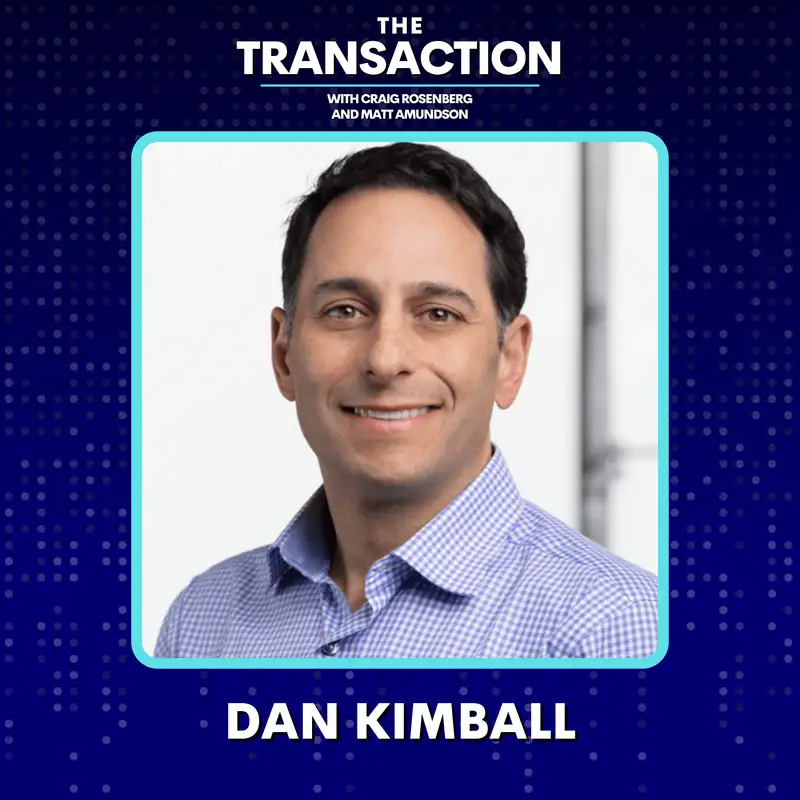
An Honest Reappraisal of Marketing Attribution with Dan Kimball, GTM Advisor - Ep 82
TT - 082 - Dan Kimball
===
Dan Kimball: [00:00:00] We learned a valuable lesson in product name. It actually matters.
Dan Kimball: A lot of it has to do less with the brand [00:00:05] name, but how well they've executed on it.
Dan Kimball: You gotta know your target customer inside and out, and you gotta [00:00:10] adapt your whole view of the world around that understanding.
Dan Kimball: It doesn't solve all [00:00:15] problems, but it is the ultimate alignment mechanism, even for small companies.
Dan Kimball: My number one [00:00:20] piece of advice to portfolio companies right now
Dan Kimball: look at marginal ROAS. Look at like the last [00:00:25] dollar spent as your indicator as to whether or not this is still a viable strategy for you. And if [00:00:30] not, you better be looking up funnel and you better be thinking more diversified.
Dan Kimball: ChatGPT not just doing a [00:00:35] number on organic, it's doing a number on paid. People are getting less traffic [00:00:40] from Google Organic because of ChatGPT.
Dan Kimball: People aren't putting as much [00:00:45] scrutiny on marketing attribution as they should. And this is nothing new, but people are giving [00:00:50] way too much credit to google
Dan Kimball: The amount of focus that a company has is going to be highly correlated with the [00:00:55] success they have at actually driving their bookings goals for the year.
Craig Rosenberg: but is Skull [00:01:00] Candy did, did, did they just not innovate? 'cause it's such a great [00:01:05] name.
Dan Kimball: yeah, they used to be
Dan Kimball: cool. And then I think, I think Apple ate their [00:01:10] lunch.
Matt Amundson: Yeah, the Beats acquisition by Apple I think made things really tough for skull [00:01:15] candy,
Sam Guertin: Yeah.
Matt Amundson: but it's just fun to say the word skull candy.
Craig Rosenberg: [00:01:20] It really is. That's my point.
Sam Guertin: better than Turtle Beach.
Craig Rosenberg: what?
Sam Guertin: [00:01:25] Turtle Beach makes a bunch of headsets. It's
Craig Rosenberg: oh, got it, got it. Yeah. That would be [00:01:30] like the Turtle Beach is more like. Uh, a more, uh, like [00:01:35] golf sorta, you know
Craig Rosenberg: what I mean? Little Yeah. Resort like a Tommy [00:01:40] Bahama type.
Craig Rosenberg: Um, Yeah.
Craig Rosenberg: And then skull candy is [00:01:45] like, that's gamer. Hardcore. Could be skate wear,
Craig Rosenberg: could be [00:01:50] an energy drink.
Matt Amundson: Mm.
Dan Kimball: Uh, there, there, therein lies the problem. [00:01:55] The name does not say what it does.
Matt Amundson: but it goes on
Craig Rosenberg: Look at the [00:02:00] CMOs coming in hot.
Dan Kimball: Oh, skull,
Dan Kimball: candy. I never thought of that.
Dan Kimball: that.
Craig Rosenberg: [00:02:05] Yeah, it's true.
Craig Rosenberg: Let's not let Matt go into the candy part. We'll stay on the [00:02:10] skull part.
Craig Rosenberg: yeah. it's good. Um, all right, so, uh, by the [00:02:15] way, Dan, it's been a while for us, so we're a little out of, uh, this is like, um, it's, [00:02:20] we're out of practice.
Craig Rosenberg: I think our lot, well, no, you're not. [00:02:25] You're talking every day.
Craig Rosenberg: Look at this guy.
Dan Kimball: am talking. I, you know, I, I don't do
Dan Kimball: [00:02:30] a lot of podcasts though,
Dan Kimball: so this
Matt Amundson: okay. Well, we
Matt Amundson: haven't done one in
Matt Amundson: like six weeks, so we're [00:02:35] all, you're in good company.
Dan Kimball: Okay. yeah, that was my point, man. We are, we're, we're like just [00:02:40] getting back in the swing of things. All right.
Introducing Dan Kimball,
---
Craig Rosenberg: So, um, so I, [00:02:45] uh, the, the Dan Kimball show.
Craig Rosenberg: [00:02:50] Okay. So I've known Dan for a long time. We, we did work with [00:02:55] him. Are you ready for this, Eventbrite?
Craig Rosenberg: Dan back [00:03:00] in 2016 ish, 2017
Craig Rosenberg: ish.
Matt Amundson: he's still got the [00:03:05] swag.
Dan Kimball: That that was my, when I became a new Eventbrite employee, this is what they gave me.[00:03:10]
Dan Kimball: The, skull candy.
Dan Kimball: Yeah. you kidding
Craig Rosenberg: me? Did we, it all comes back to [00:03:15] Skull Candy,
Matt Amundson: Yeah, it does. roads lead to skull candy.
Craig Rosenberg: that it's a true, [00:03:20] but it's true. Um, and then, uh, we became friends and, um, you know, [00:03:25] he's been, uh. Uh, a, a long time executive marketer. [00:03:30] Right. And so I think, did you leave Eventbrite to go to Yelp?
Dan Kimball: I did, I [00:03:35] did. I left. I left Eventbrite. I left one struggling business to go to another struggling [00:03:40] business.
Matt Amundson: God,
Craig Rosenberg: that's,
Craig Rosenberg: Hey man, it's the story of a lot of our
Matt Amundson: yeah, take, take a [00:03:45] look at my resume, man.
Dan Kimball: It's.
Craig Rosenberg: uh, and for the last like [00:03:50] three some odd years, he's been the CMO of Spectrum equity. So,
Craig Rosenberg: [00:03:55] um, you know, we, you know, we love the, the. The, the [00:04:00] background of, uh, you know, being in the seat and now sorta, uh, [00:04:05] advising lots of different companies on their, on their marketing as, as [00:04:10] part of the sort of guest type that we have on the show.
Craig Rosenberg: So you're gonna, uh, bring a [00:04:15] new experience to the audience. And, uh, guys, [00:04:20] I don't know if Matt and Dan know each
Matt Amundson: No, this is our maiden voyage.
Dan Kimball: This is it. This [00:04:25] is it.
Craig Rosenberg: and. That's awesome.
Craig Rosenberg: [00:04:30] [00:04:35] [00:04:40] [00:04:45] So, and I will introduce [00:04:50] also to the audience. Today's guest, Dan Kimball. [00:04:55] Okay, there you go. Thanks for waving. 'cause I, I, if we had [00:05:00] canned clapping, Sam, that's, write that down.
Craig Rosenberg: We need that
Craig Rosenberg: because that was [00:05:05] weird. I made the intro and then it was all quiet and shit, and then I didn't know what to do. [00:05:10] Thankfully. Thankfully, Dan did a meek wave and then Matt did like [00:05:15] a soft Yeah. Soft. Jesus.
Sam Guertin: I'll add raucous applause [00:05:20] in
Matt Amundson: There we go.
Dan Kimball: Could you? Thank Oh Thank you. Make me look cool. Make me look cool.
Dan Kimball: cool.
Matt Amundson: [00:05:25] Dan, uh, quick question for you. Recently, did you get a payday because it does appear that Eventbrite [00:05:30] was acquired by bending spoons, a company I've not heard of [00:05:35] before.
Craig Rosenberg: part of,
Dan Kimball: Yes. spending spoons is in the business of buying [00:05:40] washed up tech companies. I think that's their business model and
Craig Rosenberg: is that right?
Dan Kimball: uh, [00:05:45] unfortunately.
Dan Kimball: I think Eventbrite's a wonderful place with a great product, [00:05:50] but they got bought for $5 a share
Dan Kimball: And that's
Dan Kimball: not, uh, that's [00:05:55] not a wonderful outcome, I think, but I think they're probably in good hands with a rollup, because I'm [00:06:00] sure Benning Spoons has some kind of strategy for these companies,
Craig Rosenberg: Yeah, there you [00:06:05] go.
Dan Kimball: There you go.
Craig Rosenberg: I did not know if Eventbrite bought, caught bought. I actually, [00:06:10] I ironically, guys, before we get going, I've been um. Listening and [00:06:15] trying to change my phone habits from
Craig Rosenberg: Doom, [00:06:20] scrolling X, um, to watching, [00:06:25] listening to music again, like real music, not my, like, my kids like, like, uh, you know, not [00:06:30] just n you know, NBA young boy and stuff like, you know, guys from my, from [00:06:35] my era and, uh. And now my feed has changed. [00:06:40] So I got like Rock and roll Hall of Fame and all this stuff. It's been pretty, it's been pretty fun.
Craig Rosenberg: And so [00:06:45] last night I went on and I'm like, you know what? I should go to a concert. I mean, this is how bad it's been, right? I'm [00:06:50] like, I, I'm gonna go to a concert. And I was trying to look through it, man. [00:06:55] It's, uh, it, I think I'm gonna go to the Foo Fighters concert.
Dan Kimball: [00:07:00] Yes, yes.
Craig Rosenberg: I, I think, I think that would [00:07:05] be a good, and I think I, my kids need to go to more con I took [00:07:10] 'em to their first concert, which was that, was it Luke, Bryan, or what was the other? Brian, uh, [00:07:15] one of the Brian's
Craig Rosenberg: at, um, Zach, yeah. Yeah. And they loved it.
Craig Rosenberg: They had a [00:07:20] ton of fun and like, you know, uh, I'm like, I gotta culture 'em,
Craig Rosenberg: [00:07:25] you know?
Dan Kimball: I'll I'll, I'll, tell you, that's been some of the the best experiences I've had with my [00:07:30] girls. I've got two daughters and they're both late teenagers now. It's always the concerts [00:07:35] more than anything. We've been going to music since they were younger and that's the stuff they want to keep [00:07:40] doing with me too.
Dan Kimball: So as you get older with 'em, share any music taste at all, [00:07:45] that's, I think that's great. I think that's great.
Craig Rosenberg: I know, but I'm gonna have to do a lot of [00:07:50] retraining. Like I, you know, like the kids will change anytime I have it on. And [00:07:55] then, you know, it is gonna be lil baby or dub baby and or an NBA young [00:08:00] boy, right? So
Craig Rosenberg: like, I've, I've gotta, and look, I listen to it. I'm, I'm down, [00:08:05] but I, it's not moving music,
Dan Kimball: you're not down. you're not [00:08:10] down. If you said you're down,
Craig Rosenberg: You're right.
Matt Amundson: You might be up.
Craig Rosenberg: You know what
Craig Rosenberg: [00:08:15] words matter. Words matter. I got a bunch of marketing guys on this show. Anyway. All right, so speaking [00:08:20] of, uh, uh, so Dan, we, there's two parts to the show. One is, you know, we're gonna [00:08:25] ask you to tell us some fun, Go-To-Market stories or company building story, you know, one [00:08:30] or, you know, if you have multiple great. Um, and then, you know, the two or three things you're seeing out [00:08:35] there that's working so, uh, in, in Go-To-Market. But,
GTM Story - The Unintended Consequences of Naming a Company
---
Craig Rosenberg: but let's just start with a [00:08:40] fun story from, yeah. You got anything for us?
Dan Kimball: I might have a story or [00:08:45] two. Um, this is an early Go-To-Market story. This
Dan Kimball: is, [00:08:50] uh, early go
Craig Rosenberg: to markets. See,
Matt Amundson: They're
Matt Amundson: the always the best. Yeah.
Matt Amundson: Oh, off to a great [00:08:55] start. This is, like when I was, 22 years old. Okay.
Dan Kimball: So
Craig Rosenberg: oh, even better. Cue the [00:09:00] Eagles. See now I'm listening to a lot of music. Cue the Eagles now. Okay, go.
Dan Kimball: I mean, for me it was [00:09:05] more grunge. It was kind of Pearl Jam and and Nirvana
Matt Amundson: It's great. Pumpkins. [00:09:10] Um, but this is, this was actually a lesson in product naming, going back to our skull candy [00:09:15] conversation. Um, it was a valuable lesson that I earned, I learned early in my [00:09:20] career. So the first job that I had right outta college, I won't tell you the year 'cause [00:09:25] that would definitely date me, was running I ran a gym in Cape Cod. [00:09:30] so I, I graduated, uh, it was great. I graduated college and my two best friends [00:09:35] and I moved to Cape Cod. And one of the guys. his parents had a house in the outer cape [00:09:40] and they gave us their house, they gave us their boat, they Loving truck, and [00:09:45] they, and they and they invested in a, a fitness center, uh, uh, [00:09:50] for three months.
Dan Kimball: They, they leased all the equipment. They got the space and they said, you guys run it. And this will be your [00:09:55] first entrepreneurial opportunity post-college. Build your resume. I was [00:10:00] like, I was like, that's this is amazing. Uh, you know, a lot of summer [00:10:05] residents closest gym was 20 minutes away, so there's a big supply demand problem.
Dan Kimball: It was [00:10:10] prime, prime opportunity. Right. Um, who wants to go to the beach when you can sit in a sweaty [00:10:15] gym, obviously. Right. Um, and, you know, I'm just gonna set this up. This [00:10:20] is, I am gonna say the date. This is the late nineties. And, um, like [00:10:25] fitness was kind of in. But no one really talked about eating disorders. And I'll get [00:10:30] back to why that's important in a second. Remember, this is a product naming issue.[00:10:35]
Dan Kimball: Um, but it was a nice facility. We had rowing machines. What did we have? Treadmills, [00:10:40] ellipticals free weights. And we ran a good shop. We played grunge music. Um, we [00:10:45] often opened on time. Um, sometimes we'd forget to open up and members would find [00:10:50] our house and knock on the door and tell us to open the gym. Um, but when [00:10:55] we wanted to get the word out, I'm a, I was not a marketer at this point, but I think this is where I found my place. [00:11:00] We decided to make a radio commercial, um, to like let the [00:11:05] whole of Cape Cod know that we existed and to come check it out. And I think we were given away like. [00:11:10] A free day and then you could subscribe for a month or something like that. Um, and [00:11:15] so we made the commercial, it was super fun. I think it was a take on like Beverly Hills 9 0 2 1 oh or something [00:11:20] really funny. And it was good. It was really fun. We had a blast making it. [00:11:25] Um, and up until now, like a lot of people knew about the business. But most people [00:11:30] didn't. 'cause we were kind of in a strip mall off the side of the road and there wasn't good signage.
Dan Kimball: It was just kind of [00:11:35] like this thing and it was like, there's some fitness equipment in there, but no one really knew the name or [00:11:40] what to do about it. After the radio commercial, everybody knew about it, right? Like the [00:11:45] whole of Cape Cod knew that this fitness center existed. And [00:11:50] um, we had lines out the door after this radio commercial, [00:11:55] unfortunately. many of these people who wanted to come to the gym were [00:12:00] there to lecture us on the name of the fitness [00:12:05] center, which was apparently was offensive. Um, so just a little [00:12:10] backstory, the parents of my friend who gave us the money also were in charge of naming this [00:12:15] place. Now, the mom was a dermatologist and the dad was an [00:12:20] orthopedic surgeon. Mom or, uh, dermatologist. Skin [00:12:25] Dad, bone Doctor. Skin and Bones was the name
Matt Amundson: Ooh. center.
Craig Rosenberg: [00:12:30] oh
Craig Rosenberg: Jesus.
Craig Rosenberg: Oh Lord.
Dan Kimball: [00:12:35] hindsight, in hindsight not, not a great name, but we were too young and stupid to know that that was [00:12:40] offensive. And I think they were a little bit old and not really understanding [00:12:45] that even though that's tongue in cheek and funny for them, that it would be misperceived and, um, this did [00:12:50] not land well. And, um, I don't think we hit our subscription targets for [00:12:55] the summer. Um, not only 'cause of the bad name, but uh, we learned a [00:13:00] valuable lesson in product name. It actually matters. And, um, if you offend [00:13:05] people with your product name these days, it it tends to work in some spaces, but that kind of [00:13:10] name is just gonna piss people off. So it didn't it didn't work, but it was a good lesson nonetheless,
Craig Rosenberg: That scene. [00:13:15] Now, you know what, Dan, I was worried about you and your story
Matt Amundson: you you [00:13:20] said I'm,
Craig Rosenberg: yeah, because he said, we said, okay, what's your story? And he said, well, I may have some story. [00:13:25] And it's like, hmm, you know, that means like it's, he's gonna be like, oh, this one. [00:13:30] That was a great story.
Craig Rosenberg: 'cause there was a [00:13:35] lesson,
Craig Rosenberg: the twist on the name, that thing whacked me in the, I was rolling. I'm like, [00:13:40] fuck, these kids got to live in Cape Cod and like run their own business. Like [00:13:45] there's that. I'm not sure there's anything better.
Craig Rosenberg: And,
Sam Guertin: on the name. I like [00:13:50] that.
Matt Amundson: Yeah. The, the,
Matt Amundson: the, name reveal
Matt Amundson: was
Craig Rosenberg: up. Build up. Yeah.
Dan Kimball: Oh, [00:13:55] it, and the logo, the, our logo. was like this stick figure [00:14:00] holding up a, a set Oh boy. was just all the wrong, it was [00:14:05] all the wrong
Craig Rosenberg: Oh God.
Craig Rosenberg: Oh Lord. Oh, [00:14:10] hey, uh, the people waiting outside to lecture. You. Like, were you guys, [00:14:15] I'm just imagining this guys. Look, look, look, think about this. And Dan and his buddies, they're all excited. They're like, [00:14:20] holy crap. They're high fiving. 'cause the ad worked, then they get [00:14:25] there and people are incensed. They, they [00:14:30] can't wait to give them the business. I mean, like, what was that like?
Dan Kimball: [00:14:35] It
Dan Kimball: was, it was. not literally give us the business. It was not great. It was, um. [00:14:40] It was, um, we were not very good at defending ourselves. We kind of, you know, we were, [00:14:45] we had our hats on backwards. We were kind of like, we were bros. And we were like, what are you talking about, man? [00:14:50] It's hilarious. And, and they'd be like, you know, my daughter struggles with eating. And [00:14:55] we'd be like, it was a real lesson. I mean, it really was. It was kinda. Like in hindsight, like, [00:15:00] what a bunch of dummies. It was kind of funny. But in the moment we were like, we got, we were pretty upset. We were [00:15:05] like, what? This just happened, you know? Um. But it was really fun to make, [00:15:10] it was, it was fun to make the radio commercial. I, have, I have not made a radio commercial since then. And [00:15:15] um, I have to say, that was probably one of my most fun marketing experiences was going to the station and [00:15:20] doing that. That was cool. It was a lot of fun.
Craig Rosenberg: That's a great story. I love that. [00:15:25] Um, I mean, no, no, wait a minute. That sounds bad on my part. It's not a, [00:15:30] yeah, it's a terrible story that landed, you, landed the plane. [00:15:35] Um, okay. Love that. All right, so, uh, scale of one to five on that [00:15:40] story,
Matt Amundson: a top five story, top five Yeah. top five for sure.
Matt Amundson: and mostly because Dan's [00:15:45] such a good marketer. The storytelling aspect of the way he unfurled the story was just,
Matt Amundson: [00:15:50] uh, I'm M. Night Shyamalan.
Dan Kimball: Had it had, I told you, had I told [00:15:55] you the name of the, of the fitness center in the beginning, it would not have
Dan Kimball: had the [00:16:00] same impact.
Dan Kimball: And I, and I did, I did lay a few, like Easter eggs. I said eating [00:16:05] disorders were still not really part of the dialogue back in the late nineties. Right. [00:16:10] But, um, but I think behind closed doors, it was, I think that was
Craig Rosenberg: Yeah,
Dan Kimball: lies [00:16:15] the difficulty.
Craig Rosenberg: that is. I once, had an idea [00:16:20] during this sort of golden era of vaping to create a nautically themed [00:16:25] vape shop called Vape Cod. Uh, oddly enough, I couldn't get any financial, I could not [00:16:30] get any financial backing for that.
Craig Rosenberg: vape? God? [00:16:35] Um, yeah. I, uh. [00:16:40] Okay. That was a great transition. [00:16:45] Um, speaking of product naming, um, so, [00:16:50] uh, well actually let me ask you marketers this, what's the best [00:16:55] company name for the right reasons? Not just, you know, I like [00:17:00] skull candy. We were just talking about that, but like, if you guys had to te let's do tech 'cause we're in tech. [00:17:05] Like if you had to say like, this was one of the best company names of all [00:17:10] time. What, what would you guys say? Think about that for a sec. And Sam, you can [00:17:15] join in too, buddy.
Craig Rosenberg: Oh, know you [00:17:20] uh, would probably say Salesforce,
Craig Rosenberg: Why?
Craig Rosenberg: Why? Why that in a [00:17:25] past, uh,
Craig Rosenberg: Oh, I've already done this question.
Sam Guertin: Uh, not, [00:17:30] not this directly.
Craig Rosenberg: Okay. All right. Good, good.
Craig Rosenberg: Well, [00:17:35] Salesforce followed Dan's rule of, you knew what it did,
Craig Rosenberg: but now you don't. I mean, now it's just [00:17:40] beyond, I actually, you guys should talk about that. What is there a.
What's in a Name (Of a Company, Brand, or Product)?
---
Craig Rosenberg: Is there a [00:17:45] like evolution point where the name doesn't matter anymore and it's just like the [00:17:50] brand has built up around the name? Because in the case of Salesforce, [00:17:55] that was a good ride for 20 years on the perfect name. And then, um, [00:18:00] and then now they've sort of broadened their horizon and I don't know what that, you know, [00:18:05] when, when that's doable. But anyway. All right. Go. What do you guys got? What [00:18:10] does CMOs, what do you guys got for me?
Dan Kimball: I think honestly, I think Apple is [00:18:15] brilliant, um, only because it doesn't limit them on any product [00:18:20] set, and it was so good in reaction to like the boring kind of PC [00:18:25] world. Which was so kind gray and vanilla [00:18:30] and had no personality. And I think the Apple with the rainbow logo on [00:18:35] that first kind of set of computers just, it just kind of made a statement about what they [00:18:40] stood for. Uh, and it's sustained and it could be anything that you want it to be, but [00:18:45] everyone kind of inherently knows what an Apple well-designed product is. And a lot of it has to [00:18:50] do less with the brand name, but how well they've executed on it. But I think that's any brand, um. [00:18:55] I just think that's, I, that's, that's a, that's a brilliant one because of what they've [00:19:00] become.
Craig Rosenberg: Okay. I like that
Matt Amundson: Yeah, I've got a similar vein, which is Oracle, which I [00:19:05] think is just such a badass name. I love it. And like, you know, they were, the, the concept [00:19:10] of the name was like they were telling the future, uh, and they were, and they, and I mean, they created that, [00:19:15] right? Like, you can feel however you want to feel about Oracle today, but like, that was such a great name, [00:19:20] such a great name. And, um, I, I, I've always loved it and I [00:19:25] actually love the, the word mark that they use. Uh, it's simple, but it works and it's just, it's [00:19:30] so good. I was gonna say like, uh, on the literal front, I loved when TripActions came [00:19:35] out. I love the name of that. I thought that was really cool. The fact that they're now called Navan is [00:19:40] so bizarre to me.
Matt Amundson: Um, all due respect to the, the marketing department [00:19:45] there. I'm sure that's working out great for you guys, but, uh, I now I'm like, what the heck is Navan? [00:19:50] Don't get it.
Craig Rosenberg: Yeah, that's a good point.
Craig Rosenberg: 'cause, 'cause [00:19:55] uh, we, we moved to Navan and I did not know what it was, so I just [00:20:00] kept ignoring the emails, um, which went [00:20:05] really well with the hr. All right, let me, you know what, so this is interesting. So actually [00:20:10] if I'm taking, Dan said something interesting. He said Apple didn't limit [00:20:15] them. So it added like this, this color to a [00:20:20] dreary business. Um, but it didn't limit them. So salesforce.com then is a [00:20:25] bad name,
Matt Amundson: [00:20:30] It's a medium name,
Dan Kimball: Yeah, it's not the
Craig Rosenberg: but it is limiting though,
Matt Amundson: [00:20:35] but I think, I think they rode that to their sort of me meteoric rise. Right? Like [00:20:40] it was just what you were getting from it and what the value prop was in those early days as they [00:20:45] just sort of ate everyone's lunch. Like it just worked so well. And then, you know. I [00:20:50] think branching out and changing the brand name would've been bizarre and they had already taken the company public, so [00:20:55] you really can't do that. And so, yeah, maybe, uh, [00:21:00] 20 plus years down the road, now you're kind of wishing you were named something else, but [00:21:05] I think it was part of the success.
Dan Kimball: yeah. I don't think it's as troubling or limiting as [00:21:10] like user testing, right? Like I used to, I used to, help those guys out and. [00:21:15] It. actually, it was around the time when they were doing far more than just user testing, but it's so [00:21:20] literal and it's so descriptive. Um, I kept telling 'em that it's [00:21:25] time to change and they never did. Uh, and it, you know, I don't think it really limited them, but certainly new [00:21:30] buyers are probably confused about the, the full breadth of the offerings.
Matt Amundson: Yeah,
Matt Amundson: [00:21:35] I What I didn't even know user testing did more than just user testing. I always just assumed. So[00:21:40]
Matt Amundson: there you
Craig Rosenberg: Yeah. There you go, man. Uh, let me ask you guys [00:21:45] two. I want to get your guys take on two names. I know I'm diverting,
Matt Amundson: Yeah, go ahead. This is great.
Dan Kimball: Yeah. [00:21:50] Yeah.
Craig Rosenberg: So one is EMC.
Matt Amundson: Mm-hmm. [00:21:55] That's Oracle esque, right? Isn't that like a similar, [00:22:00] like, really powerful name means a lot about intelligence and like, [00:22:05] uh, it sort of speak Well, now it speaks to the company. I don't even know if they're what they're doing these [00:22:10] days, but like, is that a, was that a good.
Dan Kimball: I don't know that that was [00:22:15] a good name 'cause it's the first time that I've even put two and two together that was like the formula, [00:22:20] EMC squared.
Matt Amundson: [00:22:25] Everybody's learning today.
Craig Rosenberg: I, I [00:22:30] just, I almost stood up. That was good. Yeah. Okay. Not that great. Okay. I got one for you
Matt Amundson: [00:22:35] Go,
Craig Rosenberg: And Matt, you actually, uh,
Craig Rosenberg: you'll have to go first. Ready? [00:22:40] Datadog.
Matt Amundson: Uh, I mean, I've never liked the brand name. Uh, [00:22:45] to me it doesn't, like, it doesn't mean observability at all. Um, [00:22:50] it's a super successful company and they've done well, but like, yeah, don't, don't, don't love the [00:22:55] name.
Sam Guertin: people
Sam Guertin: like dogs and they've got in their [00:23:00] logo.
Matt Amundson: Yeah, but people don't like data.
Dan Kimball: yeah, I don't,
Dan Kimball: I don't, I don't love the [00:23:05] name personally. I don't know why I don't like it. It's more of a visceral kind of thing for me. I [00:23:10] love dogs. I have two dogs. Um, but it just seems a little too cute for a, [00:23:15] a really big enterprise company. And I guess they're proven. It doesn't matter. Uh, like snow, [00:23:20] like Snowflake is not a great name. Um, but they, they It doesn't matter. [00:23:25] They did. It's all about execution at the end of the day. I think you could probably work with any brand name unless it's offensive. [00:23:30] Like, like, like, like we did, you know?
Matt Amundson: I think, uh, on the Snowflake [00:23:35] thing, um. S strange name. I think Denise has done a [00:23:40] great job with the branding of it, and it's like you see a snowflake building and you're just kinda like, oh man, it's [00:23:45] cool.
Matt Amundson: Uh, I think the, the word and logo mark there work really, really well. [00:23:50] Um, it, it, it probably wasn't helpful for them that like the terms snowflake [00:23:55] like really jumped into the zeitgeist not long after they, uh, [00:24:00] they, they, they started, you know, growing as a business and so they were probably like, damn, I wish we weren't called [00:24:05] that, but.
Matt Amundson: I think that's largely like the negative connotation of the term Snowflake has largely gone [00:24:10] away.
Dan Kimball: yeah,
Matt Amundson: yeah,
Craig Rosenberg: Hmm.
Dan Kimball: Fair point.
Craig Rosenberg: [00:24:15] All right. I like it.
Matt Amundson: there
Matt Amundson: was a, I will say there was a company that once recruited [00:24:20] me that was called Zesty.
Dan Kimball: Hmm. I remember zesty.
Matt Amundson: [00:24:25] Yeah.
Craig Rosenberg: Is zesty still around? They did like cloud
Matt Amundson: I don't, yeah, I don't think [00:24:30] Zesty made it, but I'm not sure. I'm Maybe, maybe they did. Maybe they rebranded. Was that
Dan Kimball: a soap? [00:24:35] Is that a, is that a soap company?
Matt Amundson: no, it [00:24:40] was, it was, it was cloud cost optimization. Uh, but yeah, I guess you're not [00:24:45] fully optimized until you're zest fully optimized.
Craig Rosenberg: I'm [00:24:50] zestfully clean. Um, sorry. That was bad. That wasn't even good.
Matt Amundson: no, [00:24:55] you just dovetailed right off. I what? I said that was great.
Craig Rosenberg: I try that, but it's very [00:25:00] dad joke to take
Matt Amundson: here we are.
Craig Rosenberg: said and do it. Yeah, you're right. All right. [00:25:05] All right. So, um,
Matt Amundson: Great brands are authentic, [00:25:10] Craig.
Dan Kimball: It is true.
Craig Rosenberg: That is so that, [00:25:15] see, that was a dad joke. That worked. All right. See, you did that. You did it. You did [00:25:20] it. Dad joked that worked. Um. All right.
What's Working for B2B Brands in the AI-Era
---
Craig Rosenberg: So Dan, [00:25:25] in your travels now for the last three years, like what, what can you tell us about what's [00:25:30] working for folks out there? It's a, it's a difficult market. So what, what what are we, what [00:25:35] are you seeing?
Dan Kimball: yeah. It's a, it's a data dog fight out there.
Matt Amundson: Oh
Craig Rosenberg: Uh, [00:25:40] Jesus.
Matt Amundson: God. Boom.
Craig Rosenberg: are I can dad joke
Dan Kimball: you all day[00:25:45]
Craig Rosenberg: oh, clearly. Wow. You were waiting for
Matt Amundson: that was great.
Dan Kimball: I [00:25:50] was, I just, was just, it just, it just hit me
Craig Rosenberg: Oh, it was impromptu. Impromptu. [00:25:55] Yeah. Yeah. yeah. Yeah. Um, what I, you know, I think it is hard out [00:26:00] there, right? There's a lot of, um, rising costs, increased
Dan Kimball: [00:26:05] competition, you know? Um. longer sales cycles, [00:26:10] uh, worries about the economy, AI native companies, eating old SaaS businesses, [00:26:15] lunch, all that stuff. Um, I, this one might be a little bit boring [00:26:20] and, and I'm sure you've had people on here already talking about this, but it's the one that I [00:26:25] probably spend the most amount of time with across our portfolio and talking to [00:26:30] founders, which is. is. uh, gotta know your target customer inside and [00:26:35] out, and you gotta adapt your whole view of the world around that [00:26:40] understanding. Um, some people call it ICP, some people call it cAP db, whatever you want to [00:26:45] call it, advanced segmentation. The, like, the amount of focus that a company has [00:26:50] is going to be highly correlated with the success they have at actually driving their bookings [00:26:55] goals for the year. And if you're, if you're like, if you think you can survive [00:27:00] by kind of spray and pray and the old way, um, there are [00:27:05] very few companies I think that can succeed with that old strategy. So I'll maybe [00:27:10] bring this to life. Like one of our companies Is a FinTech in [00:27:15] the kind of the, the tax space. And they're, they're selling to corporations for years. [00:27:20] Um, pretty much selling to everyone and their grandma, and it worked really well. Right, Zer [00:27:25] era, no doubt it worked well. And even after that, I think it just like the after effect of just [00:27:30] their product being the one and only, it just kind of worked.
Dan Kimball: And then like maybe early last year, [00:27:35] we hit this point where like the marketing team would hit their pipeline coverage [00:27:40] goals. Like it would look good on paper, but each quarter we'd miss on bookings and that there was [00:27:45] like a growing margin and that delta of like, we hit on pipe, but like our close [00:27:50] rate's bad and we, we kept looking at it, we're like. Salespeople suck. Like salespeople can't close [00:27:55] all these leads. And it just, it was a real kind of mishmash of [00:28:00] problems that kind of sat in the middle of that. Um, 'cause the leads were qualified by most [00:28:05] definitions. Like we had good lead stage definitions. We knew what an MQL was, we knew what [00:28:10] SQL was, we knew what it took, like the bant process was in place with the SDR organization, [00:28:15] med pick, all stuff. Um, maybe those definitions were too loose, but, but it [00:28:20] was, the criteria was pretty clear. Very clearly what they weren't considering [00:28:25] was, and this, this was kind of hiding beneath the surface, is that the ERP that [00:28:30] these companies were on, um, really made all the difference, like [00:28:35] several of the ERPs were essentially off limits or just created so much friction in the [00:28:40] sales process because their competitors already had like a fully integrated partnership with these [00:28:45] ERPs, or they were like kind of in the bag with them.
Dan Kimball: But this was not in their [00:28:50] lead score. Like there was nothing in there that said, which ERP must they work with? And what are [00:28:55] the conditions of that ERP relationship? And frankly, they hadn't done the hard work of [00:29:00] just looking at their customer file. And if they had, they probably [00:29:05] would've deduced just by looking at all the characteristics of their customers. Who's closing, who's [00:29:10] not, who's retaining, who's got the best LTV? The ERP tag would've stood out like a, like [00:29:15] a blinking light. And they just didn't, they didn't do that work. And they lost like literally [00:29:20] two years of, of like, maybe not about a year and a half. ' 'cause we really started solve [00:29:25] for it in Q3, Q4 last year. But like, like [00:29:30] it just wasn't working. We couldn't point to why it was, but if they had just looked at their customer file [00:29:35] and run a regression on those characteristics, the ERP one would've stood out. And, [00:29:40] and now I think what that's turned into is like every one of my portfolio companies and all the founders I [00:29:45] talked to. Is like run an ICP project. Like there's easy [00:29:50] ways to do it. There's technology that allows you to do it. Um, you can figure out the [00:29:55] signals, you can merge that with buyer intent to get a clear picture. Pipeline becomes more [00:30:00] predictive of close rates. You don't scratch your head about why things aren't closing. It doesn't solve all [00:30:05] problems, but it is the ultimate alignment mechanism. even for small [00:30:10] companies and it, it's like 75% of the companies I've talked to just [00:30:15] haven't done the work. And it's not, it's not hard work, but it's like people don't know the [00:30:20] playbook and it seems hard and they just don't do it. And they're like, well, we have lead [00:30:25] scoring and we bought Six Sense, which has intent data.
Dan Kimball: It's like, yeah, but like have you, have you asked like the [00:30:30] questions about like why people are buying and why they're not, and have you thought about the 20 different [00:30:35] hypotheses that would. really unearth a lot of those kind of reasons why. And um, [00:30:40] it's just been a big lesson over the last year and a half, two years. Um, and, [00:30:45] uh, I, I just think it's, it's like the most important thing to get right in the beginning of the year.
Matt Amundson: Yeah. It's also one [00:30:50] of those things that I see a lot of companies get wrong because, you know, they [00:30:55] have very nebulous closed loss reasons, or they have, you know, the, or [00:31:00] the closed loss reason that they have is like incompatible technology or something instead [00:31:05] of like. What is it? What is happening? And it's one of those situations where it's like, [00:31:10] you know, you take a, I, I don't know how large the sales team is at this organization, but you take a hundred [00:31:15] person sales team, you talk to 20 people over the course of, you know, a week.
Matt Amundson: You [00:31:20] suss that stuff out really fast. And in certain cases, one of the biggest problems I see, especially at [00:31:25] these like mid-size companies is the over reliance on like technology and process. [00:31:30] Sometimes facilitates this like miss [00:31:35] of like really key simple evidence that a good conversation with a [00:31:40] sales organization can, can uncover very, very quickly.
Matt Amundson: And I'm not [00:31:45] saying that that's a company's fault because I actually see this as like a, uh, like a huge [00:31:50] problem across the industry is like, we're often doing like SQL [00:31:55] analysis and we're. Pulling all these files and running regression and blah, blah, blah. And [00:32:00] at the end of the day, it's like usually Occam's Razor here.
Matt Amundson: It's just, you know, hey, we're [00:32:05] trying to sell to this company, uh, or these types of companies and they have the wrong [00:32:10] ERP system. And I can tell you from the discovery call, if they're running this, [00:32:15] then there's no way that we're gonna close a deal. But, you
Matt Amundson: know, either those people aren't given, given a voice [00:32:20] or somebody's not taking the time to have the conversation.
Dan Kimball: or, or you [00:32:25] know, they get it wrong for a year and a half and then the administration turns over.
Dan Kimball: And
Dan Kimball: then the, and then [00:32:30] the
Dan Kimball: next CRO comes in the next CMO comes in and they don't look at history and if they're [00:32:35] smart, they're gonna do the, the, the work, right. But like, it just seems to be this [00:32:40] revolving door of missed opportunity and missed work. and um, again, it [00:32:45] used to be really hard to do this work. It doesn't have to be manual.
Dan Kimball: It's one of the best aI use cases. I know. [00:32:50] nail this, you know, and and light up your whole cross-functional [00:32:55] Go-To-Market and product organization. your CFO, everyone should just get around the table and say, [00:33:00] this is our ticket this year. This is, this is where our addressable market lives. This is where we're gonna [00:33:05] win. Let's go. And especially today with SaaS just kind of slowdowns and [00:33:10] competition, the focus is, is what's gonna win. You know? Um, [00:33:15] it's hard, it's hard, uh, to accept that, but it's, I just think it's, it's where the world [00:33:20] has gone.
Craig Rosenberg: All right.
Marker
---
Craig Rosenberg: I'm gonna ask you guys a question that I kinda, [00:33:25] um, I'm very curious about what if [00:33:30] there is no data.
Dan Kimball: Like you have no customers or you have [00:33:35] like, what do you mean no data?
Craig Rosenberg: you, I mean, well, like, well no customers would be [00:33:40] aversion, but even if you only have six, [00:33:45] uh, and you're not PLG, PLG does a [00:33:50] good job of helping you get lots of data,
Craig Rosenberg: right? Um. [00:33:55] So you're more of a classic enterprise software company starting out. You [00:34:00] can't boil the ocean. Uh, you'll fail, um, [00:34:05] but you don't really have the data to analyze things. [00:34:10] What, like, you know, what, what would you guys do there?
Dan Kimball: I, [00:34:15] I honestly think it comes down to, like, the founders usually know [00:34:20] their domains really well, and the early team, the early teams have, even if they only have [00:34:25] six customers, they've talked to the market, they've, if they're. Curious founders, and they built [00:34:30] this thing. Maybe they came from industry, you know, maybe they built a FinTech, they came from [00:34:35] banking.
Dan Kimball: They're just like, they're knowledge experts. So I think, um, I think just using [00:34:40] common sense about like, if then, you know, if they, you know, if a [00:34:45] company has this aspect, then they're a good prospect. If they have this [00:34:50] kind of, uh, if they're hiring these sorts of people, they're an interesting prospect. If, you [00:34:55] know, they're, they have this many employees like. I think common sense can drive your hypothesis [00:35:00] development. And then even if you don't have the customer file to bounce it off of, [00:35:05] you can probably find ways to like figure [00:35:10] out. Like just, um, you know, either through sales processes, through [00:35:15] marketing, through survey work, or through just like, okay, commonsensically, this is our ICP.
Dan Kimball: Let's try [00:35:20] it out for a quarter. And it's gonna be better than spray and pray and not [00:35:25] learning anything. 'cause you, don't have enough touch points with any one of those kind of sets of [00:35:30] ICPs. So I, I think it's common sense.
Matt Amundson: Uh, I, I would agree here. I think the other thing [00:35:35] I would say is like, this is where product management plays like a really important role. And I'm [00:35:40] not saying that you probably have product managers at this stage of the business, but whoever is [00:35:45] acting as the product leader, they should know. Like this is a technology we integrate really well [00:35:50] with.
Matt Amundson: This is the stuff that we don't, and you should be able to narrow down your ICP just based [00:35:55] specifically on what environments you're building your product for. If you're building a product that is dependent [00:36:00] upon a CRM, an ERP or, or some other sort of like [00:36:05] nesting larger platform. So they should know and you should.
Matt Amundson: Stick within that as much as [00:36:10] possible. Inevitably, you're gonna get somebody who comes inbound, somebody who answers a phone call, [00:36:15] somebody who clicks on an ad or meets you at a trade show and doesn't have that environment. And you're, you're gonna [00:36:20] have to weigh out whether or not that the, there's a market that exists there and that's worth the r and d [00:36:25] to go out and, and build a better, uh, integration with something else, but.
Matt Amundson: You [00:36:30] gotta start small and you gotta start narrow. And that's like, I think that's very antithetical to the [00:36:35] way we think about businesses here in the valley. But you know, if you build the [00:36:40] foundation correctly, if you go close the right types of companies, and if that works and [00:36:45] there's a real market there, then you should be fine.
Matt Amundson: It's more than you know, as long as. [00:36:50] You're priced correctly, it should be more than enough to get you your first, like, you know, milestone ARR [00:36:55] numbers, whether that's 10 million, 20 million or 50 million. And then after that, then you start thinking about [00:37:00] expansion. But um, to me it's product management, [00:37:05] whoever's in charge of that, and a lot of cases, that's the CEO is what makes or [00:37:10] breaks your ICP formation in the early part of your business.
Craig Rosenberg: Okay. [00:37:15] I like those answers.
Craig Rosenberg: I'll give you guys a couple. I'll give you guys a couple thoughts, [00:37:20] which might. Tie to what you said. So one is, now that I've seen all these [00:37:25] early stage pitches, like really good founders built [00:37:30] something to solve someone at some company's
Craig Rosenberg: [00:37:35] pain.
Dan Kimball: Yep.
Craig Rosenberg: ones, Yep. they, I, I've seen [00:37:40] the, the way they talk, they're, they're, they're, uh, they built a [00:37:45] product for an ICP already. And like [00:37:50] those are, uh, the, you know, you could see it. It's [00:37:55] just how they talk about it. Like, for example, in their pitch decks, they talk about the market and the [00:38:00] problem and they talk about, you know, that person [00:38:05] at that type of company's problem. And often the [00:38:10] ICP lies in why you built the product, why you built the company.
Craig Rosenberg: [00:38:15] And uh, I think things distract them. You know, like [00:38:20] the new sales person comes in, he, and he's got a list of 500 and it's [00:38:25] like, no, it's not gonna be enough. You know, you can't do it. You have to embrace the idea [00:38:30] of targeting and segmenting. And often the company is a good one, [00:38:35] is built to solve someone at some entity's problem. And [00:38:40] that is a good start because once you start. Marketing and selling, [00:38:45] then you're iterating. But you have to make a bet. And that bet often lies [00:38:50] in the story on why you built the company. That's one. And I could see it. I [00:38:55] could see it in folks. Uh, so then the second though [00:39:00] is using a proxy. So like early days ABM, I used to have [00:39:05] to do this with people all the time because if you guys remember, it was like. [00:39:10] Uh, people could not fathom this idea of [00:39:15] constraining your targeting.
Craig Rosenberg: They couldn't understand it.
Craig Rosenberg: It was like, [00:39:20] what? And then you would, uh, you know, in my job at Topo, I would win over marketing and [00:39:25] then sales would blow it up.
Matt Amundson: Mm-hmm. Yep.
Craig Rosenberg: so you use a proxy. [00:39:30] It doesn't, it could be a competitor, but it could also be someone in a. You [00:39:35] know, in that, in, in a very similar universe, right? That sells [00:39:40] something akin to what you sell and using them as your, you know, [00:39:45] your first sort of stab, right? I used to tell people all the time, well, why don't we, let's look at [00:39:50] your competitors. Who do they sell to? And when you would look, uh, nine Outta [00:39:55] 10 told you the market. And they say, well, we don't want to go [00:40:00] direct at the competitors. It's like, well, you built a product to kill them,[00:40:05]
Craig Rosenberg: so we have to kill them where they are. Now, you can find your niche, but you [00:40:10] won't find it. That's hard to bet, but you can. But you [00:40:15] start there, right? And then you constantly iterate with data and feedback. [00:40:20] The salespeople to the chagrin of many, become one of the best sources [00:40:25] of information that you'll have.
Craig Rosenberg: And the more con. And so if you [00:40:30] set a conversation standard, like you have to have X number of conversations per week [00:40:35] and we want you to close business, but to get there, you gotta do it. You will get the data you need to [00:40:40] continue to refine, um, and or redirect. So anyway, those were [00:40:45] my additions to that. Okay. I, that was a really good one, Dan. I say the, we have had. [00:40:50] Uh, folks bring it up. What's interesting is what you said, first of all, you [00:40:55] mentioned a name after ICP that I've never heard of. What, what did you say? ICP [00:41:00] or
Dan Kimball: Uh, CAP db. CAP DB is maybe [00:41:05] a, um, maybe it's a PE kind of term. It's, it's, uh, it's customer and [00:41:10] prospect database. So it's a
Dan Kimball: very specific project where you run regression [00:41:15] against the characteristics that are most predictive of highest LTV in your [00:41:20] customer database, and then you map that to the prospect audience.
Dan Kimball: So it's, it's, it's [00:41:25] ICP work.
Matt Amundson: Man, everybody on this call learned something today.
Dan Kimball: [00:41:30] Right,
Dan Kimball: right.
Dan Kimball: It's,
Craig Rosenberg: All right. Well, yeah, It's one of [00:41:35] those days.
Craig Rosenberg: It's one of those days. Um, okay. Uh, any [00:41:40] other, uh, things you're seeing? That's a good one, by the
Matt Amundson: Yeah. Yeah.
Dan Kimball: I [00:41:45] think probably another one that's top of mind. I literally was just on a call this morning with a, with a guy, but it [00:41:50] was, it was already on my mind. And then I talked to a guy and he kind of reinforced it. But I think [00:41:55] that, um, I'm supposed to start with the, with the headline statement. The headline statement here is [00:42:00] that people aren't putting as much scrutiny on marketing attribution as [00:42:05] they should. Um, and especially, and this is nothing new, but people are [00:42:10] giving way too much credit to google. Um, and this is also nothing new. [00:42:15] Um, but I, I think for the first time ever, their house is under attack in, in a real [00:42:20] way. Um, like chatGPT. Yes. Paid social. Yes. But [00:42:25] people are finally waking up \to \the fact that like when you control the [00:42:30] channel. The auction of that selling into that channel, and you control [00:42:35] the analytics that tell you whether that channel is working or not, and it's [00:42:40] all last click and you're taking credit for everyone else's expense. [00:42:45] It's it like it's only a matter of time before if, if people have optionality both on the channel [00:42:50] level and also on the analytical level, they're gonna start to look elsewhere. And I think [00:42:55] that's finally starting to happen. Um, I'm not saying that Google would ever [00:43:00] lie or, or do anything that's mischievous, um,
Dan Kimball: Winky face, but I'm [00:43:05] not sure they've had enough intellectual honesty about. about just how [00:43:10] meaningless last touch attribution is as a holy grail and [00:43:15] google Analytics and Edwards really lean on this metrics and less sophisticated [00:43:20] marketers, of which there are many across startups. They just kind of believe
Dan Kimball: it. [00:43:25] And so, um. And, and like there's this over-reliance and total inefficiency [00:43:30] on their paid media spend as an example. So, um, maybe like an [00:43:35] example, uh, like one of the companies I've been talking to, they're [00:43:40] not a portfolio company, it's just a founding team who wanted some advice, was asking me [00:43:45] recently, like how much money they should put into upper funnel paid media channels like YouTube, [00:43:50] tikTok, connected tv. Obviously, like everyone's saying, you gotta [00:43:55] invest more in brand. What's the brand demand balance? That's been a a forever kind of conversation. [00:44:00] Everyone kind of knows that you have to go create demand now, but like CFOs [00:44:05] haven't yet bought into that and. The stress on the marketer is real because [00:44:10] payback periods are coming from one side and demand is getting more expensive on the other, and you're getting [00:44:15] squeezed. Um, but like I looked at their performance data of this [00:44:20] company in the tests that they ran in social media, TikTok connected tv, and [00:44:25] it showed that those channels were like deeply in the red when you just looked at ROAS. [00:44:30] Uh, and Google was like this shining star with a beautiful ROAS and a short payback [00:44:35] period.
Dan Kimball: And the CFO was like, keep spending there. And it, it appeared very black and white to them. [00:44:40] Um, now I know I'm not the only one that's recommended this to marketers, but I was like, [00:44:45] just outta one question survey at the end of your self-service checkout flow, which [00:44:50] asks where people originally learned about your product and, [00:44:55] um, you know, I think before they launched that survey.
Dan Kimball: The data was [00:45:00] telling us that google drove over 60% of new customers acquired at a very profitable [00:45:05] rate. Once we ran the survey, 70% of people said that they first learned [00:45:10] about the company through social media. Um, and like, [00:45:15] especially in the most recent kind of monthly cohorts, it was very clearly that's where the momentum and the growth was coming [00:45:20] from. Um, they weren't really looking at the data with enough scrutiny 'cause of what I said before, it's [00:45:25] like Google data must be trusted and it's ga. their C their CFO loved it ' cause it [00:45:30] was a clean dollar in dollar out attribution model. model. Um, they [00:45:35] had invested in, in a, in a mixed media model, which, um, thankfully now you can, as a [00:45:40] mid-size company, there's lots of options, but they didn't understand channel diversification, [00:45:45] diversification strategy.
Dan Kimball: Um, but a simple question. like It literally revealed [00:45:50] that all their beliefs about the ROI of their marketing dollars were false, or at least highly questionable. [00:45:55] Um, so now as a result over the last six months, [00:46:00] um, they're investing more up funnel. Uh, we're starting to isolate some populations [00:46:05] geographically to see if we can understand the actual monetary impact of upper funnel [00:46:10] on maybe like performance channel efficiency, um, and [00:46:15] really understanding how much we actually need to spend in the auction. Which is getting increasingly more [00:46:20] expensive and increasingly more hard to believe, um, versus like how much is [00:46:25] actually gonna come in anyway. Like incrementality is a dirty word at, at google. Um, so [00:46:30] next up for them is like, let's invest in an MMM. You could spend like 20, 30 grand a year and get [00:46:35] some good sophistication. Um, and you can kind of [00:46:40] run a full funnel strategy that's not as heavily reliant on Google, which [00:46:45] is, which is by the way, getting more expensive. ChatGPT is not just [00:46:50] doing a number on ChatGPT. ChatGPT not just doing a number on organic, it's doing [00:46:55] a number on paid, right? Like people are getting less [00:47:00] traffic from Google Organic because of ChatGPT. So [00:47:05] their natural instinct is, I gotta spend more money on CPC. And that's [00:47:10] driving up CPCs. So you have this weird perpetual kinda motion of [00:47:15] like. Cha eating my lunch. Google knows this, they're just gonna catch it [00:47:20] all in the paid. But now, like the LTV to CAC is getting all outta whack. [00:47:25] at a certain point, the marginal return on those ad dollars spent on Google [00:47:30] get really, really bad.
Dan Kimball: And so my number one piece of advice to portfolio companies right now [00:47:35] is look at marginal ROAS. Look at like the last dollar spent as your [00:47:40] indicator as to whether or not this is still a viable strategy for you. And if not, you better be looking up [00:47:45] funnel and you better be thinking more diversified. Sorry, that was a long rant, but like it's a [00:47:50] big deal right now. Not just for like PLG and consumer, but also B2B enterprise. There's too [00:47:55] much money going into the option.
Matt Amundson: Fascinating.
Craig Rosenberg: was, [00:48:00] yeah, that was
Dan Kimball: There was a lot in there,
Dan Kimball: but
Craig Rosenberg: riveting. a lot of good [00:48:05] quality. It's so good, man. I'd, I mean, I'd love to take that [00:48:10] deeper. I know we're running up on time here, but man, oh man. Like so. [00:48:15] Um, I mean, one thing that I've definitely seen, uh, [00:48:20] as a CMO right now is our investments into other [00:48:25] social networks have actually driven up. We, you know, we're, we're not investing more dollars [00:48:30] into, uh, um, Google Ads right now, but we're actually seeing [00:48:35] more clicks on our Google ads as we've like diversified into places like Reddit, uh, [00:48:40] and other channels like that.
Matt Amundson: And we're like. Are people just not conditioned [00:48:45] to click on an ad in Reddit, but like, they see the ad and then they search, and then they click on our [00:48:50] ads there? Like, is is that your supposition at this point?
Dan Kimball: Uh, [00:48:55] yeah, I, I haven't had a lot of success with paid ads in Reddit. I've had more success [00:49:00] in, uh, gaming the organic kind of
Dan Kimball: community discussions. Um, [00:49:05] but yeah, they won't show up in your attribution
Dan Kimball: model. Um, they, they will show up in your [00:49:10] LLM share of voice reports,
Dan Kimball: though, which, so they're finally showing some, if you can [00:49:15] translate that into ROI, they're showing some value. Um, but it's still not like [00:49:20] CFO dollar for dollar kind of stuff, you
Matt Amundson: Yeah. Yeah.
Matt Amundson: Yeah.
Craig Rosenberg: This is fast. [00:49:25] This is fascinating. Can I throw you guys one thing? I, I was listening to Kara [00:49:30] Swisher and, um, she was, she [00:49:35] basically said with a, the one thing AI will do. Is, [00:49:40] uh, Facebook and Google are gonna wipe out the market on [00:49:45] advertising because they're, the AI will allow them to target [00:49:50] in like the most extreme amazing of ways, and [00:49:55] nobody else will have that scale that will allow them to do what those [00:50:00] guys will do.
Dan Kimball: S, she said that [00:50:05] Meta and Google will take over the mar, so they'll just continue their dominance and just get
Dan Kimball: more
Dan Kimball: dominant.
Craig Rosenberg: Or even [00:50:10] become no people. Yeah, it'll wipe, wipe out the rest of the market on ad, on [00:50:15] ads, digital ads.
Dan Kimball: I mean, I think those two platforms together make up like 80, [00:50:20] 90%
Dan Kimball: of total media spend already Um,
Dan Kimball: I, [00:50:25] I think that's an, I think that's a possibility. I think like data is the network effect for AI [00:50:30] to get better and better. And at some point, the more coverage and depth you have of that [00:50:35] data on every human on earth, the more powerful you become. But. [00:50:40] um, if LTV to CAC doesn't, if that doesn't math. If that math doesn't math, [00:50:45] then brands stop investing and, um, they look for [00:50:50] alternatives and, um, I don't know what those alternatives are is the [00:50:55] problem.
Craig Rosenberg: Yeah.
Craig Rosenberg: Well we're get,
Matt Amundson: I mean, I've been thinking about running some ads in InTouch Weekly that's [00:51:00] still in print, right?
Craig Rosenberg: That's a great Mag man dentist office. [00:51:05] Read that thing every time, man.
Dan Kimball: think the, I think the Franklin
Dan Kimball: Mint, um, [00:51:10] catalog is, is opening up some
Craig Rosenberg: Oh man. There
Matt Amundson: Yeah,
Craig Rosenberg: That a [00:51:15] boy.
Dan Kimball: Yeah.
Dan Kimball: Yep.
Craig Rosenberg: Um,
Dan Kimball: good.
Craig Rosenberg: speaking of [00:51:20] just, uh, anecdotal on target market, you know, I took my kids to the model [00:51:25] train show at the San Mateo County Fair Grounds that[00:51:30]
Craig Rosenberg: there is a, there is a very specific persona [00:51:35] there, uh, to be clear, like, yeah, uh, [00:51:40] I, I just walked in there going, um. And why [00:51:45] did I bring it up?
Craig Rosenberg: Because I kept thinking, like as you were talking, it's like, well, your best guess [00:51:50] might be the right guess. I'll tell you right now. Nothing surprised [00:51:55] me about the folks in the Model Train convention.
Matt Amundson: Nice. [00:52:00] Good.
Craig Rosenberg: the, yeah,
Matt Amundson: You got a good head on your
Craig Rosenberg: many.
Dan Kimball: Can you be more specific [00:52:05] about what you expected to
Sam Guertin: Yeah,
Dan Kimball: was delivered to you? you?
Sam Guertin: maybe some examples.
Craig Rosenberg: [00:52:10] I was thinking, well, you know, they're model trains and everyone's looking for something to do. So [00:52:15] like, would this be like a, you know, a, a wide variation of [00:52:20] folks that were in there, you know, that were checking out trains. But no, it was, I [00:52:25] mean, yeah, there was, I mean, obviously families there with their kids, uh, but. [00:52:30] There was the, the folks that were running the booths that, that sort of [00:52:35] fit the bill?
Dan Kimball: Like carnies, were they like carnies?
Craig Rosenberg: no, [00:52:40] no, not like carnies. They're more like, um, [00:52:45] so, uh, lumberjack outfits, sort
Matt Amundson: Yeah,
Craig Rosenberg: [00:52:50] of suspenders, um, you know, a lumberjack flannel, [00:52:55] maybe a Ben Davis.
Matt Amundson: pant.
Craig Rosenberg: type pant.
Matt Amundson: [00:53:00] Yeah. Um,
Dan Kimball: a can, a thick canvas pant.
Craig Rosenberg: 35%. [00:53:05] 35% bushy mustache.
Matt Amundson: Yeah.
Craig Rosenberg: Not many women [00:53:10] at all.
Sam Guertin: are shocking insights.
Craig Rosenberg: Yeah. it delivered. It [00:53:15] delivered, the, uh, yeah. All right. Sorry, I just had to throw that in there. Um, [00:53:20] so so Dan, that was fun as shit. You did
Matt Amundson: This was great, [00:53:25] man. You, you gave me a lot of things.
Matt Amundson: to think about, like this was,
Craig Rosenberg: The second part I think is right. I think [00:53:30] that's worth the show. I mean that there's, we gotta unpack that 'cause um, [00:53:35] you know, I only threw in the Kara Switcher thing knew and we had little time.
Craig Rosenberg: But like that, that one I [00:53:40] think. Would be really worth digging in on. Not not, you know, the segmenting [00:53:45] ICP thing is a really important one.
Craig Rosenberg: Uh, but like what you brought up there, [00:53:50] that's part of the second part,
Craig Rosenberg: which is about, you know, your, your ad [00:53:55] spend and, and you know how you're gonna use it going forward.
Craig Rosenberg: That's part of what [00:54:00] everyone's sort of juggling, trying to figure out right now,
Dan Kimball: Totally, Totally, [00:54:05] We're not all, we're not all big like CPG markers with MMM [00:54:10] backgrounds, and we're not statisticians, but like the tools are there. You know, it's, the [00:54:15] tools are there and the expertise is there, and I think the models are more accurate than the [00:54:20] attribution that you get from the analytics systems right now. And, um, I think we'd all [00:54:25] be better off if we just put a little more weight in that I really do. [00:54:30] do.
Craig Rosenberg: Mic drop. There you
Craig Rosenberg: go. Alright, well Dan, thanks [00:54:35] buddy. Appreciate you. It's good to see you. Hopefully you'll get a Peloton workout after [00:54:40] this. Um, and then you could, I guess, take a nap if I'm seeing
Dan Kimball: it doesn't even, it, [00:54:45] it doesn't even, work anymore. It's just there
Matt Amundson: Oh
Craig Rosenberg: okay.
Craig Rosenberg: It's all show.
Craig Rosenberg: I like [00:54:50] this.
Sam Guertin: It's a decorative bike.
Craig Rosenberg: I'm really fit. Look at the Peloton in the [00:54:55] back. Okay. Uh, that was The Transaction. Nice work guys.
Craig Rosenberg: [00:55:00] Thanks Dan.
Dan Kimball: Good seeing you.
Thanks for joining us for another episode of the [00:55:05] Transaction, Craig, and I really appreciate the fact that you've listened all the way to the end. What are you [00:55:10] actually doing here? For show notes and other episodes, please visit us@thetransactionpod.com, [00:55:15] like and subscribe on Spotify, apple Podcast or any other place you get your podcast [00:55:20] from.
Either you have [00:55:25] walked away from your podcast device. Or this is playing somewhere in the background. [00:55:30] Someone in your house would really like for you to shut this off [00:55:35] [00:55:40] now.
Creators and Guests