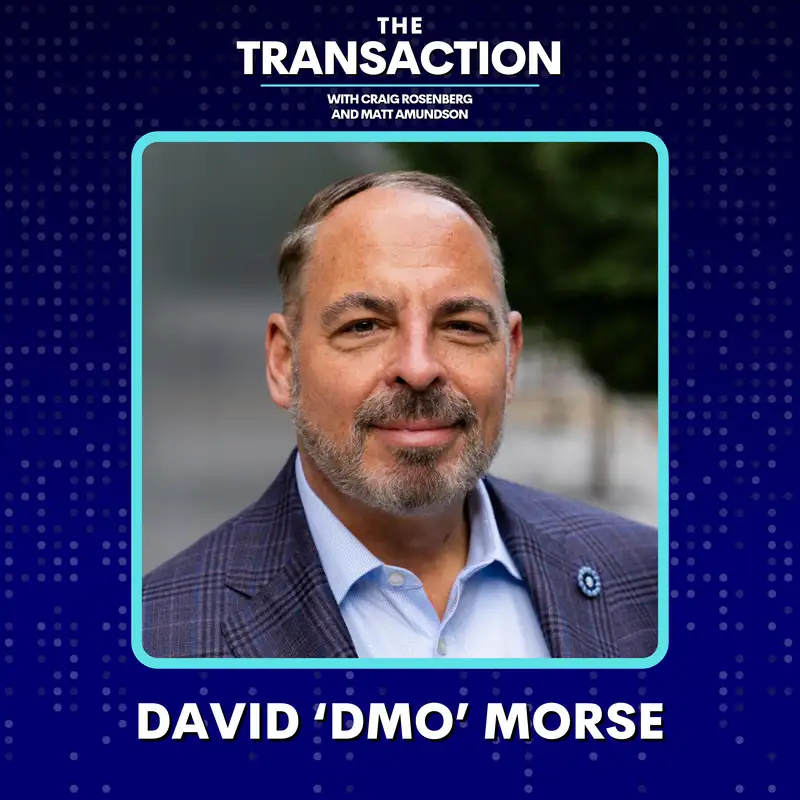
Better Sales Discovery & Smarter Outbound with David “DMo” Morse, CEO of B2B MVP - Ep 88
TT - 088 - David Morse
===
David DMo Morse: [00:00:00] The third thing is this, outbound automation. Like a human rep can really only focus on quality, let's say [00:00:05] outbound for a limited set of companies.
David DMo Morse: But AI can work on much, much more. And then [00:00:10] when the companies are qualified or they're responding, then you can decide to inject a human into [00:00:15] it. the whole problem, I think with outbound in the past was you had to just kiss so many frogs and it was so [00:00:20] inefficient. AI never gets tired kissing frogs, and you don't even hear about it.
David DMo Morse: And you could really spend [00:00:25] quality time with the people who fit the ICP, who are showing interest.
Craig Rosenberg: You know what, by the way, I was [00:00:30] just thinking though, old guys like me on the call that, that Sam [00:00:35] just used the term inside baseball, and we're gonna ask him, do you know where that [00:00:40] comes from, Sam?
Sam Guertin: Um, [00:00:45] baseball reporting industry,
Craig Rosenberg: Oh. Okay, [00:00:50] well that was, uh, broad enough that you could somehow make [00:00:55] yourself right, but, uh, no, there, before there was ESPN, [00:01:00] before there was the internet, we would either read box scores in the [00:01:05] newspaper or there was a show on Saturday called This Week in Baseball,
David DMo Morse: [00:01:10] Uh, yeah.
Sam Guertin: Hmm.
Craig Rosenberg: and it was, um, where you would get, it was a actual [00:01:15] highlight.
Craig Rosenberg: Uh, reel. And, um, that [00:01:20] is where the, uh, phrase inside baseball came from.
David DMo Morse: Did they also have bloopers? [00:01:25] As part of that show. Okay.
Craig Rosenberg: It was Mel Allen. I think [00:01:30] that did it. Um, it was so good. Matt was actually, might be too young for that too. So [00:01:35] Matt was on TikTok at age eight, so he's, he's got it going [00:01:40] on.
Matt Amundson: I'm 44 years old.
Craig Rosenberg: He's very. Are you? Shit, I've been [00:01:45] telling everyone you're like 33. All right. All right. My bad, my bad. Um, all [00:01:50] right, so,
Matt Amundson: beard? For crying out loud?
Craig Rosenberg: there's zero [00:01:55] gray.
Craig Rosenberg: Let's be clear.
David DMo Morse: Yeah, it's looking pretty. It is looking pretty good. I got some gray in mind. Yeah.
Craig Rosenberg: [00:02:00] yeah. Thank you. DMo
Sam Guertin: pepper than salt.
Craig Rosenberg: You [00:02:05] Matt's Matt is actually arguing that he's older than he is and trying to prove it [00:02:10] when I've been telling everyone he is 33 years old and so it's, I would go with that. [00:02:15] Matt,
Matt Amundson: God, in my mind, I'm 33, like everybody has like a mental age, like [00:02:20] where they sort of, you know, like someone's like, Hey, you wanna play hoops? I'm like, oh yeah, I could play hoops. [00:02:25] Then you go shoot a basket with your kid and your knee [00:02:30] explodes.
Craig Rosenberg: Yeah. Well, I hope not, but yeah, I, my kids were [00:02:35] like, my dad played basketball here, throw him the ball and then I shoot in an airball at, you know, [00:02:40] um, and then I have to say, well, I didn't warm up. Yeah. And then they tease me. Yeah. So that, that's [00:02:45] good.
[00:02:50] [00:02:55] [00:03:00] [00:03:05]
Introducing David DMo Morse
---
Craig Rosenberg: All right. So, um, we have a fun, fun, uh, show today.[00:03:10]
Craig Rosenberg: Um, and, um, I want to make sure I set the table in the right way [00:03:15] because I just literally just did a, um, council [00:03:20] with, uh, DMo uh, for the portfolio and it was really great. So I've, I'm doing a [00:03:25] double up here, but basically for everyone on the show, um, [00:03:30] our buddy and friend and. Guest who has not his, his has not been [00:03:35] produced by, by the time this comes out, it will be Jim Wilson.
Craig Rosenberg: Said, Craig, do you know [00:03:40] my buddy David Morse DMo And I'm like, no. And he's like, [00:03:45] well, you, you should man. And he's like, let me just send you this. And he sends me [00:03:50] YouTube. Raps, they're, it's DO rapping. [00:03:55] Okay. And I'm like, wait, who is this guy? And so the next time we talk, we go out to breakfast. He's like, did you [00:04:00] just check out those rap?
Craig Rosenberg: I'm like, yeah. He's like, the guy is a, uh, you know, sales [00:04:05] consultant who we use in our portfolio, but also to [00:04:10] make it fun is also a rapper who raps about, you know, sales. [00:04:15] And I just learned in ours in our session, he will do a custom. [00:04:20] Wrap for you. Yep. As part of like the sales training, which we just [00:04:25] did. So, um, that's the kind of guy we like to have on the show.
Craig Rosenberg: We [00:04:30] don't like, you know, boring folks that do really dry things. So this, I felt like, [00:04:35] uh, uh, David would be a great fit. So I'm just going to get [00:04:40] going 'cause I need to ask about the wraps. Again, even though I've talked about it just for our [00:04:45] guests, we have our guest today, David Morse, AKA [00:04:50] DMo Every other person on this call, you have to call him DMo because I, we have to [00:04:55] get in the habit.
Craig Rosenberg: Okay, Matt, let's practice. Go.
Matt Amundson: Well DMo. [00:05:00] It's great to have you on the transaction.
Craig Rosenberg: Thank
David DMo Morse: Thank [00:05:05] you.
Craig Rosenberg: All right. Um, but, but dmo just, and [00:05:10] you can tell us a little bit, but, but it's not like he just like came out of the blue [00:05:15] and started rap it, you know, he, he, he's got, you know, billions of dollars that, you know, he's, [00:05:20] him and his team have closed over the years selling enterprise software.
Craig Rosenberg: So it's a really [00:05:25] great combination. Um, so Sam, what do you think of, of that? [00:05:30] Um, his background go.
Sam Guertin: Uh, [00:05:35] his, his. Literal background or his wrapping background? No. Uh, I think [00:05:40] that's, uh, wonderful. Uh,
Sam Guertin: DMo
Sam Guertin: Um,
Craig Rosenberg: Perfect. There you go. Good. That was a
Sam Guertin: hot fire [00:05:45] today? Or c can we
David DMo Morse: I have an instrumental depending on how all this [00:05:50] goes. I have an instrumental and I have a wrap for you guys that's personalized for you
Matt Amundson: Oh [00:05:55] Lord.
David DMo Morse: for
Craig Rosenberg: I tell you guys? I, by the way guys, I was just testing Sam [00:06:00] and he did that amazing. He, he weaved DMo in mid [00:06:05] comment, and so Sam, nor he, by the way, DMo just to tell you, Sam doesn't [00:06:10] normally deliver when we set him up like that and he just did. So we want to make sure that we [00:06:15] point out
David DMo Morse: You know, it, it is like we've known each other our whole lives. It was so natural. I didn't even, I didn't even [00:06:20] catch it. It was so subtle.
Matt Amundson: Sam doesn't
Craig Rosenberg: All right.
Matt Amundson: deliver.
Sam Guertin: [00:06:25] Instant rapport.
Matt Amundson: shit.
Craig Rosenberg: so dmo, welcome to the show. Can you, [00:06:30] for the, for the fellas, tell us about DMO the Rapper. Like how did, how did we get [00:06:35] there?
David DMo Morse: All right, so I was born in Shalin, Staten Island, uh, one year before the [00:06:40] Wu-Tang. So I knew it was Destiny.
Craig Rosenberg: Oh,
David DMo Morse: but I'm a baby. I'm a nineties [00:06:45] rap baby. Just all about it, and I always have been. Uh, but [00:06:50] uh. Probably around, I don't know, it was like 2010 and 2012 I [00:06:55] started doing improv 'cause I had no hobbies.
David DMo Morse: And my wife's like, you gotta stop just working all the time and do [00:07:00] something fun. And so she got me a gift debate to improv 1 0 1. And it [00:07:05] turns out I was good at it. And I got cast in all these shows. Like I would perform all over the [00:07:10] world with this, uh, Boston group. Uh, but I got cast in the show called Beatbox.
David DMo Morse: [00:07:15] And essentially what you have to do is, it's like, whose line is it anyway? But a whole [00:07:20] show, uh, but all rapping and so like, you'd open the show if [00:07:25] you got tagged to open the show. You would do 16 bars as one character. You would literally spin [00:07:30] around, do 16 bars, this as another character, spin around again, do 16 bars as a third character to [00:07:35] set the theme for the show.
David DMo Morse: And that's like eight mile stuff. You know, it's like just off the top of your [00:07:40] head and you have to make it funny and you have to be on theme and you have to be a character. And then you have to do these [00:07:45] scenes with people to make it make sense. You know, improv, like you've seen improv shows like Hit or [00:07:50] Miss, right?
David DMo Morse: And but to try to do it with like. Rhyming and, you know, [00:07:55] trading back and forth and making it funny and it is super difficult. But then that's how I got [00:08:00] into it. And then when the theaters closed during COVID had no outlet. So I just started doing [00:08:05] stuff, more stuff online. And you know, last year I set myself a challenge.
David DMo Morse: I said, [00:08:10] uh, I'm gonna write a new wrap a week, record [00:08:15] it, produce it, make a video, and send it out over socialist. And I did that 52 [00:08:20] weeks out of out of the year. 52 new rap videos and a rap album that [00:08:25] is like nine songs of sales and marketing raps set to like Biggie, [00:08:30] Tupac, outcast Beats, and it's like, I'm super proud of it.[00:08:35]
David DMo Morse: Super fun.
Craig Rosenberg: I mean, come on [00:08:40] now. That is, that is, I mean, you can't, there [00:08:45] is no other, this is the beauty of having you on the show DMo There is no other [00:08:50] guest like you.
Matt Amundson: Yeah,
David DMo Morse: Thank
David DMo Morse: you. Matt. That.
Matt Amundson: [00:08:55] was it like, you're welcome, Craig. Was it, um. [00:09:00] Was like the do it on a weekly basis, like the forcing function that made it happen. Like that [00:09:05] became a part of like your system. Uh, you know, salespeople, oh, [00:09:10] Craig dropped out there for a second. Salespeople love systems, right? And so like, and [00:09:15] having discipline and rigor and whether that's like building a list of people to [00:09:20] call.
Matt Amundson: Uh, you know, making sure that like, you know, your Salesforce [00:09:25] hygiene is up to date. Like people, they like book time on their calendars to do all that stuff, [00:09:30] like, and it, then it becomes a part of their process and the way that they sell. Like [00:09:35] I imagine the only way to get to that is to be like, dude, I'm doing this.
Matt Amundson: Every week, right? [00:09:40] Like, I, I'm gonna do this every Thursday or whatever, and maybe I have time set [00:09:45] aside to help me prepare. And I'm like, Ooh, I really like this beat from, you know, ready to die. Or, [00:09:50] I really like this beat from, uh, you know, from Southernplayalistic or whatever. And I'm [00:09:55] just gonna, I'm gonna use that to, to make my next song.
David DMo Morse: [00:10:00] It was totally like that because you had to stamp it out. So like Fridays was the idea. [00:10:05] Saturday Sundays was the lyric. You know, Mondays was recorded to the audio. Tuesday, Wednesday was the [00:10:10] video. Thursday was shipping it, and it was just kind of over and over again. I even did it. I [00:10:15] went skiing in the Alps.
David DMo Morse: I went to Cambodia, Vietnam. I made four videos. I was there for four [00:10:20] weeks. When I left the CMT and uh, three Vietnam videos, one put on pen and my wife was [00:10:25] like, dude, we're in front of anger Watts. Stop making your videos. And I'm like, [00:10:30] no. You know, the public wants this.
Matt Amundson: Hey, we gotta give people what they [00:10:35] want.
Craig Rosenberg: What they.
David DMo Morse: Yes. So like my audience is demanding it, but I cannot quit. You [00:10:40] don't understand. And so, like, no matter where I was, no matter how busy work was, no matter where I was [00:10:45] traveling, and it was, it would be interesting 'cause we'd be like in the back of a taxi going from like, let's say [00:10:50] way to, you know, somewhere in Vietnam and I'd be writing lyrics 'cause I know where I'd be going next and I'd [00:10:55] be like, alright, these are the shots.
David DMo Morse: I'm gonna get 'em, I'm gonna do 'em in this like, you know, lantern place in [00:11:00] uh, Hoan. And it was just like I knew I was gonna do it and it was, uh, [00:11:05] yeah, she's a patient wife. Uh, but you know, she, she did get to go to Vietnam and [00:11:10] Cambodia. That's not all bad.
Craig Rosenberg: That is amazing. I love [00:11:15] that. Um, all right, well actually, can I, can I divert one more guys? Because [00:11:20] I, I do wanna mention years ago, this was like 2008, [00:11:25] early Twitter, I got into a Twitter, uh, [00:11:30] let's call it a conversation 'cause it was not a battle on top five, uh, [00:11:35] OG rappers of all time. And people were just jumping in that I don't, this is the [00:11:40] only time I've ever had people jump in that, um, I don't know.
Craig Rosenberg: I [00:11:45] was just responding to someone with, you know, my take. And [00:11:50] so I'm gonna ask DMo like if you had to rank your top five [00:11:55] nineties rappers, I guess you'd say, what would that be?
David DMo Morse: All right. So it's hard to rank [00:12:00] them one if five, but I will tell you like I like 'em for different reasons. So I love Wu-Tang, [00:12:05] just 'cause it's personal for me. Coming from Staten Island and the teamwork. It's just [00:12:10] gritty East Coast. Uh, what I like, Eminem, I love because he's an [00:12:15] internal rhymer and his internal rhymes are untouchable.
David DMo Morse: [00:12:20] Um, I love, uh, biggie just 'cause his flow is a little bit off and smooth and [00:12:25] it's so unique and deep and it's just like you feel it. And you almost just put on one note of a [00:12:30] Biggie song or like, you know, it's coming and you know, everybody's into it. And it just, just the feeling. [00:12:35] Um, what else? You know, I love Outcast just 'cause they kind of, [00:12:40] uh, they grew up, they started producing themselves and they learned, they were very, very young when they [00:12:45] first started, but they kind of grew into this role of producing themselves.
David DMo Morse: And their songs are [00:12:50] like, just really, really deep, you know? Uh, and not about the bling or just kind of like all that stuff. [00:12:55] Pretty song. And then my favorite mc probably is Black Thought From the Roots. [00:13:00] Like that guy's just
Craig Rosenberg: I like that. Yeah.
David DMo Morse: endless, like just [00:13:05] sophistication. Like if you ever seen, he does like a 20 something minute freestyle [00:13:10] that is so complicated on what is it the, uh, sway in the morning.
David DMo Morse: [00:13:15] And it is like legendary just, and, and I saw the 50th, [00:13:20] uh, hip hop anniversary show that LL Cool J sponsored Black thought was the. [00:13:25] Second rapper for every act of that, like two or three hour show. And the roots were back in the whole [00:13:30] time for every act that came on. Like, uh, queen Lativa and like, he is [00:13:35] legit, like legit greatness.
David DMo Morse: Like, I don't know if enough enough people appreciate black thought, but the [00:13:40] underrated I would say, if I could pick a six, is atmosphere. A duo from [00:13:45] Minneapolis, um, a little bit slower, a little bit smoother, but very underrated. I listen to [00:13:50] them all the time.
Craig Rosenberg: Wow.
Matt Amundson: what about you? answer. know if [00:13:55] we have time for your top five. Let's go top three.
Craig Rosenberg: how about this? I'll just throw in some that [00:14:00] he didn't mention that are my favorites. Uh, I am a huge ice cube [00:14:05] guy and always have been.
Matt Amundson: Mm-hmm.
Craig Rosenberg: Okay. Like I've been to, I've seen him [00:14:10] live like five times. Uh. And, uh, the guy, [00:14:15] I just, that, that's what I came up. So I was like pure, like [00:14:20] West Coast guy, although I love Public Enemy, um, because, uh, [00:14:25] uh, that they sort of.
Craig Rosenberg: Run DMC was my entree, but then like, we [00:14:30] all had the little, the sneaky audio tapes of NWA because like we weren't allowed to [00:14:35] have it. It was so scandalous and there I was audio. Um, and then, you know, I [00:14:40] just like Q broke off and it was just like during my college time. I mean, [00:14:45] he was the guy, so I like, you know, I do, I did love Biggie when he [00:14:50] came in, so I got my East Coast in, but I, you know, the guy, the West coast guy that I like that not all [00:14:55] East Coast guys like you will mention is too short.
David DMo Morse: Yes.
Craig Rosenberg: Um, [00:15:00] you know, I, I feel like he's, uh, I don't think he's an underrated genius. [00:15:05] Um, I, I just. I came up with him and like that [00:15:10] voice just will always resonate with me. So, you know, I threw in too short in there [00:15:15] as well. But, uh, Matt, Matt, you got any
David DMo Morse: Well, Craig, let me, let me tell. Let me tell you [00:15:20] about too short. Do you know he could have been the Topo marketing founder for hip hop in the Bay Area? [00:15:25] Do you know what he did? He sold tapes out of the back of his car and he put the names of drug [00:15:30] dealers in his songs so that they would spread his tapes all over the neighborhood.
David DMo Morse: So he was like a [00:15:35] marketing genius back then, uh, doing that type of Dude. Network there's something [00:15:40] visceral for you and him.
Craig Rosenberg: Network
Matt Amundson: about the attention engine.
Craig Rosenberg: [00:15:45] yeah. Baby. Matt, you got any others for us
Matt Amundson: I, I don't mean to [00:15:50] like step on demo's toes, but like my friends and I were all such huge Wu-Tang clan, [00:15:55] uh, fans when we were kids. And like, it, it's, it's weird because, you know, we're California kids, [00:16:00] but, um, we grew up in Southern California. Uh, but like, I just had like a buddy who [00:16:05] had entered the 36 chambers on like cassette tape and like, we wore his like.[00:16:10]
Matt Amundson: We wore that tape out and like we were buying like singles with the B [00:16:15] sides of like every one of the like clan members where it was [00:16:20] like, you know, there was like the method man one where he, like the B side was the Mary j Blige [00:16:25] song that he had and then like, you know, all of like the crazy stuff [00:16:30] that Rizza was doing, like post.
Matt Amundson: Post that first couple big albums where he was doing like the Bobby [00:16:35] Digital stuff and then like the horror core stuff that he, that he was doing with [00:16:40] the grave diggers and all that. Like, we went pretty deep on that stuff during the [00:16:45] early and mid nineties. So like I, I'm for that. And then. You know, my, my, my son's [00:16:50] like, he loves hip hop.
Matt Amundson: And, uh, I don't know that I, like, love Drake, but I sort of [00:16:55] respect his music and incidentally enough, like I've, I've seen him live a few times and his [00:17:00] live shows are unbelievable. But like, again, being a a West coast kid, [00:17:05] uh, I'm more of a biggie guy than a Tupac guy. Although I think the older I get the more I appreciate [00:17:10] Tupac's music as well.
Matt Amundson: So,
Craig Rosenberg: Yeah, my kid makes me listen to Tupac on [00:17:15] every car ride, so I'm kind of back
David DMo Morse: know what? You have to make him listen to. I have a song, you know, [00:17:20] dear Mama by Tupac, it's now Dear Buyer. And it's kind of like, you know, the framing of the song is like [00:17:25] he got into trouble with his mother and they reconciled and he finally appreciated her and [00:17:30] recognized he was also a bad son.
David DMo Morse: You know, I might have been a bad salesperson earlier in my career and treating customers not [00:17:35] so great, but I came around and we reconciled. And [00:17:40] we found, we found relationships.
Craig Rosenberg: I love it. I love it. All right, so [00:17:45] let's go into the main structure of said show AKA, the [00:17:50] transaction. Um, so you gotta Go-To-Market story for us DMo
David DMo Morse: All [00:17:55] right. So, uh, I do, and it's actually my favorite [00:18:00] story from my last company because, uh, it, it ignited the [00:18:05] company in a really weird way. So, uh. Cambridge, uh, [00:18:10] true motion sold to insurance companies. We sold telematics technology, right? That helped you measure how [00:18:15] you drive. If you drive safety, save money, insurance.
David DMo Morse: So we were competing for a top 10 insurer, and the name of the game is [00:18:20] Get All Top 10 because they have all the drivers, right? And that's the economics of it. And, [00:18:25] uh, you know, we had gone out there and our team didn't necessarily do a great job with the first demo. [00:18:30] So, uh, the team thought we, like, we, eh, our app [00:18:35] wasn't that great.
David DMo Morse: Solution wasn't that great and they didn't know if the team was that great. On [00:18:40] top of it, they were running like this, you know, nine tab, 900 field RFP driven by [00:18:45] procurement. And if anybody knows me, I'm just like, that causes me to have an aneurysm. I just don't accept [00:18:50] that. And uh, so I inserted myself into meeting with the people [00:18:55] who were running it and they did not like me 'cause I am barged in on their process.
David DMo Morse: And I [00:19:00] tried to like find a way in and, but we created a crack. [00:19:05] Teaming out there. We did a little bit better, but it wasn't enough. So I'm sitting in our VC's office, a [00:19:10] general catalyst. We get the call from this company and they're like, look guys, we [00:19:15] can't go with you. There's two other companies we're taking to the finals and I'm sorry. [00:19:20] So, um, my CEO says we should do something crazy like a video or something. And I'm [00:19:25] like, that's it. Half an hour. I wrote a script for a video, a funny video that [00:19:30] would highlight like, our solution is good and our team is awesome. Saturday went out and got all the props, [00:19:35] hired the production company and the editor.
David DMo Morse: We rehearsed on Sunday, we shot it [00:19:40] on Monday, we edited on Tuesday, we shipped it on Wednesday to this insurance company. [00:19:45] Thursday we had, uh, uh, kind of an all hands, what, what do we [00:19:50] call it? Whiskey o'clock, uh, where it's like Thursday everybody gets together and we just kind of have an all company [00:19:55] gathering.
David DMo Morse: And, uh, we, we, uh, debuted the video for the company. [00:20:00] And all throughout this process, tons of people were telling me, this is a stupid [00:20:05] idea. You shouldn't do it. You're gonna fail. And what happened [00:20:10] was, as soon as we showed it to everybody in our like cafeteria room. [00:20:15] The rep on the deal gets a text from the woman, [00:20:20] can you guys get out here Monday? My marketing person had put links [00:20:25] in where we sent it out and it was like on a map and it was like lighting up all over the country of people [00:20:30] watching the video. We go out there and we're sitting in a room with the [00:20:35] president of the insurance. He's sitting next to my CEO before the meeting even starts.
David DMo Morse: He's like, this might [00:20:40] be the greatest comeback in the history of business and. He reaches [00:20:45] over my, my CEO had a tin of Altoids. It was like the most intimate moment where he [00:20:50] basically just gives, Toby opens it and they share a little Altoid together. After we got [00:20:55] done, they're like, alright, you need to go talk to procurement.
David DMo Morse: Procurement calls us. They're like, I've [00:21:00] never seen anything like this in 30 years, but we wanna do business with you guys. And what it taught, the [00:21:05] company was like, never quit and even be willing to take a risk to go [00:21:10] get a win. And put yourself out there. And it was like, it was a cha, it was a culture [00:21:15] changer for the, we already had a great culture, but it really made people believe in what we were [00:21:20] doing and got inspired about like not quitting and having grit and not giving up.
David DMo Morse: And so, and we [00:21:25] won, you know, multi multimillion dollar contract over many, many, many years and a great relationship. And it [00:21:30] turns out, uh, the women who hated me, uh, turned out we became really great friends. We [00:21:35] stay in touch to this day.
Matt Amundson: I ding Craig all the time for bringing up the heroic, [00:21:40] uh, GTM story. Like, hey, it could be funny, it could be heroic, and I feel like [00:21:45] heroic always throws people off. And DMO just delivered the most heroic, uh, [00:21:50] gutsy, uh, GTM play that we've heard.
David DMo Morse: Yeah, just make videos. [00:21:55] the lesson.
Craig Rosenberg: By the way, I, you know, looking yourself out there.
Matt Amundson: I mean, putting [00:22:00] yourself out there like that is not an easy task. That is. That is like, that is [00:22:05] awesome.
Craig Rosenberg: the, the, and so. Not quitting and you know, [00:22:10] just sometimes you just gotta realize you literally have lost. So you have nothing to [00:22:15] lose if you don't go for it, you know? And it's like, um, [00:22:20] just went for it. Now we'd like to see this said video, but, you know, we'll, we'll hold [00:22:25] off on that request for now.
Craig Rosenberg: So that, that was an excellent story. And I will say [00:22:30] that I have allowed Matt to criticize me on throwing in Heroic, [00:22:35] um, but I will say Matt. The heroic stories. 'cause Deon had [00:22:40] a pretty heroic story yesterday. Yeah. So we just have to figure, [00:22:45] I, I have to figure out how to better position it, but DMo just delivered and
Matt Amundson: [00:22:50] I
Matt Amundson: will never
David DMo Morse: and I were at University of Delaware at the same time. Me and Chris Degnan
Craig Rosenberg: Are
Craig Rosenberg: you [00:22:55] serious? I didn't know him
David DMo Morse: back then. Yeah.
David DMo Morse: Blue hands.
Craig Rosenberg: Oh my God. [00:23:00] There you go. Um, alright, cool. So, uh, the second part of the show, we'd [00:23:05] love to hear from you. You know, you're doing a lot of work with a lot of different companies [00:23:10] right now, um, which is the kind of perspective we like, uh, you know, what are, what are [00:23:15] you seeing as the things that are working today?
Craig Rosenberg: Um, and, uh, yeah, [00:23:20] just start going and we'll dig in.
David DMo Morse: Yeah. It, uh, there's an element of [00:23:25] it I think, uh. E, everybody thinks the basics are the basics [00:23:30] and they're being done so well. But when you actually get out there and you start working with companies, especially [00:23:35] companies, let's say, that are less than 10 million, it's just not true. [00:23:40] And you know, you just, if you would just spend all your time in LinkedIn, echo chamber.
David DMo Morse: It's like, [00:23:45] oh my God, everybody's mastering Claude. Everybody's perfect on ICP, everybody. It is like, you actually get out [00:23:50] there and you look at what companies are doing, you realize that it's not true. It's very basic. [00:23:55] So I mean, um, for, I, I mostly work with companies [00:24:00] that have a co sell to a complex sales cycle.
David DMo Morse: Rather than very simple. [00:24:05] So you need to do discovery, you need to build a champion, you need to do executive selling, and you know, other [00:24:10] things like that. And, uh, what I see is that more younger [00:24:15] sellers who just never really had investments in training [00:24:20] and methodologies to execute these things, to know how to test a champion, to know [00:24:25] how to talk to an executive buyer, to know how to build a one page business case narrative that gets funded. [00:24:30] To do problem discovery, like it's just the skills gap. Chris talks [00:24:35] about this and I'm like, I see it firsthand too, is it's just that, yeah, [00:24:40] it's a lot of activity, but not a lot of training and reflection and building those skills. And so that's [00:24:45] one opportunity I see. Um. Uh, the second thing that's really [00:24:50] interesting is, boy, it's just a wonderland.
David DMo Morse: Like John Mayer said, your body is a wonderland. I [00:24:55] think with ai, I think your corporation is a wonderland, uh, because like almost any problem [00:25:00] you encounter, you could try to figure out how do I build a, uh, you know, a [00:25:05] GPT or a Claude project, or use cowork or Claude Code to [00:25:10] try to solve problems like small and big.
David DMo Morse: And it's really, uh, there's nothing stopping [00:25:15] us, I think from, from solving some of these problems. Just like, um, [00:25:20] so that's two is, uh, uh, use of ai. And then the third thing is this, [00:25:25] uh, outbound automation. Like when I work with companies, you know, like a human rep can really only focus [00:25:30] on quality, let's say outbound for a limited set of companies.
David DMo Morse: But AI can work on much, much more. [00:25:35] And then when the, the companies are qualified or they're responding, then you can [00:25:40] decide to inject a human into it. You know, the whole problem, I think with outbound in the past was you had [00:25:45] to just kiss so many frogs and it was so inefficient. Uh, AI never gets tired kissing [00:25:50] frogs, and you don't even hear about it.
David DMo Morse: And you could really spend quality time [00:25:55] with the people who fit the ICP, who are showing interest and, and those [00:26:00] things. So I'm at, you know, I'm at the front end of my consulting practice, so we're probably still in the phase [00:26:05] where we're building the, the processes that are un automated to a certain [00:26:10] extent. Um, getting them to a good place and then automating them. So, [00:26:15] but that's the, that's really like what I'm gunning for is because a small team of sellers [00:26:20] can reach many, many more buyers when you take advantage of this technology. So those are some of the [00:26:25] things I'm seeing.
Craig Rosenberg: Okay, so let's dig in. Let's start on the first one. [00:26:30] Um, so you mentioned discovery, but like when you look at some of the basics [00:26:35] that are missing and you had to go into a sub $10 million [00:26:40] company, like what you, you can't do 'em all. So like, what, what do you think folks should [00:26:45] focus on right now, um, in the, in the sales skills gap [00:26:50] and, you know, what, what is it and what should they be doing?
Craig Rosenberg: Um. Let's, let's, [00:26:55] let's dig in there.
David DMo Morse: Yep. So, uh, w [00:27:00] when I go into these companies, like I just did an assessment top to bottom of the GTM for this one company [00:27:05] and, um, the reps were comfortable talking [00:27:10] with, let's say lower level reporting analyst personas.
Craig Rosenberg: Got
Craig Rosenberg: it. They weren't [00:27:15] really connecting with the higher level business personas that this company sold to.
David DMo Morse: And [00:27:20] I just think they couldn't, they didn't have any empathy or understand them. You know, it's [00:27:25] kind of like executives have a different mindset. They're much more business oriented, and you have to be like a business [00:27:30] oriented peer. And so I think a lot of the reps would shy away from those conversations because all they could [00:27:35] do is talk like say demo and product. And so the first thing would be to [00:27:40] just, um, create persona guides and train them on how these personas [00:27:45] think. And, you know, it's, it's amazing. You can, in just very little time using deep [00:27:50] research, put together these persona guides. And then what I did was I turned them using, um, uh, [00:27:55] notebook LLM. Into like podcasts and you could turn them into videos and you could turn them into [00:28:00] learning assets in just like minutes.
David DMo Morse: And so they could listen to what it's like [00:28:05] to be a, you know, a, a police chief, let's say, on [00:28:10] while they're jogging or you know, while they're riding in the car. And you know, it's, it, the [00:28:15] way it does it is it's like, it's like us talking on a podcast about the issues is very comfortable. [00:28:20] So that's the first thing is empathy and understanding of the personas and their problems.
David DMo Morse: The second [00:28:25] thing is to do, to give them really almost like cut and paste messaging for outbound, [00:28:30] for cold calling, for reaching out in a way that's not about the product [00:28:35] and is really about their problems to engage them. So creating like sequences that are cut and paste until they get [00:28:40] used to it. Uh, and then, uh, running training sessions, like we just had one yesterday where they [00:28:45] had, we, me and the CEO had them cold call us in real time and you get a sense for like, are they able to [00:28:50] do this on the phone? Um, now over time, I think I've also instituted like [00:28:55] a, um, just a simple Claude rubric of evaluating transcripts. They don't have [00:29:00] gong yet, or chorus or any of that stuff, so we just feed the transcripts on in it and like you can get a ton of [00:29:05] learning just from doing that. They get better. And then the last piece of it is really [00:29:10] the discovery questions to ask once you get somebody on the phone.
David DMo Morse: And once you have that initial meeting [00:29:15] to do like some basic problem discovery before a demo. The team was kind of going right to the demo [00:29:20] without any knowledge. Injecting that. I think we're having better quality [00:29:25] meetings so far and we're getting better resonance with those top personas. You know, it's still early days to [00:29:30] try to do this, but that's how I did it.
David DMo Morse: 'cause I have a long list of other stuff we need to do, but [00:29:35] I felt like understanding the problems of the customer was like priority number one [00:29:40] and it would unlock a lot more.
Craig Rosenberg: by the way, Matt created his [00:29:45] personas at his last gig in AI and had that, these [00:29:50] personas actually look at web copy. Any copy that he created, he was running 'em through the. [00:29:55] Personas, which I thought that was really cool. Similar idea. 'cause I saw [00:30:00] Matt nodding when you brought up personas, which is kind of old school in many ways.[00:30:05]
Craig Rosenberg: And probably the the biggest problem, 'cause when you do talk to folks that are, [00:30:10] you know, when you're, let's say you're sub 10, you're in the mix with the founders who love the [00:30:15] product, not necessarily the problem or the solution. And so you're addicted to [00:30:20] that conversation and they're good at it. I mean, Stacey Epstein on our thing was like, no.[00:30:25]
Craig Rosenberg: People are good at talking about their product, they're, that's not the problem. Right. [00:30:30] And, um, and so I, I, you know, I love this idea and I love that [00:30:35] you turn 'em into podcasts and videos for the learning there. That's great. You know, the only [00:30:40] thing, yeah, the only thing I was thinking for you on that is, I don't know if you guys have played with [00:30:45] some of the sales simulation, uh, products where you can put that persona [00:30:50] in and they, they don't have to cold call you and the CEO they can practice on their own [00:30:55] against their personas, you know, um, that, that I think is really cool too. [00:31:00] Um, so on the, on the [00:31:05] discovery, I want to talk, 'cause I think we could group the outbound stuff at the third part of this conversation. [00:31:10] We just did a session, um, with you on discovery. But I think for the [00:31:15] audience, like you keep saying problem discovery, so how do we tease that out?
Craig Rosenberg: Like what, [00:31:20] and what do, what do you mean by that and how do we tease that out?
David DMo Morse: Yeah, what you're looking [00:31:25] to do is you're not looking to demo the prob the product right away. [00:31:30] What you're looking to do is to truly understand, um, [00:31:35] the problem that this organization has in related to higher order problems. So, for [00:31:40] example, like a very classic one is I go talk to a report analyst about saving them time.
David DMo Morse: [00:31:45] Right, and I have a solution that does that, or I do integrations faster, or something [00:31:50] like that. You know, that in itself has no value really. Right? It's a functional [00:31:55] value and the, the executives don't care. You're not going to get top dollar for that. Nobody's [00:32:00] really going to care in the organization. So, uh, it's about kind of creating a pain [00:32:05] chain from like this functional problem to, well, how does that impact the operational [00:32:10] metrics?
David DMo Morse: Right. And then saying, okay, how do the operational metrics [00:32:15] drive your financial metrics and quantify that. And then you say, well, okay, you have these financial metrics. [00:32:20] Um, how does that impact your CEO's priority for the top three things they want [00:32:25] your company to do and try to relate it. Now, not everything always relates to the very, very top, [00:32:30] um, but I think you have to try to do those things.
David DMo Morse: And I think in most domains you can relate [00:32:35] what you do to what the CEO wants. If you get creative and think hard enough. Like I [00:32:40] was a real big fan of, um, the challenge, not just Challenger sale, but the Challenger customer. [00:32:45] And one of the great things about that book is they do a great job of, um, how [00:32:50] do you rewire somebody's mental model?
David DMo Morse: To get them to think differently about their [00:32:55] current situation and you have to insert yourself. They have that very famous densely case, [00:33:00] um, of the dental hygienist and they, they made ergonomics a root [00:33:05] cause of dental practice profitability. And so this is what I do with the team is [00:33:10] relate this like lower level thing to these higher level things and then give them questions to ask to [00:33:15] uncover it. And you know, in my book I have a whole methodology around, well [00:33:20] start what's working, then find out what's challenging, then dive to root causes, then look at impacts, [00:33:25] find out what they've tried to do to solve it, quantify it, find out who else has the problem. There's a whole [00:33:30] series of questions to try to like, get information, but what you're really looking to try to do is resonate. [00:33:35] Resonate. So, you know, if I'm working with a law enforcement, [00:33:40] um, um, company like. Your [00:33:45] reporting has to relate somehow to officer safety, or it has to relate to crime [00:33:50] reduction, or it has to relate to making the chief look good with the politicians. If you don't have that [00:33:55] story and you can't tell that story, you're going to be stuck in like reporting purgatory and [00:34:00] very, very, low prices and deals that just never go anywhere because nobody ca nobody who with power [00:34:05] cares.
Craig Rosenberg: Yep, that's right. All [00:34:10] right. Yeah. Oh, Matt.
Matt Amundson: Yeah. Re reminds me a little bit of the [00:34:15] example that Scott brought up in the, the event we were at yesterday, [00:34:20] uh, with ServiceTitan, right? Like, um. This [00:34:25] idea that like, not only are you providing this software service to like these trades [00:34:30] people, but that like the value that they're getting is like they're spending more time with their [00:34:35] kids.
Matt Amundson: You know, they're not up at night doing their accounting. Like they get to go throw the baseball with their [00:34:40] kids and like, that's something that's almost so priceless. Like how, you know, how do you even [00:34:45] put a price tag on that and like connecting to that bigger [00:34:50] thing, that emotional thing. Uh, and then, you know, the, the, the [00:34:55] examples you gave, like whether that's like, you know, how they show up to the politicians that they're, that they're [00:35:00] supporting, or the, the police, the police chiefs show up to the politicians that they're supporting.
Matt Amundson: And I think that that is like, [00:35:05] it gets into like narrative and like brand values and stuff like [00:35:10] that. And I think in a lot of cases, especially early on in, uh. In a company's journey, [00:35:15] sales feels a little bit abstracted from narrative sales feels a little [00:35:20] abstracted from company values. And the more you can actually bring that in because [00:35:25] that's like, you know, those are the, the, the founders first principles.
Matt Amundson: That's why they built what they built. [00:35:30] The more you can bring that into. The sales process, the more people are like, [00:35:35] okay, well you're not just like another product, like the three others that I'm evaluating as a part of this process, [00:35:40] you actually like, there's real value. There's real meaning behind what you're doing. [00:35:45] And I think people shy away from that 'cause they feel like it's esoteric, but like it is actually very
David DMo Morse: [00:35:50] told through like these linkages of value. The other thing is like, you know, inevitably, like there's [00:35:55] so much proliferation of software, it's everybody is inundated. So what is the CFO gonna do? [00:36:00] What is that CFO gonna say? Every, every project that comes before them, what are they gonna say? Can we [00:36:05] make do with what we have?
David DMo Morse: Right? Can't we make do with what we have? Can't use this thing. It's like. [00:36:10] That's, that's almost the automatic answer from the financial decision maker. So you have to have a [00:36:15] story that goes above that. Like, yes, you have to have a good ROI, but [00:36:20] you have to link to the priorities that, uh, that that organization cares [00:36:25] about for that purpose too.
Craig Rosenberg: Yeah, totally. All right, [00:36:30] cool. That was great. Number two, you brought up, um, uh, [00:36:35] wait, what, what? Remind me again what quote you used there for [00:36:40] ai,
David DMo Morse: What did I say?
Craig Rosenberg: Sam, come on.
Sam Guertin: [00:36:45] Um. Well,
Matt Amundson: Sam wrote a AI doesn't [00:36:50] get tired of kissing frogs. You said
David DMo Morse: Oh yeah, the frog kissing,
Matt Amundson: uh.
David DMo Morse: [00:36:55] kissing.
Craig Rosenberg: Well, no, that wasn't the one. But let's No, but let's jump in on that. So let's just go [00:37:00] to number three. 'cause I love this 'cause there is, uh, so outbound. [00:37:05] So essentially what you described is there are, um. [00:37:10] You're gonna have your humans go after their top, [00:37:15] top accounts. The rest will be done through ai. You're [00:37:20] gonna create now incorporate your number one.
Craig Rosenberg: Our messaging or outbound messaging has to [00:37:25] be, uh, you know, uh, effective. But then. [00:37:30] On the other stuff, the, the it, the AI is going to bring [00:37:35] responses and then we'll decide based on the company whether we bring a human in. That was kind of what you [00:37:40] described. And then you said that's when you brought in that great quote that Sam brought up, but is, uh, [00:37:45] AI doesn't get tired, kissing frogs.
Craig Rosenberg: Um, and so tell us [00:37:50] more about that. Like give us an example of how you've set someone up on that. I think that is a. [00:37:55] Uh, I think this is not just a, one of the biggest topics that we run [00:38:00] into, uh, but also sounds like you have a really sensible way of incorporating [00:38:05] AI in humans. So, so tell us more on that.
David DMo Morse: Well, I would still say I'm still early [00:38:10] days at this, so I haven't like, you know, to be full disclosure, fully automated this, but [00:38:15] ultimately I think even all outbounds, all initial outbound can be done [00:38:20] by ai. We're just happen to be starting with, we need to make sure [00:38:25] our messages. The firmographics and the [00:38:30] demographics and the signals we might use will fit and will resonate when we do send those [00:38:35] messages out and when we automate them.
David DMo Morse: So we're trying out a variety of things that could work just with the [00:38:40] reps right now. Um, and, uh. [00:38:45] So that's just to get them going. 'cause we haven't set up all the automation for them yet. [00:38:50] But once we do, then we set up the automation. There's no reason why every first touch couldn't be through ai [00:38:55] because from what I've seen, like AI can pretty much write better message than almost any [00:39:00] other human if you trade it properly with the proper context and parameters.
David DMo Morse: [00:39:05] Now, uh, like where I think the magic is, is like the, these signals that [00:39:10] are like, uh, job changes and some of these others is like every. Company in your [00:39:15] space is now getting those signals and it is like as soon as like you get a new job, [00:39:20] Craig is like five salespeople. You're gonna get a an automatic email six seconds later that [00:39:25] says, congratulations on your new job.
David DMo Morse: So that's not special. I think what could be special [00:39:30] is a lot of the industry research you might inject into problem. So for example, like if we're talking about [00:39:35] policing, there's lots of policing studies out there to draw from. There's [00:39:40] lots of public records around crime spikes. There's lots of public [00:39:45] records, um, around, uh, our, uh, what is the, the phrase?
David DMo Morse: It's, um. [00:39:50] When your, when your municipality is tagged for oversight because you've had a use and force [00:39:55] incident, right? So there's all these types of things that are much, much better signals than like [00:40:00] the classic, like, you got a new job. And so this is what I'm trying to bring in from, [00:40:05] um. Uh, like the government data sources plus industry research sources have [00:40:10] much, it's just a different message.
David DMo Morse: It's a much more, uh, like [00:40:15] problem grounded message, business grounded message than, congratulations. I saw you changed your website, or [00:40:20] you're hiring a couple of developers, or it's it like it, it's [00:40:25] meant to resonate more. Right now we're doing this in a way that's not totally scalable, [00:40:30] uh, but hopefully we find it and then we automate it.
Sam Guertin: Craig, I [00:40:35] believe the, uh, the AI quote you were looking for from earlier was with ai. Your [00:40:40] company is a wonderland.
Craig Rosenberg: yeah. Yeah.
David DMo Morse: yes.
Craig Rosenberg: [00:40:45] That, that, there you go. The, uh, well, let's John Mayer, not a [00:40:50] rapper, but rap adjacent.
David DMo Morse: Yeah.
Craig Rosenberg: Why? Why is he rap? Jason?
Matt Amundson: [00:40:55] He just is man. It's weird. He just is, he's rap adjacent. [00:41:00] He did a, I mean he, there's, it's funny, my son who also likes Kanye West, [00:41:05] there is a unreleased John Mayer, Kanye West [00:41:10] song that you can only get on YouTube. I'm, I, maybe it's not Sound Cloud, uh, [00:41:15] called Bittersweet and like my son loves this song and it's John Mayer and Kanye West.
Craig Rosenberg: [00:41:20] Okay, so that's, I see where you got some proof of this set adjacency. I like [00:41:25] that. Um, yeah, I mean, I, I think, uh, I mean, what about, uh, [00:41:30] for your setup now? Is it all. L are they, are you recommending that people call [00:41:35] still or
David DMo Morse: for certain ones, a calling is better, like, I think it's just better to call. [00:41:40] And, uh, you know, it's just very simple. Like you call and then you send an email right after Sam saying, give an email, [00:41:45] go check it. Like that, that even that little move has a higher, uh, response rate. [00:41:50] Uh, if you, I call it the double tap,
Craig Rosenberg: Yeah.
David DMo Morse: know, you just do the like little things like that, you can [00:41:55] improve your response rate.
David DMo Morse: So it's a silly little thing, but you know, it, it, it [00:42:00] works.
Craig Rosenberg: That's funny 'cause Topo in, uh, uh, [00:42:05] 2017 Triple Touch was like, the, the numbers on that were significantly [00:42:10] higher. You would double on a double touch, you would triple if you threw in a LinkedIn message as [00:42:15] well. Yeah. That, that, that, that remains true. I love that. Okay, cool. All right, so let's talk [00:42:20] about, uh, your, your corporation is a wonderland.[00:42:25]
David DMo Morse: Yes. mean by that?
David DMo Morse: So the question you almost have to always ask is like, when [00:42:30] presented with a problem. Uh, how do I, uh, understand the problem? How do I [00:42:35] think through it and how do I maybe create a solution? And AI is a great companion for thinking [00:42:40] through, for trying solutions and finding solutions. Like a very simple thing.
David DMo Morse: [00:42:45] I was working with another company that was trying to hire its founding se and you could [00:42:50] probably imagine that the hiring process was a little unstructured. Like I'm a very [00:42:55] structured guy when it comes to hiring. I have my, my hiring guides are [00:43:00] legendary. Companies for just like, it's like really effectiveness in [00:43:05] finding the right talent that stays and performs, um, [00:43:10] because it's structured and the company was just like getting a lot of junk [00:43:15] applicants and was overwhelmed by it, and they were interviewing people who were just clearly [00:43:20] not fits and they hadn't thought through the rubric.
David DMo Morse: The first thing I did was like, all right, you need a rubric to evaluate [00:43:25] against and literally. To create a little Claude project [00:43:30] that lets you paste in the LinkedIn profile and spits out, isn't [00:43:35] this person a fit shot? I even phone screen them is the silliest little thing, [00:43:40] but it saves so much time and they found their person through this rubric [00:43:45] that, you know, it created and they're making an offer and the [00:43:50] person like, we'll see how they do ultimately, but.
David DMo Morse: It was, it was just a lot [00:43:55] of wasted time and you could just see things like that and just be like, this could be sped [00:44:00] up made much better. You know? Because when anytime humans have to kind of [00:44:05] evaluate something like that against like solid criteria, they tend to be like, like, you know, you probably [00:44:10] hired a lot of people.
David DMo Morse: Do I like this person? Are they cul culture fit? Whatever that means. [00:44:15] You know, they don't define what is really success in the job and then evaluate rigorously [00:44:20] against that.
Craig Rosenberg: Yeah. So what else is part of [00:44:25] your rigorous hiring process?
David DMo Morse: So I have a, every role [00:44:30] has a hiring guide, and the first thing is the scorecard. The first section of the [00:44:35] scorecard is the results we expect this role to achieve. So you can imagine for an AE [00:44:40] it would be like quota attainment, pipeline forecast, accuracy, something like that, hard [00:44:45] numbers. And then the second, uh, section is job behaviors.
David DMo Morse: And [00:44:50] we tend tend to pick three to five in, uh, true motion. I, uh, had [00:44:55] teaching tenacity and teamwork. It was very much based after the challenge or so.
Matt Amundson: Hmm.
David DMo Morse: and [00:45:00] criteria. And then the third was just personal behaviors that we wanted, and then like humility and [00:45:05] open-mindedness and some other things that we would test. And then from there we architect a hiring [00:45:10] process to actually test against that scorecard and hire against that scorecard. And that scorecard actually [00:45:15] followed that person in the role. The onboarding was tied to it, [00:45:20] their performance management was tied to it, their promotions were tied to it. We'd have conversations.
David DMo Morse: [00:45:25] The training was tied to the behaviors we wanted to develop. Everything came off of that. [00:45:30] What do we want this role to be? And the people who are in this role, what do we want them to be and do? [00:45:35] And I, I took that from uh, um, a couple things. I think it's who the method for [00:45:40] hiring top grading and then Google had a lot of wisdom around you asked the [00:45:45] same interview questions of the same candidates all the time, so you develop a really good [00:45:50] baseline and a really good comparison.
David DMo Morse: And I kind of maybe took that a little bit to the extreme, but we were very [00:45:55] disciplined in doing it. And our track record of hiring, having people perform in the [00:46:00] role, get promoted and not wash out, was very, very strong.
Craig Rosenberg: Yeah, [00:46:05] it's amazing. We, uh, you know, yesterday we did an [00:46:10] event and it felt like multiple mentions on the importance of [00:46:15] hiring well. Um, and, but hiring. Well, in the sense [00:46:20] that, are you hiring the, the right person for your organ, the organization, and [00:46:25] the role in your organization? 'cause you know, this, it's, it resonates with [00:46:30] me because, you know, I'm in, you know, uh, a position where I watch these [00:46:35] recruiting cycles and they look for names, company names, so names on [00:46:40] the front when they're deciding instead of like, what, you [00:46:45] know, a scorecard around what do we need from this person?
Craig Rosenberg: And what are we trying to do [00:46:50] and recruiting for, you know, that, you know, to, to, it could, in many [00:46:55] cases when hear, when you hear startups talk, it's future A players. [00:47:00] They, they, we've evaluated them and we know they can be an A player and so that's [00:47:05] why we're gonna hire them. But like when you get a players from [00:47:10] like high class brands on the front of the jersey, uh, you really don't know.[00:47:15]
Craig Rosenberg: Because there's so much going for them at the, you know, at that, you know, [00:47:20] uh, you know, blue Chip, uh, tech company that you don't know [00:47:25] and you're not looking for the right things as a result. Instead, you're just looking at, you know, what, what jersey [00:47:30] they wore. Um, and so I, I, I mean, I, I think that's really important [00:47:35] and it's interesting now with ai, the stuff that you can go do to go, you know, [00:47:40] both speed this up and do it more effectively is pretty amazing.
Craig Rosenberg: Alright, so I [00:47:45] know we've had, um, we spent some time talking about rap, but like I do, we have a couple minutes [00:47:50] left. So I did want to see are, uh, dmo, will you be performing a rap [00:47:55] song for the transaction?
David DMo Morse: I will be performing a rap song for the transaction. [00:48:00] Now, Sam, can I, can I play an instrumental? Is that possible? How do I do
Matt Amundson: Let's find [00:48:05] out. Let's just try.
Sam Guertin: Uh, yeah, actually you should be able to, [00:48:10] um, if you go down to, uh, share screen. [00:48:15] You should be able to share the audio, [00:48:20] uh, from your device as well.
Matt Amundson: [00:48:25] What.
David DMo Morse: Ah, here we go. Alright, so I could share. Alright, [00:48:30] so let me just say, can you, can you see now the Renegade instrumental?
Sam Guertin: [00:48:35] I got
David DMo Morse: you see the visual of it? Alright, so, so why I picked [00:48:40] this? Can I tell you why it's one of my favorite song? Do you know, do you know who, who, who [00:48:45] sang or who Ra Renegade the song Renegate.
Craig Rosenberg: I like [00:48:50] Eminem
David DMo Morse: Jay-Z and
Matt Amundson: Jay-Z. That one?
David DMo Morse: Yeah, so it's off the, it's off the album called The [00:48:55] Blueprint. So when I thought about you guys, I'm like, you know, these guys are for so long been the [00:49:00] blueprint for GTM. They're kind of
Matt Amundson: Oh, look at you.
David DMo Morse: And look, Matt, I [00:49:05] don't know whether you're truly Jay-Z or m and m, but I always thought maybe Craig probably would be Eminem, [00:49:10] uh, in the Duo.
David DMo Morse: So I'm not really sure. I, you probably all have qualities of each. [00:49:15] I don't know. I don't know you guys very well yet, but, uh, that's why I went with [00:49:20] this. So this is my instrumental
Matt Amundson: All right. all, all right.
Matt Amundson: I, I definitely the [00:49:25] Jay-Z and he's the, he's the Eminem that that works.
Matt and [00:49:30] Craig, this one's for you. For your amazing contributions and a fantastic [00:49:35] podcast, this is my tribute. Let's go. [00:49:40] To be or not to be, to be a business Hamlet on the number one GTM podcast on the [00:49:45] planet. Demo's BizHop lyrics, I'm a modern-day Shakespeare. YouTube pioneers are making [00:49:50] pods truly great here.
Holding master classes for both AI and SaaSes, bringing colorful views [00:49:55] behind colorful glasses. I'm spitting with polish, bars I flog and demolish. Craig [00:50:00] dropping knowledge, since blogging that funnelholic. From me B2B, like learning A, B, and [00:50:05] C, Top of Mind, ABE, and of course, IDD. They don't talk theory, that shit is freaking [00:50:10] dreary.
Bringing action tips and stories, speaking pragmatically. Biz is evolving, [00:50:15] future's happening now. Need who, what, when, where, why, and most importantly, how. If you want to [00:50:20] succeed with sales, marketing, and prod, your mission is to listen to The Transaction Pod. [00:50:25] Matt and Craig bringing you the GTM best practices.
They be dropping wisdom [00:50:30] gems. Transaction paves the way, B2B first aid. For your ailing revenue, revenue, [00:50:35] revenue. Matt and Craig bringing you the GTM best practices. [00:50:40] They be dropping wisdom gems. Transaction paves the way, B2B first aid. For your ailing [00:50:45] revenue, chika-chika revenue. Yeah, it's your boy [00:50:50] Demo.
Thank you for having me. [00:50:55] [00:51:00] Peace
Craig Rosenberg: out.
Sam Guertin: Woo.
Craig Rosenberg: [00:51:05] That's a first man. That was a first.
Sam Guertin: [00:51:10] Wow.
Matt Amundson: Uh,
Craig Rosenberg: Um, wow. Thank you for doing that. That by the way, the, when you [00:51:15] Yeah, that's a guts man. And I love the colored glasses reference. I think we
Matt Amundson: That was so [00:51:20] good. I, I mean, I didn't, I didn't wanna start laughing because I thought that you would think I was like, [00:51:25] but it was so good. Like it was so good.
David DMo Morse: Well, thanks man. You [00:51:30] guys are inspiring, right? It's easy to write for when you got a lot of inspirational stuff and, and stuff to hang your [00:51:35] head on, so.
Craig Rosenberg: All right. I love it. All right, well DMo the gr great [00:51:40] job today. We appreciate you coming on. You are, um. Uh, the kind of [00:51:45] unique guests that we like to, to roll with, man. You got, uh, we had a deep wrap [00:51:50] conversation, and then we received our own custom wrap, plus we got some Go-To-Market value and [00:51:55] a heroic story.
Craig Rosenberg: I'm gonna call that a win.
David DMo Morse: Yeah, it was super fun. I was really [00:52:00] looking forward to this, so,
Matt Amundson: Yeah, us too. Man. That was awesome. You knocked it outta the park.
Craig Rosenberg: [00:52:05] I appreciate you, man. All right, all right. Appreciate you guys, too. Let's do it.
[00:52:10] Thanks for joining us for another episode of the Transaction, Craig, and I really [00:52:15] appreciate the fact that you've listened all the way to the end. What are you actually doing here? For [00:52:20] show notes and other episodes, please visit us@thetransactionpod.com, like and subscribe on [00:52:25] Spotify, apple Podcast or any other place you get your podcast from.[00:52:30]
Either you have walked away from your [00:52:35] podcast device. Or this is playing somewhere in the background. Someone in your house would [00:52:40] really like for you to shut this off [00:52:45] [00:52:50] now.
Creators and Guests