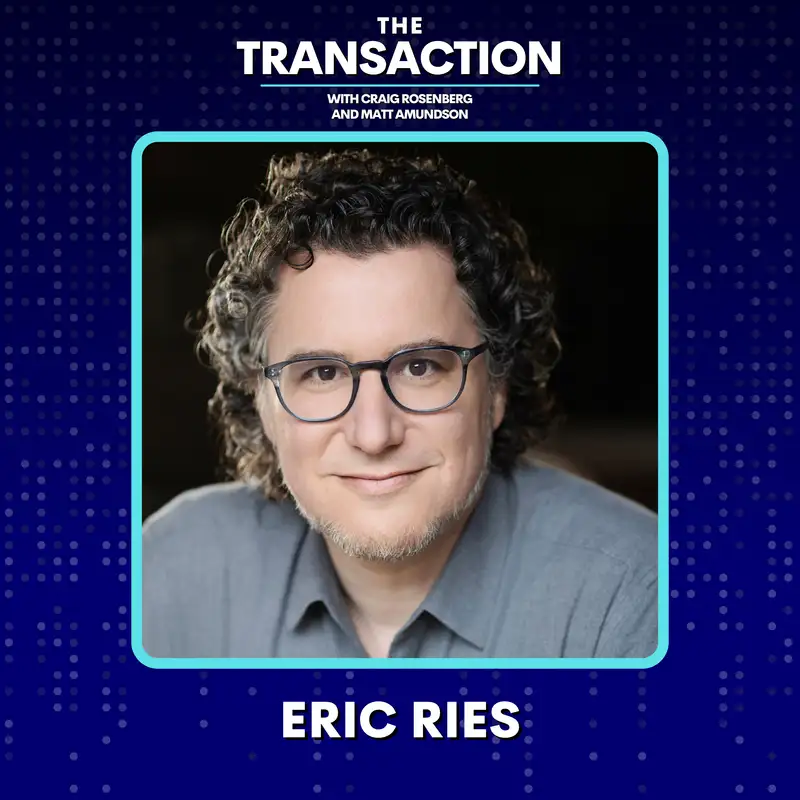
Building an Incorruptible Company that Lasts with Eric Ries, Author of Incorruptible & The Lean Startup - Ep 78
TT - 078 - Eric Ries - Full Episode
===
Eric Ries: [00:00:00] Trust is by far the most underrated asset in business. And what's interesting to [00:00:05] me is how many companies throw it away so casually. Instead of trying to [00:00:10] stockpile it.
Eric Ries: So much of what dominates our modern economy is based on what people say [00:00:15] can or can't be done, but nobody knows what can or can't be done.
Eric Ries: success can become a liability in [00:00:20] itself, because it attracts predators, because it creates temptation, Because it's so much easier to [00:00:25] destroy than it is to create.
Eric Ries: If you want to make your OKRs go up, you can [00:00:30] always do it by spending down our trust account.
Eric Ries: And you have these circular deals in AI that I [00:00:35] bet are going to be scandals pretty soon.
Eric Ries: We have built an economy that is eating itself alive as we [00:00:40] hollow company after company, after company out.
Eric Ries: Trust is the asset that compounds.
Craig Rosenberg: quick note as we start the [00:00:45] show. Today, uh, we have our, our famous guest host. He's on [00:00:50] show number eight, working with me today, Scott Albro. So I [00:00:55] think that's eight, right? I think you're on number eight. Um, so yeah. As [00:01:00] we, as we, as we get into this, by the way, I'm gonna get, before we even intro, I, I had to take [00:01:05] my dog to the vet.
Craig Rosenberg: I think all of us in tech messed up by not becoming [00:01:10] veterinarians. It is like the, it is unreal. It was just to check him on a bunch of [00:01:15] stuff and I walked out $800. Poor. I mean, it was amazing.
Scott Albro: You know, I saw, I saw a [00:01:20] great tweet today, or whatever it's called now, post today related to this. I, [00:01:25] it was some vc, I can't remember. He ba he basically tweeted [00:01:30] whoever starts Alpha School for dogs will become a billionaire. [00:01:35] And Alpha, you know, Al Alpha School is that cutting edge [00:01:40] school down in, down in Austin.
Scott Albro: I think maybe there are a few locations now. Right. And [00:01:45] anyway, I thought it was a great idea. So, um,
Eric Ries: Yeah, I'm sure that the problem is you have to get the dogs to use [00:01:50] apps. That's gonna be a little challenging.
Scott Albro: Yeah. Yeah. Well, I don't know. We're gonna end up with some [00:01:55] AI that can translate dog language to humans, so, um,
Eric Ries: So that [00:02:00] that would be the best seller. Yeah.
Scott Albro: Yeah.
Craig Rosenberg: I love it.
Craig Rosenberg: [00:02:05] [00:02:10] [00:02:15] [00:02:20] [00:02:25] All right, so today, um, Scott and I, uh, we do have [00:02:30] a guest. I'm pr I'm just gonna admit I'm a little nervous just because, [00:02:35] uh, today's guest is famous. And I'll just leave, like before I even, [00:02:40] so, today's guest is Eric Ries. He is the creator of the Lean [00:02:45] Startup Method, which we've all sort of quoted from, grabbed from, and, you know, [00:02:50] that is the author of the bestseller, the Lean Startup, the Leaders Guide.
Craig Rosenberg: And the startup [00:02:55] way and um, you know, like the term, the [00:03:00] phrase, is it the term the acronym MVP that was came from you, right, [00:03:05] Eric? Yeah. Yeah. So like,
Eric Ries: Yeah. Sorry about that. For people who are sick and tired of hearing [00:03:10] about it, it's my fault. Yeah.
Craig Rosenberg: Albro used it a lot. He was our, my CEO for like [00:03:15] 15 years.
Scott Albro: I used to hammer people on that, but this is definitely the biggest guest [00:03:20] that's ever been on the transaction, for
Craig Rosenberg: Oh, for sure. Like e Yeah.
Eric Ries: Oh, [00:03:25] you guys
Craig Rosenberg: team reached out. I'm like, Hey, are you sure you meant to us? And the PR guy's [00:03:30] like, yes, he likes like fun shows. I'm like, okay. All right, well we'll
Eric Ries: I do. I do like fun [00:03:35] shows.
Craig Rosenberg: Actually, before we start, I do have a, you know, it feels like the Lean Startup and a lot of [00:03:40] the things that, um, like MVP and, um, you know, this sort of constant [00:03:45] optimization philosophy that you, you brought to the table, it endured.
Craig Rosenberg: I mean, how, what was it like [00:03:50] 15, 20
Craig Rosenberg: years ago, you wrote the
Eric Ries: Yeah, it's been 15. Yeah. The book is 15 years old now. That's
Craig Rosenberg: What do you [00:03:55] think? I mean, what, what was the what? What allowed it to sort of stay [00:04:00] relevant like
Craig Rosenberg: that through all those years?
Eric Ries: Well, gosh, I don't know. You know, it's probably not my youthful [00:04:05] good looks and my, uh, you know, stylish writing. I think it's much more about how [00:04:10] useful the ideas turned out to be to a whole generation of founders. The timing was good [00:04:15] too. I, I started writing about these startup writer around the time of the great financial crisis.
Eric Ries: So, of course people were [00:04:20] hungry for new ideas and calling it lean since people thought that meant it was gonna be a lot [00:04:25] cheaper, I think that was also really helpful. But, but you know, you never know with these things. Sometimes you catch lightning in a [00:04:30] bottle and it just, you know, it just happens. And again, I don't take the credit for it.
Eric Ries: Like, I hope the book was good. [00:04:35] I hope I did my part. But my part was just one element of a whole, whole movement of people who [00:04:40] wanted to see the practice of entrepreneurship and the practice of business be changed to be more [00:04:45] scientific, more iterative, more humane. And I think we did We did pretty good.
Craig Rosenberg: I mean,
Scott Albro: [00:04:50] Craig, I, I think about, I think, you know, in our world, the Go-To-Market [00:04:55] world, there's all, there's a flavor of the year every year. You [00:05:00] know, there's, there's some, there's something new every year, right? And I think [00:05:05] about Eric, what you did for startups more generally, [00:05:10] product development, right? To have something that's lasted 15 years is, is really, really [00:05:15] remarkable.
Scott Albro: So, so
Scott Albro: thank you for that. It's incredible.
Eric Ries: It has, it has been quite a run. So I'm [00:05:20] very, I'm grateful really to the people who have been the evangelists for these ideas. Especially in the early days. You know, [00:05:25] now it's easy to evangelize 'cause it's popular. But you know, when, when we first started talking about Lean [00:05:30] startup, most people thought it was absolutely ridiculous and it [00:05:35] was count, counter, like it was, it was contravening these best [00:05:40] practices that were really firmly entrenched that people, I remember people telling me, you'll never be able to change.[00:05:45]
Eric Ries: Those are, that's how it's always been. That's how it has to be for some. Reason, and I, I actually feel like the [00:05:50] fact that people took a, a leap of faith on it and said, well, because it makes sense to me. I'm willing to speak up in favor of [00:05:55] it. You know, you open your mouth, you never know what might happen next.
Craig Rosenberg: that's great. I, uh, [00:06:00] uh, before, actually, before I talk about, uh, the new book and then [00:06:05] kick off the real part of the show, the, the, um, what [00:06:10] about like, now, like, is, is there anything related to AI and the new [00:06:15] revolution that we're going through that, you know, uh, it makes the lean startup more [00:06:20] relevant, the same or less relevant?
Eric Ries: Oh, I think a lot more relevant. I was just, [00:06:25] um. Yeah, I, uh, it's funny, a couple weeks ago I did Lenny's podcast, [00:06:30] um, and he was talking about, you know, he's, he's being interviewing all the product managers and Go-To-Market [00:06:35] leaders at the major AI companies to really unpack how they're working. And [00:06:40] he was like, they're really, they don't call it MVP 'cause that's not a customer facing term, but they are [00:06:45] really embracing the winners there are embracing lean startup in a really profound way.
Eric Ries: Because at the end of the day, [00:06:50] you have, you, you can't really predict what these models are gonna do. And so when you embed them into a [00:06:55] product, you have all this uncertainty. You have to experiment with real, real life use cases [00:07:00] or you, you know, you're sunk. And I just thought that was such a good point.
Eric Ries: Like this is [00:07:05] not, you know, I wrote The Lean Startup well in advance of ever hearing the term generative [00:07:10] ai, right? Like before I knew what a Lang large language bot, I could never have predicted Claude Code or anything like that. But [00:07:15] the principles have held up really well because we still see the same two fundamental [00:07:20] facts.
Eric Ries: Think like what are the mega trends about. Business in our [00:07:25] lifetimes. It has been one about the democratization of access to the tools of building. [00:07:30] So faster cycle times, uh, you know, more iteration, more data, [00:07:35] more ability to, to put ideas into the world. You know, any individual person now [00:07:40] can, can be a first party competitor to some of the world's largest companies.
Eric Ries: And on the second hand, [00:07:45] increased uncertainty. Customers have more choices. Uh, channels are more crowded. [00:07:50] Um, you know, markets are, are more interconnected than ever. And obviously we live in a time of [00:07:55] geopolitical uncertainty too. So you have have kind of external uncertainty on top of all the uncertainty we as [00:08:00] innovators are always trying to create ourselves. So yeah, when you have that combination of extreme [00:08:05] speed and extreme uncertainty, lean startup is your, you know, that's, that's the tool that [00:08:10] is evolved for those conditions.
Craig Rosenberg: Said Albro. Were you getting up to react [00:08:15] to that or were you just reacting?
Scott Albro: No, I was just getting excited. I mean, I couldn't, I [00:08:20] couldn't agree more, so it, it caused me to sit up in my seat. What's the meme where the guy [00:08:25] sits up in his seat? Uh, yeah,
Scott Albro: I don't, yeah.
Craig Rosenberg: All right, so [00:08:30] the, the new book, I love the title by the way, so
Craig Rosenberg: just everyone will get excited [00:08:35] about that. Incorruptible, why good companies go bad and how [00:08:40] great companies stay. Great. I mean, come on man. That is a great [00:08:45] title.
Eric Ries: Well, thank you very much.
Craig Rosenberg: let's, , so just for the audience, [00:08:50] our special guest that is, I'm very nervous. I wore three coats of deodorant [00:08:55] for, uh, I just say, Hey man, this is how we do this show. And I said, Hey, we, we'd love to hear a [00:09:00] story from you. He's like, oh, let's do it.
Eric Ries: Let's do it. Okay. Yeah, yeah. No, no, it's great. Uh, this is, I [00:09:05] feel like kind of the essence of the book is in this one story. So let me tell you the legend of Sol Price. [00:09:10] So Sol is the unquestioned goat of retail, like the father of modern [00:09:15] retail. So much so that people don't know this, the, when Sam Walton [00:09:20] decided he was gonna get into retail, he was like, what should I name my company? He named it Walmart. [00:09:25] As an intentional tribute to Fed Mart, the company that Sol Price had started in the [00:09:30] 1950s.
Eric Ries: But what's interesting about Sol is that he was a lawyer before he became a [00:09:35] retailer, and he was trained that he had, as a lawyer, a fiduciary duty to [00:09:40] his client. It means you put the client's needs before your own. So when he became a retailer, [00:09:45] he said, you gotta be a fiduciary to the customer. That's what it meant.
Eric Ries: So when his competitors would try to [00:09:50] undercut him on price. Sol would put up signs in his own store that says, don't buy this [00:09:55] product from me. You can get it cheaper at this other store down the street. Because being a [00:10:00] fiduciary meant he wanted to get his customers the best price, he didn't care. So his go-to-market strategy [00:10:05] was so different than hardly any other retailer, certainly at that time, but even today would be very [00:10:10] unusual.
Eric Ries: He didn't spend money on sales and marketing. He said the best [00:10:15] advertisement is the unsolicited testimonial of a satisfied customer. He practiced what he [00:10:20] called capped margins. He wouldn't mark up any item more than 14%. [00:10:25] He paid above market wages. He had, he called it the intelligent loss of sales. [00:10:30] He had limited selection, only of the highest quality products that he would personally vouch for, and it was [00:10:35] a very particular warehouse format.
Eric Ries: You know, big box retail. pioneer[00:10:40]
Eric Ries: It really worked. Customers loved it because they felt they could trust Fed Mart. You [00:10:45] knew you were getting a fair price because they were not trying to charge you as much as they could get away with. They were [00:10:50] charging you always what they thought was fair. 14% over their own cost. Company [00:10:55] grew. He took it public, but as a public company, he was miserable. He hated the short term pressure [00:11:00] of Wall Street constantly on him to have higher prices and lower wages. But he [00:11:05] believed in low prices and high wages. That was his formula that drove Fed Mart's growth. So [00:11:10] he took the company private.
Eric Ries: He brought in new investors, a new board he that he thought would [00:11:15] understand retail better, but no, they were still hypnotized by these [00:11:20] best practices that drive our finance driven economy to this day higher. [00:11:25] Prices, lower wages, squeeze what you can faster growth quarterly targets. We've all lived [00:11:30] it. You don't need me to tell you all about it.
Eric Ries: Sol found it infuriating. All this [00:11:35] culminated in a big fight in 1975 after Sol had been building Fed Mart for [00:11:40] more than 20 years. He comes into work one day and he can't get [00:11:45] into his office because the locks on the doors have been changed. He doesn't work at Fed Mart anymore. [00:11:50] The board got what they wanted.
Eric Ries: Sol was in their way in the way of [00:11:55] more profit is how they thought about it. So they got rid of him and they were able to convert Fed Mart [00:12:00] into a more conventional retail approach. You wanna guess what happened? [00:12:05] It only took him seven years to bankrupt what Sol had built over the course of [00:12:10] 20. By 1982, the whole chain was completely liquidated.
Eric Ries: And what's so interesting about this [00:12:15] story is you see an act of immense value, destruction [00:12:20] being done in the name of profit. It's the same thing that [00:12:25] destroyed so many iconic brands that we kind of think of vaguely as old fashioned, like [00:12:30] Sears or Circuit City. Whatever happened to Sunbeam, whatever happened to Sharper Image, you [00:12:35] know, whatever happened to, uh, men's Warehouse?
Eric Ries: You're like, oh yeah, that thing. I remember that company. [00:12:40] If you study the behind the scenes story, you'll find this incredible destruction. [00:12:45] That was caused by the very success of the company itself, because the more successful [00:12:50] you become, the more valuable you are as a target. So [00:12:55] Fed Mart was destroyed, but what happened to Sol?
Eric Ries: Did he spend the rest of his life complaining about how the market's not [00:13:00] fair? No. He was a classic entrepreneur. See if you can relate to this. He took two [00:13:05] weeks off. To lick his wounds, he rented the [00:13:10] office upstairs from Fed Mart and he started again. He built a new company [00:13:15] that he called Price Club.
Eric Ries: Today. Price Club is mostly forgotten, but that's because of what happened next. [00:13:20] One of the people that went with him from Fed Mart to Price Club was named Jim Senegal. And Jim [00:13:25] Senegal. A few years later after that, decided to start his own company with Sol's blessing implementing [00:13:30] the engine he had learned at Fed Mart.
Eric Ries: And a few years after that, his company and [00:13:35] Sol's company merged to form the company we know today as Costco. [00:13:40] So Sol is actually like, this is like the deep cut history of the founding of Costco. Today. [00:13:45] Costco is a $400 billion public company, but it still to this [00:13:50] day maintains the integrity of Sol's ethos, capped margins, [00:13:55] fiduciary to the customer.
Eric Ries: It's all still there, the dollar 50 hotdog. All the famous stories you know about [00:14:00] Costco are made possible by this particular combination. Of the ethos, [00:14:05] the business philosophy, but a structure, a governance structure that [00:14:10] protects that ethos and prevents what happened to fed Bart from happening to Costco now [00:14:15] going on 40 years.
Craig Rosenberg: Now that's a story, my [00:14:20] God. Um, all right, well, let's react to that Albro. Any thoughts?
Scott Albro: [00:14:25] I mean, it's, it's such a, I I was familiar with that story and it's, it's ex [00:14:30] it's just a very compelling story and, um, it's so [00:14:35] rare, I think, to find companies that are able to do what you just [00:14:40] described there, Eric, like, like really focus on the customer delivering [00:14:45] value to the customer. But also survive in [00:14:50] today's, you know, economic climate.
Scott Albro: Right. Um, and, um, [00:14:55] you know, I I, I do have one personal anecdote that's sort sort of related to [00:15:00] this. The first CEO I ever worked for, um, I worked in [00:15:05] sales and this CEO used to beat into the sales organization. [00:15:10] Sales is just about trust and, [00:15:15] and this is why salespeople exist. This was late nineties. He had this [00:15:20] theory that all products commoditize over all markets commoditize over [00:15:25] time.
Scott Albro: And so in the world of B two, we were in the world of B2B in the world of [00:15:30] B2B. The thing that prevents you from commoditizing is the salesperson. [00:15:35] And the way the sales person can do that is just by being the most [00:15:40] trustworthy partner that the customer can have. Now, I think he took the [00:15:45] commoditization thing a little too far, right?
Scott Albro: I don't, I don't fully believe in that. But this [00:15:50] idea that the number one job of a salesperson is to establish trust, I've, I've always [00:15:55] found that to be a really compelling idea. And Eric, your story just reminds me of that, [00:16:00] of those days now, you know, 25, 30 years ago.
Eric Ries: [00:16:05] Trust is by far the most underrated asset in business. And what's [00:16:10] interesting to me is how many companies throw it away so casually. [00:16:15] Instead of trying to stockpile. it So it's like an asset that we're just like a leaky boat, just [00:16:20] letting it drift right out. And it's true that, yes, in a sales driven process, of course [00:16:25] trust can be personal to a individual person, but trust can also be [00:16:30] institutional.
Eric Ries: You know, um, Bruce Schneier the Shire, the the security expert, has a whole book of [00:16:35] what we call institutional trust. And he, he gave this example, which I thought was so brilliant. When you get on [00:16:40] an airplane, you are literally betting your life. [00:16:45] That the plane is gonna take you where you want to go. So you say, oh, I trust. [00:16:50] But who are you trusting? Exactly? You trust the pilot. You've never even met the pilot. How could you trust someone [00:16:55] you've never met? You're trusting. Not just the pilot, but like 10,000 people. [00:17:00] Every person who maintains that aircraft, who built it, every rivet of every [00:17:05] joint, you know, the staff on board, the, the, uh, aircraft control, the [00:17:10] FAA like think how many people are required to keep you alive.
Eric Ries: And it's so [00:17:15] seamless. You don't even think about it. You just hop on, hop off. If there's a delay, you complain. If The [00:17:20] food tastes bad, you complain. It's like you just had a miracle of a million people work together to move you [00:17:25] to a point A to point B, and you're complaining about the peanuts. Like it's so powerful.
Eric Ries: [00:17:30] That's the power of trust. It makes possible the seemingly impossible. And if you study [00:17:35] mission-driven companies, which I, I did for the new book especially, but having been around a lot of these leaders too, [00:17:40] you'll notice they have these incredible superpowers. That if you've [00:17:45] never seen it in action, you might actually not believe.
Eric Ries: Like I, I was, I, I keep seeing these [00:17:50] examples where, where people kind of can't fathom. Like, how is that company shipping product so [00:17:55] fast? How come they can raise so much money? How come their like cost basis is lower? than Their [00:18:00] competitors? How come their com their customers don't churn even when they make a mistake?
Eric Ries: Why, why, why? [00:18:05] If you look at the research, the answer is always trust. When people trust [00:18:10] friction goes down, costs go down, velocity increases. It's like a, a lubricant that makes [00:18:15] business more efficient across the board. So why, if it's so [00:18:20] valuable, do we not stockpile? And why, if it's so valuable, do we [00:18:25] not protect it?
Eric Ries: See, this is like, again, going back to the Fed Mart example, you can see how Sol was able to [00:18:30] stockpile it, but that just made it more valuable for the investors to wanna steal from [00:18:35] him. And we see that all over the economy.
Scott Albro: Yeah.
How Founding The Long-Term Stock Exchange Showed The Limits of Best Practices & Convetional Thinking
---
Scott Albro: Hey, Eric, that, [00:18:40] that reminds me of your work with on on LTSE and, [00:18:45] and founding LTSE. You know, my, my response to what you just said is like, there's [00:18:50] long-term thinking and there's short-term thinking, and the system right now rewards a lot of short-term [00:18:55] thinking. Right.
Scott Albro: And can can you tell us a little bit more about your [00:19:00] experience with LTSE and some of the thinking behind that, it seems, seems related here.
Eric Ries: Oh [00:19:05] yeah, of course. The reason I know so much about this, you know, corporate governance and trust and finance, and, I mean, I, I'm [00:19:10] not a lawyer, but I can play one on tv, but I can play a lot of these other roles too. I can pretend to be a [00:19:15] banker, pretend to be an investor, pretend to be all kinds of things.
Eric Ries: 'cause I've really been in the belly of the beast for a while. [00:19:20] So if you, if you have your beat up old copy of the Blue Book, right of Lean Startup [00:19:25] and you turn to basically the last page, it was almost the last thing I wrote in the book too. [00:19:30] It says somebody should really build a long-term stock exchange or [00:19:35] LTSE. When I wrote those words, I didn't know anything about stock exchanges. It was a [00:19:40] pure deduction from first principles based on the following argument. We [00:19:45] know from the re research, like if you look, read the, you know, lean manufacturing, lean startup comes from Toyota. [00:19:50] So if you read books about Toyota or companies like it, you will see that having a [00:19:55] philosophy of long-term thinking is the necessary precondition for making a lot of money and [00:20:00] companies that have that have a huge advantage.
Eric Ries: And then I thought, oh, that's interesting. If that's how [00:20:05] you make a lot of money as a company, why are we putting companies in a short-term pressure cooker called the [00:20:10] public markets wouldn't long-term oriented investors want long-term value [00:20:15] creating companies? And so I said, oh, okay. That seems like we've made a mistake.
Eric Ries: We have to find a way to get [00:20:20] long-term investors and long-term companies together for mutual benefit. Am am I crazy or is that not a stock [00:20:25] exchange? So I just wrote that somebody should really do that. And then, you know, nobody did. [00:20:30] Lean Startup has sold millions of copies and it has been picked clean [00:20:35] of its ideas.
Eric Ries: Every crazy random thing that I said someone should do in that [00:20:40] book, believe me, someone's done it. And I've gotten to do a bunch of the things like I remember, I remember when I told people we were gonna [00:20:45] change how business education works. They're like, that's impossible, but I get to work on the new Harvard [00:20:50] Business School curriculum.
Eric Ries: And now it's like entrepreneurship is taught in a way better way. Like I can tell you 20 things [00:20:55] like that. But nobody ever called me to say, Hey, Eric, is the stock exchange idea still [00:21:00] available? No one ever wanted to do it. In fact, the Wall Street Journal wrote an article, straight news [00:21:05] article, not an op-ed that said, you know, lean Startup guys next.
Eric Ries: Crazy idea. And [00:21:10] it was about like, and I was like, oh, crazy can be used as a, as a straight description. It's not [00:21:15] considered editorial. That's just a fact. Yeah, that's how crazy it seemed. [00:21:20] But I couldn't understand why. What was so weird to me was for years, I mean, literally for [00:21:25] years I would talk to anybody who knew anything about public markets and I'd just say, I get this crazy [00:21:30] idea.
Eric Ries: Tell me why it won't work. And everyone I met was a hundred [00:21:35] percent sure it couldn't work. Impossible not, and not just, it wouldn't be profitable, [00:21:40] but like you'll never get it approved. It's illegal. You'll never get companies to list it. Like everything you need to [00:21:45] do to make an exchange will never be able to do.
Eric Ries: And what was so interesting about that is the reasons they [00:21:50] would give made no sense. So to an entrepreneur that's like raving [00:21:55] a red flag at the bull, you know? 'cause I'm like, wait a second, I need to know [00:22:00] why I'm not doing this. It seems like a good idea to me. And so this is 10 years ago now, maybe [00:22:05] I, I said, oh, well I'll just put one foot in front of the other and see where it goes and see [00:22:10] what kind of progress we can make. And one day I figured I would find out why it's a bad [00:22:15] idea and then it will leave me alone. Hey, I might still, you know, it's a going concern even now, [00:22:20] but you know, it's hasn't taken over the world yet. And everything that people said was [00:22:25] impossible, we showed was possible, and eventually I came to realize that so much of what [00:22:30] dominates our modern economy is based on what people say can or can't be done, [00:22:35] but nobody knows what can or can't be done. So we actually, we have people, I think, who [00:22:40] are very invested in shaping the domain of what is possible for their own benefit. [00:22:45] And what is needed to break out of that consensus is entrepreneurs, as they always [00:22:50] have in history, to say, you know, don't tell me what I can't do. Let's go find out. And [00:22:55] I think LTSE is like one instance of a general pattern I [00:23:00] call civic infrastructure.
Eric Ries: Not just a regular old for-profit company, but, and not just a [00:23:05] mission-driven company, a company that is attempting to remedy, um, a civic scale [00:23:10] problem. That allows every other part of the economy to operate more effectively, [00:23:15] to nurture and support other organizations too. I think, uh, we need entrepreneurs to tackle [00:23:20] those kinds of problems, and I wanted to create a proof point that it can be done.
Scott Albro: [00:23:25] Very cool.
Eric Ries: I got into it.
Scott Albro: Very cool.
Craig Rosenberg: Amazing. That is amazing. [00:23:30] Alright, so let's, let's do this. That was the story we'd hoped for. There's a lot of things I think [00:23:35] we'll point back to you. I do wanna make sure though, that we have the opportunity to [00:23:40] tie this to incorruptible, my new favorite title. I will repeat it just for [00:23:45] everyone to have some fun incorruptible, why good companies go bad, and how great companies stay [00:23:50] great. The story has example of why good companies go bad and how great [00:23:55] companies stay. Great. Uh, that was like the story, uh, to the [00:24:00] book, but like, um, I, I, you know,
How Businesses Cash in Trust & How They Build Trust with Customers
---
Craig Rosenberg: I do wanna sort of transition to some of the [00:24:05] ideas that, you know, that Incorruptibles is gonna bring to the table. But is there anything else you wanna [00:24:10] say about the book?
Craig Rosenberg: And then let's, let's talk, let's talk about some of the ideas in there.
Eric Ries: [00:24:15] Yeah, sure. I think. Most leaders [00:24:20] are taught a very narrow idea of what their job is, [00:24:25] and they're taught that success will protect you. So like, don't worry, like the kind of stuff we're [00:24:30] gonna talk about in this episode, we're told, don't worry about that stuff. You can always do that later. You can [00:24:35] always add it later.
Eric Ries: You know, just get successful. Get product market fit. You know, be, get rich, [00:24:40] get successful. Like power gain. Power power will give you freedom. And the [00:24:45] big message of this book is, is the way in which success can become a liability. In itself because it [00:24:50] attracts predators, because it creates temptation, because it's so much easier to [00:24:55] destroy than it is to create.
Eric Ries: So when people harvest the trust of [00:25:00] Fed Mart, suck the marrow out of it, that appears to be profitable. [00:25:05] When in fact it's an act of value destruction. And I'll just, can I tell you a funny [00:25:10] story?
Eric Ries: Maybe Guys tell, tell me if, tell me if this has happened to you. I was out to dinner with a group of friends. [00:25:15] We were traveling away from home and someone said, oh, I think this restaurant, we had two [00:25:20] nights we were out, we had two restaurants to pick.
Eric Ries: Someone picks a restaurant on the first night, we go [00:25:25] there. He's like, I haven't been here in a couple years, but it's really good. And we sit [00:25:30] down and we take a bite of food and he is like, one sec, I gotta go on my phone. And [00:25:35] we're like, dude, you're being rude right now. Get off your phone. Just one sec. One [00:25:40] sec.
Eric Ries: Oh yeah. He turns it around. I could tell this restaurant got bought by [00:25:45] private equity. I could taste it. And we're all just [00:25:50] like, oh no, it's gonna be gross. And it was gross. So we go out to dinner the next night, a [00:25:55] different person picks a totally different restaurant, hasn't been there in a couple years.
Eric Ries: We [00:26:00] sit down and I swear to God, I was like, is this the same, same damn private equity fund? [00:26:05] I was like, look it up again. And like, no, it was a different private equity fund, but the [00:26:10] food tasted disgusting in that exact same way, and we were just sitting there being like, how is [00:26:15] it possible that you can taste the capital ownership structure of a company? [00:26:20] You can taste it in the food. You guys ever had this experience? It's disgusting. It's just like it [00:26:25] used to be.
Eric Ries: Used to be great and like so many brands, so many products. [00:26:30] Cory Doctorow calls it enshittification just to really drive home the point he's most, he's talking about [00:26:35] tech platforms, but like if you tried to Google anything recently, Jesus Christ,
Eric Ries: there's so [00:26:40] many products that are so much worse.
Eric Ries: I haven't even done this. A friend of mine yesterday outta the blue, a civilian, not some tech [00:26:45] person was like, oh, I tried to log into Facebook to look something up. I'm like, what happened [00:26:50] to Facebook? I was like, oh yeah, you don't know. Like, oh, sorry, newsflash. It was just like [00:26:55] unbelievable. The usability is all broken.
Eric Ries: The ads are clogging up everything, and we're [00:27:00] just, we've gotten used to the idea that once things become successful, they're gonna get ruined. [00:27:05] And we don't even know what to call it. Like what, when this happens to your favorite restaurant, to your favorite brand, to [00:27:10] your favorite product, what do you call it?
Eric Ries: Well, our grandparents knew what to [00:27:15] call it. They would've called it corruption, the making of money without the creating of [00:27:20] value. And today we have a very narrow idea about what corruption means. We think it only means, [00:27:25] you know, embezzlement or bribery. No. Corruption is literally corrupting [00:27:30] the moral logic of our economic system, and it's closer to theft than it [00:27:35] is to value creation Enough.
Craig Rosenberg: That was a great story [00:27:40] and yes, so many things have happened to me where they get bought by private equity with all due [00:27:45] respect to my friends in the game. Um, but yeah, that, that, that is, that, that [00:27:50] totally resonates. Um, so if you,
Why Re-examining OKRs & GTM Metrics Can Improve the Long Term Health of a Company
---
Craig Rosenberg: as we think about some of [00:27:55] the big ideas and incorruptible and you wanted to impart some [00:28:00] of those, like, you know, one to three of those to the Go-To-Market audience, what, [00:28:05] what would you choose to talk about and, uh, you know.
Craig Rosenberg: Uh, just help us [00:28:10] understand those and let's talk about those.
Eric Ries: Yeah. Yeah. Well, you mentioned already, um, [00:28:15] uh, uh, the, the importance of trust. As the like [00:28:20] pointy edge of the spear Go-To-Market is the point, the pointiest point at the edge of the spear of a, of a [00:28:25] business, right? So Go-To-Market. Like that's literally the interface between the public and [00:28:30] what we want to make.
Eric Ries: So the leadership lessons are really [00:28:35] essential. So if you think about, again, what I was talking about before that like an incorruptible company is kind of a formula [00:28:40] or a blueprint that combines the ethos of Sol price with the [00:28:45] governance fortress, the integrity that has protected Costco all these years.
Eric Ries: We need, we need both those [00:28:50] elements. A lot of the leadership stuff, you know, that comes up very [00:28:55] regularly in a Go-To-Market context. So, yeah, how do we, how do we make promises that people can believe? [00:29:00] How do we make sure that we don't fall into the temptation to harvest rather than to [00:29:05] create? Um, and one of the funny things about the way we do OKRs these [00:29:10] days. We do this in Go-To-Market, but also like Go-To-Market is just a [00:29:15] microcosm or like a, a recipient of this bigger system where everyone in the company has the company's [00:29:20] main goals to decompose down into their individual sub metrics. The [00:29:25] problem is because trust is an asset. See, it's a currency you can [00:29:30] spend as well as collect. If you want to make your OKRs go [00:29:35] up, you can always do it by spending down our trust account. [00:29:40] Uh, Go-To-Market is the worst offender no offense, but like, you [00:29:45] have a sales target, you got a quota, you got some goal. Hey, I got [00:29:50] an easy way for you to make your goal. Why don't you start making unbelievable promises about what the cup, what the product can [00:29:55] do? How do, like, it's so tempting. You've all, we've all done it. [00:30:00] I've done it. Like everyone's been in this situation where it's like, look, I just make a little extra promise. The engineers will catch [00:30:05] up to my promises. Eventually, it's probably gonna be fine. And here's the problem. [00:30:10] Even if you're like, I'll never do that, that's deceptive.
Eric Ries: I have personal integrity. The problem is [00:30:15] that most companies operate a competitive compensation environment. So if [00:30:20] you don't do it, you are gonna be behind the people that do do it. It's like a prisoner's [00:30:25] dilemma. Everyone can figure that out and then they can be like, uhoh, I better make sure I get to it first.
Eric Ries: So what's [00:30:30] happening is we are competing with each other to see how, how quickly we can spend down the trust account. Now of [00:30:35] course, Go-To-Market is not the only offender. Can you think of ways that finance can do this play the same trick you, you [00:30:40] obviously always engineers can may play the same trick, of course, like.
Eric Ries: Even better would be to, uh, [00:30:45] send your Go-To-Market team out there, you know, with a water gun instead of an actual gun because you, you know, [00:30:50] the thing doesn't actually work. You told them to tell people it does work. Well, that's not necessarily gonna cause a [00:30:55] problem for you. You are already promoted to the next job.
Eric Ries: Meanwhile, some poor [00:31:00] guy's trying to sell the thing you made that doesn't work. So we see it all over the modern company. We develop these [00:31:05] tribal identities, we go to war with each other, and we're again locked into this kind of zero sum struggle. [00:31:10] Instead, we have to master the techniques of making and [00:31:15] keeping promises, like seeing that as a economic logic that we want to master.
Eric Ries: [00:31:20] And once you start thinking in those terms, new things become [00:31:25] possible.
Craig Rosenberg: Okay. That was amazing. Hey, by the way, you know, [00:31:30] side note related to the. To this and to the, uh, [00:31:35] the Fed Mart story when he hung the sign and said, don't buy this from me, buy it somewhere else. [00:31:40] You know, Matt, Matt Dixon, I don't know if you know he is, he wrote The Challenger Sale, which was a very
Craig Rosenberg: popular [00:31:45] book. Yeah. So his new book, he studied literally thousands of phone [00:31:50] calls to see like, what is the, what are the tr at attributes of the great rep.
Craig Rosenberg: [00:31:55] One of them was that the, the great rep won. [00:32:00] Was not afraid to talk about their competitors and not afraid to [00:32:05] talk about what their competitors were better at, not afraid to even share competitors' [00:32:10] content if it was better than theirs.
Craig Rosenberg: And, um, and that you [00:32:15] might lose that deal, but that trust that you've created will, you know, [00:32:20] come in handy down the line. And then his co-writer of the Challenger, Brett Adamson, has this [00:32:25] similar concepts that they're bringing to market today, which is like, you [00:32:30] know, very similar to what you're talking about.
Craig Rosenberg: I think of that, you know, I, I thought of it [00:32:35] initially when you brought up the sign, don't buy from us. Buy from,
Craig Rosenberg: you know, my competitor. cause it's a better deal. [00:32:40] Um, and that, as you said, you when you said, no offense on the Go-To-Market [00:32:45] side,
Eric Ries: Yeah.
Craig Rosenberg: no offense to, we know exactly what you're talking
Eric Ries: Yeah, we've
Eric Ries: all been there. I
Craig Rosenberg: Yeah.
Eric Ries: be honest [00:32:50] about it, right? We've all been there.
Eric Ries: And you think about, like, think about channel stuffing. I mean, now I feel like we [00:32:55] haven't had a channel stuffing like public scandal in a while, but, but like used to be a regular feature [00:33:00] of, of scandals.
Eric Ries: And you have these circular deals in AI that I bet are going to be scandals pretty soon. [00:33:05] You see it in, um, like the fake account scandal at Wells Fargo. Remember that one? [00:33:10] Um, the collapse of Silicon Valley Bank. I could just like go on and on and on these stories where like [00:33:15] in the name of profit, we destroy the profit. [00:33:20] Why would we do that? Like, it doesn't, it actually is irrational, it's illogical. [00:33:25] But um, you know, I remember I read this blog post, I read a lot of blog posts about, um, [00:33:30] people who've left Google. So I, I, I did a study of, of employees who've been at Google for more than 10 years [00:33:35] who write a blog post when they leave, which is, you know, like a whole common enough that it's a [00:33:40] whole genre of blog posts. And one of them wrote the the, they have this [00:33:45] sense of like something special got lost and Google's a great company. Yet it's not what [00:33:50] it once was. There's something different and they have a hard time putting their finger on it. One of them put it [00:33:55] this way, I thought it was almost poetic. They said Decisions went, this is a person, who'd been there I think 13 [00:34:00] years.
Eric Ries: Decisions went from being made for the benefit of customers to being made for [00:34:05] the benefit of Google, to then eventually being made for the benefit of whoever was making the decision. [00:34:10] So in all of these corruption examples, you almost always will figure out if you [00:34:15] study the incentive design, you'll say, oh, I see this might be value destroying overall, but [00:34:20] it does profit somebody. Somebody thinks this is how I'm gonna get [00:34:25] ahead, I'm gonna get an advantage for it. So, like, you know, Sears, during this collapse of Sears, the [00:34:30] guy who was running it, uh, managed to extract like one and a half billion dollars in [00:34:35] fees out of the company at a time when the company was losing $11 billion. [00:34:40] So he made out, he became a billionaire, but Sears was destroyed. [00:34:45] I guess he sleeps okay at night. Somehow. I don't know. A lot of these guys, uh, I [00:34:50] think, I think are, it's very important to realize this, this desire to build mission-driven companies, this [00:34:55] need to do it. It's not just a moral thing or an ethical thing. It is an, uh, economic [00:35:00] necessity. We have built an economy that is eating itself alive as we hollow company after company, [00:35:05] after company out.
Scott Albro: Yeah.
The Looming Crisis in How Startups are Accounting their Annual Recurring Revenue (ARR)
---
Scott Albro: By the way, Eric, those examples you mentioned, [00:35:10] Wells Fargo a round tripping in, in AI right now. I, I [00:35:15] think the big scandal that's coming is how people are accounting for ARR in startup [00:35:20] land. I mean,
Scott Albro: you, we, we are seeing the most creative accounting around [00:35:25] ARR and, and this is squarely in the realm of Go-To-Market, right?
Scott Albro: So,
Eric Ries: [00:35:30] Totally.
Scott Albro: that, will be a big one in the years to come.
Eric Ries: Oh, I look, I look forward to it. I wish we would. [00:35:35] I, I think, I actually think ARR. I do because like we have to, I have to [00:35:40] purge this bad behavior from
Eric Ries: the ecosystem. Like it's, it's really, really harmful. I remember when people first taught [00:35:45] ARR, before it was called ARR, I was taught, the way you did it was you [00:35:50] take your last month's revenue and multiply times 12, and that's your [00:35:55] forecasted revenue for the new year.
Eric Ries: As if, as if your most recent month was gonna be your month going forward. [00:36:00] And that was at least more honest. Because it was like a rule of [00:36:05] thumb. We weren't claiming it as recurring revenue. We were just saying, look, if, if it went [00:36:10] really well, here's what it might look like. So you get a sense, you could, you know, dimensionalize for people how big the [00:36:15] company could be.
Eric Ries: We did that for valuation calculation reasons. We would never have dreamed of [00:36:20] reporting that as recurring revenue. That would've been like so dishonest. Like, of course not. So I think, I [00:36:25] think, yeah, we've got some, got some bad practices going on. Look forward to those being removed
Eric Ries: from the ecosystem. [00:36:30] some, cleanup there. Yeah. Yeah.
Eric Ries: Yeah.
Eric Ries: Yeah, for sure. For sure.
Craig Rosenberg: by the way, thank you for [00:36:35] mixing in stories throughout the conversation. You can't tell, I can't tell you how much we've [00:36:40] struggled on some guests to be like, tell us stories. Um, so [00:36:45] I, well, well, first I do, I do think like our, [00:36:50] let's just be, let's that, since we're being our CRO sales leader listeners today, how are [00:36:55] they gonna react to what we're talking about in terms of, [00:37:00] uh, you know, how we.
Eric Ries: I could tell you exactly. I could tell you exactly because I was on a [00:37:05] podcast with a more traditionally trained person. [00:37:10] Okay. I won't say who it was. And, and then we were doing the, it was, it was going fine like we're doing [00:37:15] okay. They're like on board with what I'm saying, what I'm saying, and then they were like, but hold on a second.
Eric Ries: [00:37:20] It sounds like what you're saying is like kind of contradicting a bunch of stuff I learned in business school. [00:37:25] Like, what's up with that? And I was like, oh yeah. Are you open to the [00:37:30] possibility that some of the things they taught you in business school wasn't true? [00:37:35] And he was like, not really. Nope. Yeah.
Eric Ries: [00:37:40] So if your, if your CRO is willing to look at the evidence, a lot of [00:37:45] these so-called best practices are actually value destroying. We, this is not just my [00:37:50] opinion, okay? Eric says, no, no, no. We have the data on this. So that [00:37:55] means that that can be challenging, okay? I get people like, wait a minute, why was I taught this [00:38:00] practice as good when actually it's bad? I thought being serious about business meant being [00:38:05] extractive and exploitative. No, you're saying that that's actually value destroying. There's this better thing, but I, there's a [00:38:10] bunch of evidence in the book. You'll have to just see how open-minded you can be and look at it for yourself. Don't take my word for [00:38:15] it.
Eric Ries: Look at the data yourself decide, but. It's not just about, [00:38:20] um, feeling good or having employee morale or whatever it is. The [00:38:25] reason why these companies have faster revenue growth, it is one of the most important growth drivers [00:38:30] because ultimately that is the asset that compounds trust is the asset that compounds.
Eric Ries: Where do you think the revenue [00:38:35] comes from? We get so confused because we say, well, marketing and sales, marketing, [00:38:40] making outbound calls, inbound, SEO, all this stuff like that created the sale. No. [00:38:45] That closed the sale. What created the sale was the [00:38:50] product and the promise that we made to the customer that they believe their belief in our [00:38:55] ability to do it is ultimately what powers everything else that we do.
Eric Ries: More belief means more sales. And [00:39:00] if you've never lived through the collapse of trust, like if you've ever tried to sell [00:39:05] something after you've lost that most precious thing, you all of a sudden realize every sales [00:39:10] tactic in the world is useless. If you don't have that precondition for it. So [00:39:15] I think the Enlightened CROs will be very excited because here's a chance for them, first of all to [00:39:20] get more, just get more growth, get more acceleration over the long run, but also to deal themselves [00:39:25] into the high level conversation.
Eric Ries: This book is about governance fundamentally, which most people [00:39:30] don't even know what that word means, but they know that it's the thing that gets talked about at the biggest of the [00:39:35] big kid tables, the board. So if you are at the C-suite level and you are like [00:39:40] feeling like, I'm still not, I'm still not cut in to the most important [00:39:45] conversations this company has.
Eric Ries: This book can help you achieve that and form [00:39:50] much more lasting partnerships between functions and departments, between investors and companies, between [00:39:55] sales and marketing, between marketing and product, that kind of stuff. That's, that's what we should be looking to do.
Craig Rosenberg: [00:40:00] Yeah, I was gonna say that was a perfect end, but I can't let you go because I do [00:40:05] have to say you did say it, which is I feel like, and Scott, you could tell [00:40:10] me if
Why & When Early Stage Startups Need To Seriously Think About Governance
---
Craig Rosenberg: when we're talking to like startup startups, so like Scott and I sort of live in seed [00:40:15] to b, c, we use the word governance and they're gonna be like, I [00:40:20] got no time for that. But you're talking about it in a bigger strategic way, and we've talked [00:40:25] about it throughout, but like when you talk to early stage folks, how do you [00:40:30] talk about it in a way that it makes sense to them where they are now [00:40:35] and where they want to go?
Eric Ries: most important question in the whole book is actually [00:40:40] not which of the techniques to adopt. 'cause the book is loaded with tactics and techniques. Okay. It's, it's [00:40:45] a blueprint book, not a.
Craig Rosenberg: Yeah.
Eric Ries: you know, agonizing about the problem kind of book, [00:40:50] the most important question is not what to do, but [00:40:55] when to do it. What you'll notice for people in the early stages is they get [00:41:00] talked out of building the kind of company they want to build. Not because someone tells them [00:41:05] no, but because people say, well, not yet. Oh, sweetheart, it's a little early to worry about that. Get product market [00:41:10] fit first and then. Why don't you raise some money?
Eric Ries: And then what? And you know the old [00:41:15] joke? The old joke is I was started a company, so I had a problem, so I raised some money. Now I have two [00:41:20] problems. So I, so I hired some people. Now I have three problems. Yeah. Like [00:41:25] the things you add create momentum and problems and [00:41:30] drama of their own, even while they attempt to fix the previous thing.
Eric Ries: So if you think you're gonna be less busy [00:41:35] in the future, you're conceding defeat. The only way you're gonna be less busy in the future is if you're out of [00:41:40] business. Okay. If it's growing. You are gonna be more busy. It's gonna be more difficult. So [00:41:45] it's very important to tackle these issues as early as you can.
Eric Ries: It's not to say that if you missed the window, it's [00:41:50] too late now, but generally speaking, don't get lulled into the trap thinking it's too early. The [00:41:55] saying in the book is it's always too early until it's too late. It'll never be the right time, [00:42:00] so you gotta get on it.
Craig Rosenberg: Yeah. Love it. All right. So that's the [00:42:05] kind of stuff we could put on the back of our t-shirts. Um, that was great. And, [00:42:10] uh, that was, I'm, I'm, I'm both happy and relieved and [00:42:15] thought this was a great show because I You did great. You did great. No one. No one would've known if you hadn't told us.
Craig Rosenberg: [00:42:20] It's wild. I mean, we've had authors on before, but this one I was like going, oh my God, [00:42:25] Scott, man, I need your help.
Craig Rosenberg: We
Craig Rosenberg: gotta go get this
Craig Rosenberg: thing done. So, um, [00:42:30] so, you know, this show will come out at, around the release of incorruptible and [00:42:35] We'll, you know, we'll, we'll make sure people know about it and, you know, obviously we've, we've had [00:42:40] sneak previews, but we'll make sure we read it and I'll make my sons that my
Craig Rosenberg: 14-year-old boys read it [00:42:45] for their, you know, selling of sneakers.
Craig Rosenberg: Yeah.
Eric Ries: Excellent. Yes. All, all the people you're willing to put a copy in [00:42:50] their hands of, you're doing me a great service, so thank you. I appreciate it. That is what a, a new book needs. [00:42:55] You can't imagine how many people like went out on a limb to hand a copy of Lean Startup [00:43:00] in 2011 to someone they knew and liked and just said, look, this is gonna be a thing.
Eric Ries: You're gonna be glad [00:43:05] you read it. And that, that was really what drove its success. So, uh, the people are willing to do that for me, [00:43:10] once again, you have my undying gratitude.
Sam Guertin: there'll be a link in the show notes.
Craig Rosenberg: Well, we trust you. [00:43:15] Sorry, I had to throw that in there. Yeah,
Craig Rosenberg: Yeah, man. [00:43:20] Scott, thanks for coming in with
Craig Rosenberg: me on this one. It was fun working with you and, and interviewing [00:43:25] Eric. so
Scott Albro: Yeah. Well, I've, I've, I've always wanted to meet Eric, so,
Scott Albro: [00:43:30] uh, now I can, that, that was a bucket
Scott Albro: list item, so I can check that off the list and [00:43:35] uh,
Eric Ries: Ah, it's very nice of you guys are very kind. Thank you.
Eric Ries: All right, well, thanks. Yeah, [00:43:40] thanks for the conversation and please be in touch. Look forward to chatting again.
Craig Rosenberg: Yes. Yes. Done. That's the [00:43:45] transaction.
Thanks for joining us for another episode of the Transaction, Craig, and [00:43:50] I really appreciate the fact that you've listened all the way to the end. What are you actually doing here? [00:43:55] For show notes and other episodes, please visit us@thetransactionpod.com, like and [00:44:00] subscribe on Spotify, apple Podcast or any other place you get your podcast from.
Have.[00:44:05]
Either you have walked away from [00:44:10] your podcast device or this is playing somewhere in the background. Someone in your [00:44:15] house would really like for you to shut this off [00:44:20] [00:44:25] now.
Creators and Guests