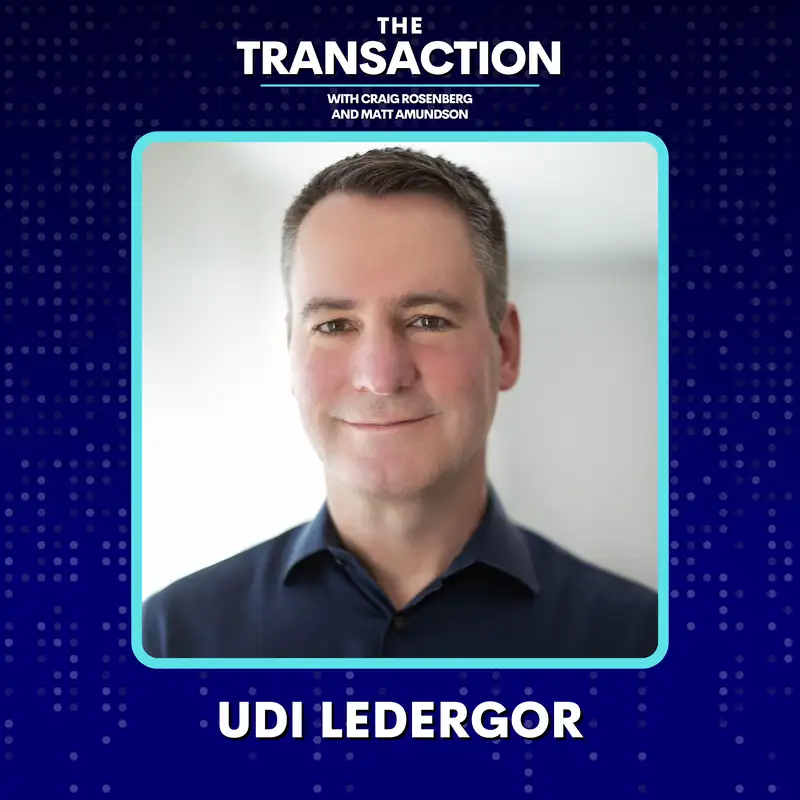
How Courageous Marketing Leadership Builds Bold Brands with Udi Ledergor, Chief Evangelist at Gong - Ep 75
TT - 075 - Udi Ledergor
===
Udi Ledergor: [00:00:00] Here I am to spill the beans on how Gong has been doing this so effectively that I'm honestly [00:00:05] shocked that more companies are not doing this
Udi Ledergor: We're sometimes over reliant on all this automation crap. we [00:00:10] like that it saves our team work, but we don't realize what we're giving up in return.
Udi Ledergor: There's two ways you can use [00:00:15] AI. One way is to automate something away so you can take the human out of it. The other one is [00:00:20] to augment the human being so that they're working together.
Udi Ledergor: Always focus on the attendees [00:00:25] experience, the other person's experience.
Udi Ledergor: What would they want to do to make this easier and [00:00:30] frictionless, even if that means creating more work for your team?
Udi Ledergor: The only purpose of the subject line is to get [00:00:35] people to open the email. Now that sounds so obvious, but if you look at your inbox right now, you'll see [00:00:40] that 99 out of a hundred emails don't follow that rule.
Udi Ledergor: Acting swiftly and decisively was the [00:00:45] right way to go, and it, and it quickly, extinguished the flames that could have gotten much bigger in this case.
Udi Ledergor: [00:00:50] The worst thing that can happen to you is not that some people hate what you're doing. The worst thing that can happen [00:00:55] to you is indifference.
Craig Rosenberg: I'm so grateful that the LinkedIn photo [00:01:00] controversy was left out of, uh, the original recording [00:01:05] here, so I'm in good
Matt Amundson: no, we're bringing it back now.
Craig Rosenberg: UDI, what are your thoughts on [00:01:10] my LinkedIn photo again? What,
Udi Ledergor: It, it looked like it was taken while. [00:01:15] Dropping in an elevator or a high speed train, I'm not sure.
Sam Guertin: [00:01:20] And of a different
Udi Ledergor: Let, let's call it dynamic.
Craig Rosenberg: [00:01:25] let me, let me just explain one thing to everyone in the [00:01:30] audience. One is I don't take very good pictures.
Udi Ledergor: [00:01:35] it's on brand. That's perfectly on brand. Then.
Craig Rosenberg: Yes, that [00:01:40] well said. What's crazy is I had to change, [00:01:45] desperately, tried to change pictures 'cause the original one that was up there was more professional, but it looked [00:01:50] like someone had like used a air pump and pumped me.
Craig Rosenberg: I mean, I was [00:01:55] like 25 pounds, way heavier. And so I had to take [00:02:00] that off. And then I went with another photo that everyone hated. Literally there was like [00:02:05] complaints in the office about it. And so I changed to this one and this one has not [00:02:10] gone well. Like I'm, Matt and I were just doing a call and this person's from [00:02:15] LinkedIn, Ruby from LinkedIn gets on and says, I have an [00:02:20] agenda item I'd like to talk you about.
Craig Rosenberg: At the end of the call, she brings up the LinkedIn photo. [00:02:25] I
Udi Ledergor: Well, I, I'll, I'll tell you, as, as a marketer, Craig, can I, can I just give you my [00:02:30] professional opinion and that is that you are winning
Matt Amundson: yeah, the engagement
Udi Ledergor: and I'll tell you why. I'll tell [00:02:35] you why, because. The worst thing that can happen to you is not that some people [00:02:40] hate what you're doing. The worst thing that can happen to you is indifference, and you are [00:02:45] getting anything but that.
Udi Ledergor: Some people love it. Some People. hate it, but everyone's talking about it. So [00:02:50] you are winning, my friend.
Craig Rosenberg: oh my
Matt Amundson: Streets are talking. Streets are talking.
Craig Rosenberg: [00:02:55] street, the streets is talking.
[00:03:00] [00:03:05] [00:03:10] [00:03:15]
Introducing Udi Ledergor, Chief Evangelist at Gong
---
Craig Rosenberg: All right, so here's what we got today. [00:03:20] Uh. Uh, I can't believe we had, this is, it's taken us this long to have UDI [00:03:25] on because he's been mentioned. So, UDI, you've been mentioned like multiple times on [00:03:30] the show. Um,
Udi Ledergor: Hopefully some of them in good context.
Matt Amundson: I, all [00:03:35] of them
Craig Rosenberg: Well, Matt always used you guys as an example of how you [00:03:40] used the content that was driven from your own product to, to [00:03:45] drive a narrative That right now the, the, the brand [00:03:50] around Gong is extraordinary.
Craig Rosenberg: And so, um, and we [00:03:55] were just remembering the days in the early days where you guys were taking like it was, or lab, [00:04:00] you, everyone, you guys were taking like real phone. Infor, you know, information [00:04:05] from conversations and turning it into interesting content when nobody was talking about it. It [00:04:10] was like, uh, man.
Craig Rosenberg: So yeah. So no, we brought you up [00:04:15] multiple times. This is also a test to see if you actually listen to the show on a regular basis. So now we know [00:04:20] the truth there. Uh, I'm just kidding. That's totally fine. The, um, so, so [00:04:25] yeah, for the audience, like, um, I'm actually normally we lead up to the [00:04:30] end. I'm just gonna say we have Udi Letterer from.
Craig Rosenberg: Uh, famous to [00:04:35] us for like one of the best. Well, yeah. Yeah. I mean, but yeah. But like for [00:04:40] Matt and I, on a personal level, the, the sort of SaaS, um, [00:04:45] AI branding exercise is like. A model. And [00:04:50] so that's why we keep me. So, um, we we're really excited [00:04:55] to, to have Udi on the show and, and talk about these things and, [00:05:00] um, kind of what we can all learn from it as an audience on what we could do.
Craig Rosenberg: [00:05:05] Um, with what he's learned. So this show is, we are very [00:05:10] excited, UDI, to have you on for, for literally like you are, you are an [00:05:15] example to us on, on what you should be doing when you're building a company. So thanks
Craig Rosenberg: for coming on. [00:05:20] folks. The excitement is mutual
Craig Rosenberg: We, uh, [00:05:25] we don't believe you, but we appreciate the kind words. Um, yeah. So, [00:05:30] um,
Matt Amundson: gracefully.
Craig Rosenberg: so yeah. [00:05:35] So we have, whoa, I just flipped my screen. Just flipped in, uh, upside down. You guys didn't
Udi Ledergor: [00:05:40] Interesting. Yeah.
Craig Rosenberg: Yeah. Yeah. Well, you know.
Udi Ledergor: On.
Craig Rosenberg: photo. Yeah, I know. We might as well make that my [00:05:45] profile photo. Okay.
3 Critical Marketing Lessons Learned from Sending an Email Campaign that Almost Ruined a Massive B2B SaaS Brand
---
Craig Rosenberg: So there's two parts of the show.
Craig Rosenberg: So part number one, um, [00:05:50] is, uh, really, you know, uh, we have a lot of fun with, we just asked the, uh, [00:05:55] the guest to tell us a Go-To-Market story. Could be, you know, [00:06:00] funny, could be harrowing, could be, you know, uh, heroic, what whatever you, you know, [00:06:05] we just love hearing stories and you probably have a million of 'em from
Craig Rosenberg: building. [00:06:10] Gong. Um, and then the second part is the, the basis of the show [00:06:15] is to learn from people like you on what strategies, tactics, [00:06:20] et cetera, work in today's really dynamic market. And that's just [00:06:25] giving it a really nice sort of, um, high level term. I mean, it's crazy. And so we'd [00:06:30] like to just, we just have two.
Craig Rosenberg: Bullet points and then we talk. So, [00:06:35] um, the, the first one we'll start with is, UDI, if you have a story for [00:06:40] us, we'll just sit back and enjoy it.
Udi Ledergor: Um, yeah, I don't, I dunno if you'll enjoy it. [00:06:45] Um, we'll, we'll go with the harrowing, if that's okay with you.
Matt Amundson: Yeah, I like it.
Craig Rosenberg: if it's [00:06:50] harrowing. I think we, well, let's see. Let's, you know what? We'll, we will be the judge.
Udi Ledergor: that [00:06:55] that word confused me for years. 'cause I, I kept expecting something about heroes, but it, it's actually very [00:07:00] saddening. So, um, yeah, here we go. So, so this [00:07:05] story took place a few years ago, um, actually during the height of the [00:07:10] pandemic and the rise of the Black Lives Matter movement, um, after the [00:07:15] murder of George Floyd in 2020. Um. It was another day in the [00:07:20] office at Gong, a rather remote office at Gong, and [00:07:25] we, we were told by G2 that we need to collect more [00:07:30] reviews before they do their, like quarterly tally. And that, uh, some of the other [00:07:35] players were accumulating more reviews that quarter and that we should send out another one of [00:07:40] those review collection campaigns for those who've never done it typically looks like this.
Udi Ledergor: We send out an [00:07:45] email, uh, to. People that we suspect are happy users of our product, and we say, [00:07:50] Hey, Matt, hey Craig. Um, thanks for your high NPS scores. Um, it's [00:07:55] thanks to raving fans like you that, that we grow and succeed. Uh, we'd love for you [00:08:00] to write your honest opinion, uh, and this link and fill out a G2 review.
Udi Ledergor: And to [00:08:05] thank you for your time, here's a, a Starbucks gift card to get yourself a cup of [00:08:10] coffee or something like that. And so.
Matt Amundson: so
Udi Ledergor: We were about to send out the [00:08:15] email when one of the customer marketers on my team had an idea and she [00:08:20] said, you know, we, we like to do good and we like to make this world a little bit of a better [00:08:25] place with everything going on now, what if we switch things up a little bit?
Udi Ledergor: [00:08:30] And instead of offering folks a random gift card for Amazon or Starbucks, [00:08:35] uh, we tell them that we'll donate in their name to a Black Lives Matter. [00:08:40] Uh, Uh, nonprofits. So there, there were few of them, uh, [00:08:45] out there doing great work to, uh, forward the causes of Black Lives Matter. And the, the idea [00:08:50] seemed reasonable and I said, yeah, why, why wouldn't people like this?
Udi Ledergor: Right? [00:08:55] Uh, they don't have to do anything except spend 30 seconds writing a review that they probably do anyway, [00:09:00] and we get to donate on their behalf. And, uh, we set aside several thousands of dollars to [00:09:05] donate, um, to Black Lives Matter causes. and so we send [00:09:10] out the email, literally the same email we've used multiple times before.
Udi Ledergor: Very successfully. We knew it should [00:09:15] drive a few hundred reviews. Uh, we just switched out the gift card [00:09:20] offer with, we'll donate in your name for a Black Lives Matter nonprofit [00:09:25] within like 40 minutes of sending that email. I got a [00:09:30] dozen livid emails in my inbox. Uh, [00:09:35] the first ones came directly from the recipients of the email who said [00:09:40] something along the lines of, this is the most offensive thing I've ever seen.
Udi Ledergor: I [00:09:45] can't believe Gong is doing this. Uh, one of them said, I hope my black sales leader didn't [00:09:50] receive this email, or We probably won't be doing business with you. [00:09:55] Uh, the next emails came in from board members who had heard about it. [00:10:00] Already within an hour from our customers who were threatening to stop doing business with [00:10:05] us.
Udi Ledergor: Uh, my CEO forwarded one of them from another board member with [00:10:10] similar tone. So it was clear that we had messed up. It was clear that we had messed up [00:10:15] and I had to act fast [00:10:20] and decide do I kind of let this. Die out and [00:10:25] hope that most people, as with in the case of most emails, don't even open the email and don't see [00:10:30] what we send out or, or do I take action and, and risk [00:10:35] increasing the visibility of the email, uh, but try and make right.
Udi Ledergor: [00:10:40] And I very quickly decided that the latter would be. the right [00:10:45] approach. That is take action, take full ownership, and see what I can do to make it better. [00:10:50] And the premise was, I [00:10:55] told you I got about a dozen emails and my thinking [00:11:00] was for every one of those dozen, there's probably 10 or 20 [00:11:05] more who feel the same way as the folks who took the time and energy to write me [00:11:10] back.
Udi Ledergor: But those other folks, they either didn't have the words or they didn't have the time, or they [00:11:15] just didn't care enough to write me what they felt about the campaign. [00:11:20] And so I thought if that's the case, there's, I've probably pissed off dozens, if not hundreds of people at this point [00:11:25] because the email went out to, I think, like 6,000 people asking for reviews, so not a small group.[00:11:30]
Udi Ledergor: And, and I thought if I got a dozen, they're probably representing like a hundred or more. [00:11:35] And so very quickly, um, we turned around another email that went out to the [00:11:40] same 6,000 people. Um, but if the first one was, I think from a generic email [00:11:45] address signed by the Gong Marketing team, the second one came from udi's inbox [00:11:50] at my gong email and was signed with my name and full email. [00:11:55] And I, I just said, folks, we, we messed up. I messed up. I said, I, messed up. [00:12:00] I, I sent you an email a couple of hours ago. Um. It [00:12:05] was not worded in the way that we wanted to and we clearly shouldn't have [00:12:10] connected the reviews that we'd love for you to write with [00:12:15] donating for an important cause. And I'm sorry that went out.
Udi Ledergor: It should not have gone out. [00:12:20] Um, here's what we're doing instead, we're immediately donating the entire [00:12:25] budget that we allocated of so and so thousands of dollars to these two Black Lives Matter [00:12:30] organizations. We hope you can forgive us for this messing up. [00:12:35] Um, I'll make sure it never happens again. And if you have any other feedback or want to chat, here's my email [00:12:40] and just feel free to reach out. And I sent that email [00:12:45] out and very quickly I got, I think the number was [00:12:50] like 60 something, emails back. So like [00:12:55] my e my inbox was completely flooded. In this case, [00:13:00] all the emails were positive.
Matt Amundson: all
Udi Ledergor: So a few of them were from [00:13:05] the same people who originally sent the complaints this time saying, thank you for taking ownership [00:13:10] and making this right.
Udi Ledergor: A lot of the. others were kind of [00:13:15] one of two options. Half of them said, you know, I didn't. [00:13:20] I didn't even feel that anything was so wrong with the original email you sent, but [00:13:25] thank you for noticing and, and sending out this apology. Um, this is what we [00:13:30] expect from Gong and from you. And the other part of the email is confirmed. What [00:13:35] I felt about the original responses where they said, you know, I read your original email. [00:13:40] Something about it felt off, but I couldn't find the words. To tell you what was [00:13:45] wrong with it. So thank you for doing this and making it right. We, we appreciate [00:13:50] Gong and we'll go write that review that you asked for. And so that's, that's [00:13:55] how that ended, uh, almost as abruptly as it started within a few hours, [00:14:00] uh, including the, the few customers who threatened to stop doing business with [00:14:05] us, retracting that and saying that they accept the apology. But the, the lessons from [00:14:10] that were. A couple maybe. Maybe. Here's the top three. Number [00:14:15] one was, you know, gong is known for being cheeky and [00:14:20] edgy and inserting humor into things. None of that was intended in this [00:14:25] case. I was not trying to be humorous or make lighthearted about Black Lives Matter matter [00:14:30] or anything going on at the time, but if anything, this taught us that. [00:14:35] There are issues where we have to be extra careful about, and when there's global and social [00:14:40] issues with this type of rawness and [00:14:45] sensitivities, we have to tread very, very carefully and should have added more layers [00:14:50] of approving this campaign in the first place, which I approved.
Udi Ledergor: So, so I took full responsibility [00:14:55] for, um, you know, it was a very good team member who had a [00:15:00] reasonable idea that I approved, I probably should have checked with a couple more people to make sure, or, [00:15:05] or even just given more thought myself, um, which I didn't do. Uh, so that was one lesson. The [00:15:10] second lesson was that my, my hunch about more people [00:15:15] being impacted by the campaign and feeling bad about it than the ones who [00:15:20] actually wrote about it was absolutely true, as evidenced by the, uh, large number of [00:15:25] people who wrote back after the apology email. That's, I think, a generic lesson to [00:15:30] remember, like if you get a handful of complaints about something, they're probably representing a much larger group [00:15:35] that just doesn't care enough to write you or don't have the time, or don't have the words, but you should not [00:15:40] assume that you just pissed off three people.
Udi Ledergor: If you get three responses, you probably pissed off 30 or 300. They, they [00:15:45] just didn't write you so. Respond as if 300 people were pissed off. [00:15:50] And then the third lesson was acting quickly and assertively and [00:15:55] proactively and not hoping that this will die over. And, uh, waiting days to see, well, [00:16:00] maybe we can just ignore this, or let's have committees and meetings next week to decide what to do.
Udi Ledergor: That would [00:16:05] would've been the wrong approach and would've escalated everything and it would've exploded and people would've started [00:16:10] sharing it on social media and god knows where else this would've gone. So. [00:16:15] Acting swiftly and decisively was the right way to go, and it, and it quickly, um, [00:16:20] sort of extinguished the flames that that could have gotten much bigger in this case.
Udi Ledergor: So [00:16:25] I promised you a harrowing tale. I I, think I delivered that.
Craig Rosenberg: God. What the, [00:16:30] whew. That was, uh, gripping. Yeah. So I'm going to, [00:16:35] let's, let's go through ratings story. Gripping [00:16:40] incredible.
Matt Amundson: Script, movie script
Craig Rosenberg: I didn't, I didn't interrupt
Craig Rosenberg: once.
Matt Amundson: [00:16:45] Yeah.
Craig Rosenberg: I didn't multitask. Like, I was like, wow. Uh, [00:16:50] harrowing. Yes. I mean. Wow, that was [00:16:55] incredible and was it.
Matt Amundson: was
Craig Rosenberg: were real.
Matt Amundson: no, no, no. I imagine, yeah, you probably didn't [00:17:00] sleep well that night.
Craig Rosenberg: But you know, I,
How Gong Intentionally Built an Authentic, Sincere, & Human Brand for A B2B SaaS Startup
---
Craig Rosenberg: I, I would say like part of it [00:17:05] too where when you said No, look, I decided to decisively send the [00:17:10] email from me. That's, that is Gong. [00:17:15] Like in many ways that was incredibly on brand to, uh, [00:17:20] because part of the ch cheeky, uh, sort of fun content [00:17:25] thing also makes you guys highly personable and
Craig Rosenberg: like,
Craig Rosenberg: uh, [00:17:30] and so, uh, you coming in with the way you did from [00:17:35] your email almost immediately, uh, that seemed completely [00:17:40] on brand.
Udi Ledergor: Yes, you, you're right, Craig, part of what we do is always [00:17:45] authentic and sincere. And, uh, we, we've codified some of that in [00:17:50] Gong's leadership principles, one of which is simply called no royalty, which [00:17:55] means being in a leadership position doesn't give us a lot of perks. [00:18:00] It gives us extra responsibility.
Udi Ledergor: That means that I don't get to push anyone [00:18:05] else under the bus when something like this happens. I have to step up and offer my head if [00:18:10] needed.
Matt Amundson: Yeah. Yeah, it's one of the things that I've always really admired about the Gong brand is [00:18:15] very human. It is very human. You know, like Craig and I talk a lot about like, [00:18:20] great marketing that we see from other SaaS companies. It's, in a lot of cases, it's very hard to [00:18:25] associate that with a person unless we know the person directly.
Matt Amundson: Right. Like, you know, [00:18:30] we, we, you know, I worked at Marketo, so we know people like Maria Pergolino, we know Jon Miller [00:18:35] very well. Um, one of the things that I thought was so incredible about Gong, uh, [00:18:40] during the, like, sort of the, the, the scale up stage of Gong, was that like, it was [00:18:45] like. This information is coming out.
Matt Amundson: It's really, really impactful stuff. It was [00:18:50] like, you know, like the four things that if you say on a phone call, like you'll, you know, lose a deal or [00:18:55] replace these four things with this to improve your win rate by 70%, and [00:19:00] because it often came from Chris. It was like just a sales [00:19:05] leader telling a sales, you know, other sales leaders like, Hey, like nudge, nudge.
Matt Amundson: [00:19:10] Here's some really good advice. That's totally driven by data, right? Like, I'm sure you've [00:19:15] been thinking this. Let me confirm that with some really good data. And I think that that's [00:19:20] one of the things that when I think about Gong as a brand is like always so exceptional is [00:19:25] like, it just felt like people helping people.
Matt Amundson: Right. Like, Hey, [00:19:30] I just, I know this thing and I think you know it too, but let me just confirm it for you for forever [00:19:35] because you've got a CRO to talk to, or you have customers to talk to. You have [00:19:40] a board that you're responsible to like, let me give you the data that you need to just absolutely [00:19:45] crush.
Matt Amundson: And that's, that's part of why I think the brand worked so well. And part of why [00:19:50] copycat brand that's like, Hey, we're just gonna come out with all these really great reports [00:19:55] that are all about. You know, that, that are based on data that we have exclusively don't hit the [00:20:00] same way. Uh, it feels like sort of like that last kind of sprinkle of magic dust [00:20:05] was the, the was was how personal the brand always felt to me.
Udi Ledergor: And you, you're [00:20:10] absolutely right, Matt. And that, that was very intentional. 'cause when we sat down, uh, a very small [00:20:15] team was me and Amit, my CEO and co-founder, uh, Orlob was involved in some of this. In [00:20:20] the early days, we, we sat with an agency who kind of facilitated an [00:20:25] exercise to determine what our brand personality is.
Udi Ledergor: And one of the [00:20:30] things that I think came out of that workshop that remains with us to this day, which makes us very [00:20:35] unique, is, is, is this. You think about every startup in every field, you ask them like, what do you [00:20:40] want to be known for? And they'll all tell you in some version or another, we want to be known as the authority [00:20:45] and thought leader in our space.
Udi Ledergor: Right? Who doesn't want to. Now we [00:20:50] also wanted to be trusted as a thought leader in our space, but here's what we did differently. We [00:20:55] married that quality with another quality. While most [00:21:00] companies confuse being thought leaders and [00:21:05] just an authority in their space with being boring and stuffy and [00:21:10] condescending, we decided to marry that trustworthy.
Udi Ledergor: Thought [00:21:15] leader with just being a relaxed, friendly guy who wants to help you out. [00:21:20] That was a very intentional decision that we made. Like we wanna be, we [00:21:25] wanna unbutton that shirt collar and the tie and let our hair down and not be the [00:21:30] obnoxious guy at a bar. When you go to a party and someone's just talking about themselves and you're looking for an [00:21:35] escape route, we don't want to be that guy or that brand.
Udi Ledergor: We wanna be the guy that asks you how your [00:21:40] day was and finds your story fascinating and communicates in a friendly way that you [00:21:45] wanna stay and have another drink with them. And I think that's what we. Attempted to [00:21:50] create and, and in most parts we did.
Matt Amundson: Yeah, I would agree.
Craig Rosenberg: [00:21:55] That was cool. What a great start to the show. All right. So, um, [00:22:00] we can piggyback that 'cause there was a lot of really good lessons there for everyone. But, um, [00:22:05] so next,
Reimagining B2B Marketing Events To Optimize for Guest Experience
---
Craig Rosenberg: like give us, you know, your sort of one to three [00:22:10] best practices, strategies, et cetera, that you feel like should be employed [00:22:15] today to be successful from the Go-To-Market side.
Craig Rosenberg: Um, and, uh, [00:22:20] well. We're just, I'm not gonna say anymore. I'm really looking go.
Udi Ledergor: Okay, so let me, let me [00:22:25] start with, one that kind of piggybacks on the last piece of conversation that we had on, on the [00:22:30] friendly tone. And then the second one, uh, I promised will be about AI because we have to, [00:22:35] right? So, uh, so let's start with one that's not ai. It's actually so old school and that's [00:22:40] why it works. So here it is. Um. You know, you know [00:22:45] how most event invites look like in, in B2B marketing. You [00:22:50] get this really well designed email with headshots of speakers and panels and [00:22:55] everything, and then click here to save your spot. And then you get this long [00:23:00] form asking you everything about your contact details and your, [00:23:05] I don't know, shoe size and dietary preferences.
Udi Ledergor: And I, I just wanted to sign up for the [00:23:10] event, get the recording. Like, I don't need all this crap. And, and that, of [00:23:15] course, as we'll tell you any event manager results in pretty low engagement and registration for [00:23:20] most events, right? Very few events actually sell out and wish they, they [00:23:25] have fewer attendees.
Udi Ledergor: So when we were, uh, about to [00:23:30] start promoting one of Gong's Celebrate events, we thought, well, what, what if we looked at that [00:23:35] invitation process and kind of re-engineered it to see what we, what [00:23:40] could we do to make it super easy for folks to sign up because they, they wanna sign up, but [00:23:45] they just don't want to go through all that clicking and landing pages and forms.
Udi Ledergor: We thought, [00:23:50] well, okay, what, what do we do when we wanna invite our family over for Sunday brunch? [00:23:55] Do we send them a landing page with a form to fill out? I, I dunno about you, but I, I don't, I [00:24:00] don't, um, we just say, Hey folks, I, we'll send a group. Chat [00:24:05] message or something saying, folks, uh, 11:00 AM brunch our place, who's in?
Udi Ledergor: And then [00:24:10] they'll either give you a thumbs up or say Yes and they're in right. It, it could be that simple. It could be [00:24:15] that simple. So we said, okay, how do we replicate that in a B2B context? And so here's [00:24:20] what we did. We compiled a list of emails already in our system of everyone who [00:24:25] attended last year's Celebrate event. And then we said, okay, we're gonna send them out [00:24:30] a plain text, email, no HTML, no graphics, no headshots, no panels, no [00:24:35] logos, nothing in there. It came out from Danny. Danny was, was the event manager at Gong at the time. Danny [00:24:40] Hutto, great guy. And so it came from Danny a, a real name, a real person, and the plain [00:24:45] text email just said something like this.
Udi Ledergor: Hey, Matt. Um. We're stoked that you came last [00:24:50] year to celebrate. We wanted you to be one of the first to know that the new Celebrate event is coming up in [00:24:55] three months. The website isn't, isn't, isn't even up yet. But if you reply to this email, [00:25:00] yes, I will get you signed up and send you all the info when it's ready. That was it. [00:25:05] So instead of asking you to click through somewhere and fill out a form and wait for pages to [00:25:10] load, we just ask you to reply. Yes. Simply reply. Yes. [00:25:15] The first test that we send that email out to a couple of thousand folks, we got [00:25:20] 700 yeses on that day. So we had 700 people signed up for the event before [00:25:25] we even put up a website because we made it easy for them.
Udi Ledergor: And, and that's what I meant by [00:25:30] just going old school, like, how would you invite your family and friends to brunch think that [00:25:35] way, and you'll get more people engaged because you have to make it easy on them. So that's, that's one fun [00:25:40] story that I think just has lessons for all of us, uh, one of them in this case being [00:25:45] like, always focus on the attendees experience, the other [00:25:50] person's experience.
Udi Ledergor: What would they want to do to make this easier and frictionless, even if that [00:25:55] means creating more work for your team? 'cause poor Danny had to sit for hours updating his spreadsheets on the [00:26:00] back end because those darn people didn't fill out any neat forms that went into your Marketo [00:26:05] forms and filled out the CRM.
Udi Ledergor: None of that happened automatically. Danny had to do that. [00:26:10] Himself, but was that worth a day of his work to get 700 attendees? You bet it was.
Matt Amundson: [00:26:15] mm-hmm.
Udi Ledergor: So that's that's a fun story and that, and it's got nothing to do with AI [00:26:20] and I, and I think we're, we're sometimes over reliant on all this automation crap. And we [00:26:25] like that.
Udi Ledergor: It saves our team work, but we, don't realize what we're giving up in return. We're giving up [00:26:30] attendees and engagement and downloads and all that stuff.
Craig Rosenberg: [00:26:35] Okay. That was a great tidbit and story. Uh, [00:26:40] Matt does send his family landing pages for when he's organizing dinners, just as a [00:26:45] heads
Craig Rosenberg: up, only
Udi Ledergor: I am not coming to your next brunch.
Matt Amundson: only 'cause they're all boomers and they, they won't know how to [00:26:50] fill it out.
Craig Rosenberg: Opt-ins, it's, you know, would you be [00:26:55] open to receiving e content from Matt over time as well?
Udi Ledergor: [00:27:00] Absolutely. I, I, I bet he puts his family on a nurture track after they sign up for the first brunch.
Craig Rosenberg: [00:27:05] but I just love, just love the idea of like, uh, [00:27:10] um, you know, what, what is the attendee or the prospect or the [00:27:15] customer, what experience do they want? I just, you know, we just did a session with, [00:27:20] um, Brent Adamson. We've had him on the show, a couple. I don't know if you've read his new book, but you know, [00:27:25] that's.
Craig Rosenberg: You know, it, that's his thing is like, you know, can we, can we [00:27:30] switch? We gotta switch seats here. And we gotta figure out like, you know, [00:27:35] what's, what, what they want to be doing and what's best for them. And uh, and just [00:27:40] something as simple as that is great. By the way, I will mention, this is not a, but like [00:27:45] topo, uh, the va, we.
Craig Rosenberg: We did it a little different, which was, there was [00:27:50] craig.ai. So basically we sent every email invite from [00:27:55] me and we just said, Hey, let me know. And we had to, they had to pay to go. So [00:28:00] we'd say I could just, I could have Sam who, or not Sam, sorry. Sam, [00:28:05] um, I forget Mark, you know, just. I'll introduce you to Mark, but it was Mark.
Craig Rosenberg: [00:28:10] I didn't send any of those emails and so people would just write back, yes, I'm in. And he'd be like, [00:28:15] great, you want to just jump on a call? You can gimme your credit card. I'll do it. So like literally we probably [00:28:20] got 50 regs out of the 1800. Everything else was effectuated by [00:28:25] Mark and it was easier, uh, for them, um, that way.
Craig Rosenberg: And it was great. The [00:28:30] funny thing was I would go to the. Summit, the TOPO summit, and people like, [00:28:35] dude, thanks for reaching out on the event. I'd be like, great, yes, I'm looking at their name [00:28:40] tag to figure out who it was. Um, but yeah,
Udi Ledergor: That was my AI clone. I'm Craig, not [00:28:45] ai.
Craig Rosenberg: same idea. All right, keep going. That was great.
Ai Takeaway
---
Udi Ledergor: Okay, here's a, here's a [00:28:50] cool AI one that I completely stole from my friend Kyle Lacey over at Docebo. [00:28:55] Um, and I, I just love it so I keep repeating it because [00:29:00] I, I think more people should be using it and it, it kind of flips the idea of using [00:29:05] AI on its head instead of
Craig Rosenberg: Instead of
Udi Ledergor: directly asking a high AI [00:29:10] to help us.
Udi Ledergor: It's actually a good way of getting AI out of our way. And I'll explain. [00:29:15] So let's say we're sitting, um, in a creative meeting trying to come up with the next [00:29:20] idea for. Our Super Bowl commercial. Okay, take this, whatever you want. [00:29:25] Um, so what some people might think they could do now is let's open [00:29:30] ChatGPT and ask it.
Udi Ledergor: Uh, say this is our product, this is our market. Um, give us 10 [00:29:35] ideas for a creative brief for our Super Bowl commercial. Right? And then they're like, great, we have all these great ideas. Let's [00:29:40] go rank them and pick one and go do them. Well, Kyle has a much better idea. [00:29:45] He starts with that same way we get in the room.
Udi Ledergor: We open ChatGPT, give us 10 creative [00:29:50] ideas for our Super Bowl commercials. And now we table all those 10 ideas [00:29:55] and never look at them again. That is correct use of AI because those [00:30:00] 10 ideas are the most obvious, regurgitated, overdone ideas in [00:30:05] the world because that's how LLMs are designed. They read all this [00:30:10] content that they were trained on, and they repeat with the highest likelihood, [00:30:15] the most regurgitated, overdone ideas.
Udi Ledergor: That's what it's feeding you. So if you're using [00:30:20] AI in any form of way for that sort of creative work, you're doing it wrong. You are [00:30:25] not developing a unique fresh point of view. You're just repeating what [00:30:30] everyone is already doing, otherwise known as best practices, which in reality of [00:30:35] course, are boring practices because by the time anything becomes a best practice.
Udi Ledergor: Everyone is doing it. [00:30:40] So it's gonna be boring and stale, and you're never gonna get something extraordinary outta it. So [00:30:45] I love that idea of, let's use AI almost like a jiujitsu move. We'll take what [00:30:50] it's good at and then use it against itself by tabling those ideas. So now [00:30:55] we know what not to do. 'cause these are the most obvious and let's go develop our own.
Udi Ledergor: But by now, our [00:31:00] creative juices are flowing 'cause we just saw 10 ideas, which is way easier to use as a starting [00:31:05] point than a blank slate.
Craig Rosenberg: AI with a [00:31:10] twist. My man. What do you think of that one,
Matt Amundson: I think [00:31:15] it's, I think it's so smart, right? Like if you're, I mean, honestly, if, if you're doing that.
Craig Rosenberg: [00:31:20] I A a thousand other people are also doing that, right? So you might as well just, you know, cease [00:31:25] with the obvious answers, right? Like we all know as marketers, the more obvious you are, the less [00:31:30] engaged and interested people are gonna be.
Matt Amundson: People love stuff that comes outta left field. So, uh, I think that [00:31:35] that is one of the smartest little hacks that I've heard, uh, for using an [00:31:40] LLM in a long time.
Udi Ledergor: I'll credit to Kyle. Lacey here. I, I bet he stole it [00:31:45] as well, but it's just so good. I have to share it.
Craig Rosenberg: Uh, we'll [00:31:50] take, I mean, with proper attribution, UDI,
Udi Ledergor: Yes, yes, yes. Still like an artist.
Craig Rosenberg: him a [00:31:55] Yeah, yeah, yeah. The um. Okay, I'm gonna try [00:32:00] to give you my take here really quick. It might get confusing. Matt [00:32:05] and I were on an earlier call with someone. I kept confusing everyone on the call. I dunno if you noticed that Matt.[00:32:10]
Craig Rosenberg: She kept having to say, so do I have to, oh, whatever Sam. No, I'm just kidding. [00:32:15] Uh, so there's this thing though, which is. [00:32:20] That's not an argument to not use AI because, [00:32:25] you know, look, I'm back on the speaking circuit and 40% of the audience are the same [00:32:30] guys that complained about the original sales tech movement, and I'm telling you, and they're like, [00:32:35] well, like, you know, what about the human element?
Craig Rosenberg: And I'm like, yeah, the human element, [00:32:40] uh, can be faster and even better using ai. Not to [00:32:45] replace your thoughts, but to enable your thoughts and like. I, I [00:32:50] don't know when that was one of the things I thought of when you were talking, you weren't saying. Don't use [00:32:55] ai. You're saying here's the best way to use
Craig Rosenberg: it.
Craig Rosenberg: Because, you know, it's like I, I'm [00:33:00] just sitting there on the show, I'm like, well, you know what, man? Like, honestly like we don't have time for this. Like, people are here, [00:33:05] like, don't use it. It's fine. Like, you, you won't win, but like, you know, don't use [00:33:10] it. Or I tell people, you know what you could do? Here's, here's my tip.
Craig Rosenberg: Go try to take. [00:33:15] The AI away from your employees and see how they react. Because you know, at the end of [00:33:20] the day, by the way, like I used to tell people that during in sales tech too, like, it's like, [00:33:25] well you can, you think all you want about ROI, but like, why don't you ask the [00:33:30] sales leader if you took away gong?
Craig Rosenberg: They'd say, I've over my dead body. Right.
Udi Ledergor: Right.
Craig Rosenberg: [00:33:35] Because they're using it,
Udi Ledergor: you,
Marker
---
Udi Ledergor: you're making an important distinction, Craig, that um. [00:33:40] I I, I'd like to use just some words to label it, which is there, there's two [00:33:45] ways you can use ai. One way is to automate something away so you can take the human [00:33:50] out of it. The other one is to augment the human being so that they're working together. [00:33:55] Now, there are valid use cases for automating things mm-hmm. things that [00:34:00] you do not need the human at all, updating your CRM. Thank God we don't need humans to do [00:34:05] that anymore. AI can fully automate that and we all get that time back. There are things [00:34:10] like coming up with a creative idea for your next Super Bowl commercial where the best use of AI is to [00:34:15] augment human intelligence and not replace it to make sure that you're getting the best [00:34:20] that you can produce there.
Udi Ledergor: And there's, there's gonna be many such cases. So yes, it's saying, and of [00:34:25] course there's gonna be tasks where, where you don't want to use ai, right? If you wanna come and console someone after a [00:34:30] great loss, you don't wanna send them an AI generated message. You actually wanna come and be [00:34:35] your, your unpolished human self and do that.
Udi Ledergor: So you, you need to understand which [00:34:40] situations are best for automating a away with ai. Which ones are best for augmenting human intelligence with [00:34:45] ai and which ones you probably shouldn't be using AI at all.
Craig Rosenberg: Yeah, [00:34:50] true that.
Matt Amundson: yes.
Craig Rosenberg: All right, what else you got for us?
Matt Amundson: Oh [00:34:55] geez.
Matt Amundson: I just, what else you got for us, UDI?
Craig Rosenberg: dude? [00:35:00] Okay. All right. All right. But here's the thing, those were two really good, like usable [00:35:05] ideas,
Matt Amundson: I agree. uh, I I,
Craig Rosenberg: it's just the way I said it,
Udi Ledergor: it's okay. I, [00:35:10] I, look, I always say my husband is thrilled anytime I get the opportunity to lecture anywhere outside our [00:35:15] home, so thank you on his behalf. Um. Here's [00:35:20] another fun one, um, to maybe address the gated
Matt Amundson: versus
Matt Amundson: [00:35:25] gated.
Udi Ledergor: content debate, which seems to be persisting after all these years. [00:35:30] Um, so there were years that everyone was, uh, um, uh, writing [00:35:35] obituaries for gated content and then for un gated content. And of course, um, the, the [00:35:40] truth is way more nuanced than that, so. With your permission, I'll just [00:35:45] walk you through the tactics of how I, think about it in a very popular context [00:35:50] of, let's say. I know my audience is somewhere on social media, [00:35:55] let's say LinkedIn, where we all live this in this day and age, and I want to [00:36:00] turn as many of them as I can into known leads on my website.
Udi Ledergor: So how do I [00:36:05] go about that? Do I use gated content? Do I use ungated content? How do I even get them from LinkedIn to [00:36:10] my website? Um, here I am to spill the beans on how Gong has been doing this for [00:36:15] quite a few years now. So effectively that I'm honestly shocked that more companies are. [00:36:20] not doing this. Um, here's what we do. So let's say we publish a new [00:36:25] article. like the Chris Orla style articles that you mentioned of, uh, why swearing on sales [00:36:30] calls will result in an 8% higher win rate. That's a real stat and that's a real [00:36:35] article.
Udi Ledergor: So.
Craig Rosenberg: God, by the way, for that one.
Udi Ledergor: Right, and that's.
Craig Rosenberg: [00:36:40] that? Yeah. Damn. Let's go
Udi Ledergor: So here's how we do [00:36:45] it. Um, the first thing we do, I want to go to where the party is at and the party is [00:36:50] at LinkedIn. That is where my audience is at, right? Um, I can't cram them all to my [00:36:55] website magically. So I go to where they're at, which is LinkedIn, and I publish the [00:37:00] article as a public article ungated, because that's The only way you can publish an article on [00:37:05] LinkedIn.
Udi Ledergor: There is no option to G it, right? So I'll publish, let's say, under my name in this case [00:37:10] now. Great. I, I get, uh, gong's [00:37:15] profiles to, uh, amplify the message. I get all of our gongs [00:37:20] to, I activate all of the gongs so that they also share the message. So now [00:37:25] hundreds of people are sharing this and thousands of people are viewing it, but all of them are anonymous readers, [00:37:30] right?
Udi Ledergor: They're on LinkedIn. I don't know who they are, but I know that they're reading my article. Um, [00:37:35] now, yes, there are some scraping tools to see like who liked it, but let, let, let's put those aside. Let's, let's try [00:37:40] to keep this clean. So here's, here's what we do to convert a lot of [00:37:45] those into known leads that I can actually continue emailing and selling to and call 'em if I want.
Udi Ledergor: [00:37:50] So here's what I do. Let's say I'm, um, I'm writing this article about why swearing on sales [00:37:55] calls work, and you should do it too. So I publish that on LinkedIn and then halfway in the [00:38:00] article, halfway down in the article, and again, at the end, I'll put a call to action which offers [00:38:05] you a premium piece of content.
Udi Ledergor: On the exact same topic, knowing that [00:38:10] you're interested in this topic right now and you are already getting value from my public domain article. [00:38:15] So if you're reading that article about swearing on sales calls, I might say, Hey, if you're [00:38:20] enjoying this read, download this cheat sheet of the top 20 swear words you should use on your [00:38:25] next sales call.
Udi Ledergor: Now, if you're halfway reading this article, you are very [00:38:30] enthusiastic about using swear words on your sales calls. There's a very good chance you're gonna click [00:38:35] that link to download the cheat sheet of the 20 top swear words you should be using. What [00:38:40] that does? it takes you to a landing page on Gong's website where we now ask you [00:38:45] just for your email, not for your shoe size, not for your phone number, not for your social security, [00:38:50] just your email to download that cheat sheet.
Udi Ledergor: And you know what? We see [00:38:55] conversion rates of 70 to 80% on those landing pages, 70 to 80%. [00:39:00] Because this is an asset that we curated, especially for [00:39:05] that public domain article that you were already reading. So we know you're in that zone. You're in that mental [00:39:10] space. I am now excited about swearing on sales calls.
Udi Ledergor: Tell me more. And so when [00:39:15] you go to our website, I know you're gonna download that PDFI minimize my ask of you [00:39:20] just to the email because there's so many tools that can enrich that now to anything. If I wanna know your [00:39:25] social security number, I'll find it. Just gimme your email. And then you can go back and continue [00:39:30] reading that article.
Udi Ledergor: But now I have your email. So that is, that is the tactic [00:39:35] of turning anonymous readers from LinkedIn to known leads on my website that now gimme their [00:39:40] email just about continuing that flow from the ungated article to the gated [00:39:45] article, knowing what zone you are and just doing that rinse and [00:39:50] repeat. And every time we publish an article with a premium asset like that, we see thousands of [00:39:55] downloads of the premium asset because we know how to distribute and amplify the [00:40:00] public articles, so enough people see it. We optimize for reach and then the [00:40:05] premium article optimizes for conversion. And by marrying those two together, we make the [00:40:10] magic happen.
Craig Rosenberg: That this is the most actionable [00:40:15] show of all time. all right, I I agree,
Matt Amundson: man. Like
Matt Amundson: there,
Craig Rosenberg: a.
Matt Amundson: [00:40:20] notes.
Udi Ledergor: you ask for tactical,
Matt Amundson: card.
Craig Rosenberg: Uh, all right, I have a couple, [00:40:25] couple thoughts.
Craig Rosenberg: That was incredible. Yeah, I know it sounds like you're like, oh, I'm just, but no, so [00:40:30] actionable. Um, so one is, is there a list of swear words that [00:40:35] Mo uh, work best on, uh, sales calls? 'cause I need that more as an audit to [00:40:40] make
Udi Ledergor: We, we, we actually, we actually looked it up. Yeah. Yeah. I mean, there was kind, kind [00:40:45] of the, the, the usual suspects, you know, the S word, the fbo, they, they showed up pretty [00:40:50] nicely. Some of them were softer. Um, but, uh, it, it, it did surprise us. And of course, it, it. [00:40:55] Made for an internet field day when we published that that [00:41:00] salespeople who swear have an 8% higher win rate.
Udi Ledergor: I mean, that was a marketer's [00:41:05] dream because Fast company.com ran with a story earning us more [00:41:10] visibility than I could ever pay for. When they ran with a story, radio station [00:41:15] started calling me, asking to interview me on air about the story they just read because it was [00:41:20] so interesting. And it just kept circulating more and more.
Udi Ledergor: And of course, [00:41:25] LinkedIn had a field day with about two thirds of the audience commenting with their most colorful [00:41:30] vocabulary, saying like, yeah, F yeah, that's what I've been talking about. And Mary, [00:41:35] come see this shit. That's what I've been talking about. And so on. And the the other third being appalled that we would [00:41:40] suggest using this kind of language in a professional setting.
Udi Ledergor: But Craig, before we [00:41:45] started recording this podcast today, uh, we were talking about something else, and I, I told you that, that you're [00:41:50] winning because your biggest enemy is not people hating what you're doing. It's indifference. And that's [00:41:55] exactly what we avoided by talking about salespeople, swearing. We did not [00:42:00] get indifference. We had some people love it, some people hate it, but that is the marketer's dream for [00:42:05] everyone to have an opinion and be passionate about getting engaged in the discussion.
Craig Rosenberg: [00:42:10] Yeah. You know, um, uh, so there's a LinkedIn, uh, [00:42:15] whisperer named Alec Paul. I don't know if you know him. And he's got, we've had, yeah, we've had him on the show, you know, [00:42:20] and he was telling me about Adam Robinson and he was saying like, look, dude, [00:42:25] he. Is totally okay with 45% of the people on the comment string [00:42:30] ripping him because he knows that's how the, that sort of, [00:42:35] uh, uh, not visitor ball, but like traffic ball rolls uphill or downhill.
Craig Rosenberg: [00:42:40] Right. And it's like per what you said, I mean, he, he creates posts that, [00:42:45] uh, get people talking on LinkedIn and elsewhere, and that [00:42:50] there's, there's only good things that come from that. Um, second thing, so, you know, when people [00:42:55] do the similar play that UDI runs, but then they say, type [00:43:00] in so-and-so in the comments to receive it.
Craig Rosenberg: You know, I've done four of those and I've [00:43:05] received two. Are, is that a bait and switch? Are people [00:43:10] actually, I mean, honestly, like, I'm like, oh, that sounds really interesting. I'll [00:43:15] write in. Um, I forget, you know, whatever they asked me to write. [00:43:20] And then out of the four that I've done that for, I've, I've gotten two.
Craig Rosenberg: The other two, I'm [00:43:25] like, well, fuck you. You just used me to get traffic. And I'm like, wait a minute. Is this like, [00:43:30] uh, I don't know. I,
Udi Ledergor: I can tell you that no, I have not tried that. The only time I [00:43:35] did anything similar that just looks similar, but, but has nothing of, of the, [00:43:40] that motive. Under it was when I was, um, assembling a reviews [00:43:45] team for my book. Um, so six months ago I was preparing for the launch of my book, [00:43:50] courageous Marketing, and I wanted to get a few hundred people to read a free copy [00:43:55] and when the book was published to write the review on Amazon. So I, I. [00:44:00] I ended up writing a similar post, which basically saying, folks, I'm giving away 300 copies of [00:44:05] my book, and, uh, if you just comment me or something like that, I'll send you a link to my book. [00:44:10] But I, I actually made sure to send a hundred percent of the people the link and it just looked like one of those posts.
Udi Ledergor: But [00:44:15] I was not trying to create traffic or anything like that. Um, I've heard from folks like Alec and [00:44:20] others that that tactic works, which is why people use it. Um, LinkedIn [00:44:25] algorithm hasn't quite figured it out yet, so it it gives them the traffic. Uh, I, I [00:44:30] agree with you. Like I, I don't love them. Um, but I think if you're going to employ them, you should [00:44:35] absolutely, like, hold up your reputation and get back to everyone with what they asked for.
Udi Ledergor: If, [00:44:40] if they took the time to, uh, engage in your post and ask for something, you should send that to them, but just not my [00:44:45] style. And I, I don't do that.
Craig Rosenberg: Yeah. Matt, have you tested any of that?
Matt Amundson: [00:44:50] Uh, we haven't done those posts ourself.
Matt Amundson: Yeah, we haven't done our, the, any of those posts. We've, we've, [00:44:55] we've sort of thought about it. Um, and like, I think some of the people on my marketing team are like, [00:45:00] ah, like, everybody does that and like, yeah. But it still seems to work. Still seems to [00:45:05] work.
Udi Ledergor: Yeah, I mean, everybody brushes their teeth and, and that's not a good reason not to do it because [00:45:10] everyone's doing it. Um, I would say if, if you're gonna experiment, you probably want to mix it up, like maybe [00:45:15] do one a month of those and then try other formats. don't Yeah.
Craig Rosenberg: But, but for [00:45:20] you, on the other hand, what you're saying is No, I can get people to a landing page. 'cause [00:45:25] one of the,
The Basics of Email Marketing That Still Work in B2B
---
Craig Rosenberg: one of the big issues for like a, let's say a [00:45:30] non-household brand B2B company is you can email all you want. You're not gonna get [00:45:35] the form fills that you're, you know, of, you know, [00:45:40] 2015, right?
Craig Rosenberg: Like, it's
Udi Ledergor: That depends. Correct? That depends. I, I agree. That [00:45:45] brand helps. Getting responses and clicks on emails and links and that [00:45:50] sort of thing, but it's really all about the offer, right. Um, I've, I've been a [00:45:55] student of email marketing for the last two decades. And the [00:46:00] basic, basic rules haven't changed all that much.
Udi Ledergor: I mean, here are the, like [00:46:05] the the first ones that, that I, I, I'm a big believer in the, the only [00:46:10] purpose of the subject line is to get people to open the email. Now that sounds so obvious, but if you [00:46:15] look at your inbox right now, you'll see that. 99 out of a hundred emails don't follow [00:46:20] that rule. They're trying to either sell you in the subject line or tell you their entire history or [00:46:25] trying to get cute or smart.
Udi Ledergor: Instead of just getting to the point, the only point of the subject line is to get you to [00:46:30] open the email. Once you've done that, the point of the first line is to get you to [00:46:35] read the second line and
Udi Ledergor: the, the, purpose of the second line, et cetera, until you get [00:46:40] to the call to action. The point of the call to action is to get you to do something and the rules [00:46:45] of what makes a good call to action.
Udi Ledergor: You have to make it super easy. You have to make it clear. You have to make it, [00:46:50] uh, clear what's in it for you. And most call to actions don't follow that. They put [00:46:55] something vague, they put something that you're afraid to click 'cause you think it's spam. And these things [00:47:00] are pretty easy to engineer right now.
Udi Ledergor: If you do All that. right and you have a big brand name like [00:47:05] Gong. Then you're gonna get more clicks. But if I did this before, I Gong was a big brand name. [00:47:10] I was the first marketer at Gong. And trust me, when I say we had Zero brand when I joined, nobody in the [00:47:15] world knew who we were. I could still get people to open the emails because Chris Orlob was writing [00:47:20] great posts about, you know, it was the last day of the quarter.
Udi Ledergor: I was 150 K short on my quota. I [00:47:25] had no idea how I'm gonna make it. And then this is what I did. Now you're gonna click to read the end of that [00:47:30] story, right?
Udi Ledergor: You don't
Udi Ledergor: care which brand it comes from. You're a salesperson, you wanna see. How [00:47:35] Chris made up 50 K. So it's all about the copy, the call to action, beautiful [00:47:40] writing, clear clarity of thought.
Craig Rosenberg: Well said. Well [00:47:45] said. Okay.
The Bait & Switch Twitter Play for Boosting Web Traffic For Startups
---
Craig Rosenberg: The third one is a bit of a diversion except I thought of bait and switch [00:47:50] when I was thinking about other people, not you. Did you guys see where there was [00:47:55] a flood on X of fake women [00:48:00] posting? That they were joining a company and it was a traffic play? Did you hear [00:48:05] about
Craig Rosenberg: this?
Udi Ledergor: I have not, and I have to admit that I don't really live on x. I think the last [00:48:10] time I posted there was like 2016.
Craig Rosenberg: Yeah, yeah, yeah, no problem. That that's [00:48:15] fine too. But yeah, Al bro sent it over and it was like, basically, okay, so here's the [00:48:20] message. Hey, I'm, I'm chow and I'm excited to be joining. [00:48:25] Uh, you know, a Twitter handle for a company as chief of [00:48:30] staff still in high school just relocated SF looking for more friends in [00:48:35] tech in the startup scene, and it's a very attractive woman.
Craig Rosenberg: Okay. [00:48:40] And then the, I'm just gonna read you a different woman who wrote, [00:48:45] Hey, I've just joined the team at Do, do.as the one and only [00:48:50] intern. We'll be working with so and so and so and so, and the rest of the team, [00:48:55] it's the same message, different thing. So these guys were all doing this [00:49:00] as a bait and switch traffic, uh, grab, because I, I looked in the, on the [00:49:05] people's profile there, there's maybe two other posts and they're all pictures of, of this [00:49:10] allegedly person.
Craig Rosenberg: Here was the other one play that these guys ran. So they [00:49:15] said, so it was a attractive woman. This one scantily clad, [00:49:20] to say the least. Okay. Um, I'm based in SF and looking to meet more friends in the [00:49:25] startup world than tech community. A little bit about me, I taught myself how to code. Gee, I wonder who the [00:49:30] target was here. I love surfing and I enjoy running marathons. Let's grab [00:49:35] coffee or do a fun activity this fall. [00:49:40] Same message from another fake per, so this, and this guy had [00:49:45] pointed out, he said, I'm seeing a trend here. And then all these guys started calling out. Basically it was these [00:49:50] startups, pri, primarily consumer driving, using these fake [00:49:55] people to drive people to their, uh, Twitter handle or X handle or whatever you [00:50:00] call it these days.
Craig Rosenberg: Talk about a bait and switch, man, that is some dirty pool.
Craig Rosenberg: [00:50:05] Some don't like,
Udi Ledergor: I don't like that if, if you're starting a relationship [00:50:10] with your audience or future buyers by being dishonest, that's [00:50:15] not a great start. That is not a great
Udi Ledergor: start. Um, so yeah, maybe you have my, [00:50:20] my temporary following or maybe you have my email address, but that, that's, that's not a great [00:50:25] starter relationship.
Udi Ledergor: Because, because you're, you're killing any trust that we have. [00:50:30] And, and we all know that in business, just like in life, relationships are all about trust. If, [00:50:35] if I can't trust you, like we're, we're not gonna be doing business together.
Craig Rosenberg: A hundred percent. And with the [00:50:40] consumer, it's the same B2B or consumer brain, it's the same thing. You know? It's [00:50:45] like, I mean, we, we, we, we, we, all hear and see these scams, um, and we [00:50:50] probably fall and pray to them every now and again when, when they're new and we don't even know about them [00:50:55] or we were kind of. Multitasking and not noticing what we were clicking. We, we've all been, [00:51:00] uh, victims of phishing attempts and, and other scams.
Udi Ledergor: Um, so I don't think this is [00:51:05] any different. Again, I don't, I don't know this company. I don't know what their end goal was and what they're trying to accomplish, but, [00:51:10] um, there, there's always gonna be bad actors out there. Um, and I think using these [00:51:15] techniques, even if you think you have a good ethical goal at the end, I, I [00:51:20] don't think that's ever warranted because you're just, uh, breaking whatever trust you [00:51:25] had.
Craig Rosenberg: Yeah, I totally agree. All right, so let me ask you guys the, [00:51:30] this, the, the,
How Gong Develops its Content Marketing & Distribution Strategy Together
---
Craig Rosenberg: I'll go back to the more, um, relevant [00:51:35] thought that I had as you were talking. So do you, 'cause you guys kill it [00:51:40] on LinkedIn. You do so well when you decide on [00:51:45] content. And, uh, what came first, the, you created the [00:51:50] content piece or you think of it together, like, will this [00:51:55] play on LinkedIn and what's the follow up?
Craig Rosenberg: Or do you create a content piece and say, [00:52:00] Ooh, that will play on LinkedIn. Or like, how does, how do you guys generate that amazing [00:52:05] content? Like what's the, like, what can we learn from you guys on that? Because that, that was a great [00:52:10] story and I, I'm just,
Craig Rosenberg: I can't wait
Craig Rosenberg: to pass that along. Yeah.
Udi Ledergor: I'll, I'll answer [00:52:15] in three points of how we do this. Number one, it's always about, um, the [00:52:20] message and the theme. So, uh, the Gong content team has a, a content [00:52:25] calendar as most teams have. Uh, it's, it's always just the base plan, which [00:52:30] life is gonna smack around and change a little bit. As you know, global and social events and [00:52:35] industry events change
Udi Ledergor: what people are focused on. We're not gonna stick to something. When, when the pandemic [00:52:40] started, we scrapped our, our content calendar in favor of what was actually happening. Of course. [00:52:45] So it starts with, let's say we know that this quarter we have a big product [00:52:50] announcement. We, we just made some very big product announcements, um, in the last few days that our [00:52:55] Celebrate Conference.
Udi Ledergor: So those are going to be the content theme that you're gonna be hearing more and more about this [00:53:00] quarter. So that's. If that's what we're trying to get out there, now we're looking at how can we produce [00:53:05] the most effective, engaging content. It gets that message across to do that. We [00:53:10] are avid students of our main social media platform, which is LinkedIn.
Udi Ledergor: That [00:53:15] means like really testing and understanding every week what's currently trending on the [00:53:20] algorithm, what people are responding to. Um, it turns out recently that putting your [00:53:25] links in the comments is actually detracting, um, traffic from the post and not the [00:53:30] other way around like it used to be. There are times where plain text posts are gonna be doing better than [00:53:35] images.
Udi Ledergor: There're gonna be times where video does better than images. You have to keep testing because what [00:53:40] was true last month is not true this month. Um, and I'll get back with a funny [00:53:45] anecdote maybe to end that story. Um, and then the third thing that we do is we also seize opportunities. [00:53:50] So we have at Gong, and this has been. [00:53:55] Encourage gongs to freely write about [00:54:00] whatever they want. Uh, they don't need to get anything approved by corporate comms or legal or anything like [00:54:05] that. They're very loose, um, social media guidelines at Gong, I think they're like one and a half pages [00:54:10] long, which basically say like, don't shit on our competitors, but other than, and don't give away our trade [00:54:15] secrets.
Udi Ledergor: But other than that, you can do whatever you want. So they do. And we've got a ton of [00:54:20] gifted writers and social media posters at Gong when we see them do something cool. [00:54:25] Oftentimes Gong will share that on the official corporate profile, giving it more traffic and encouraging [00:54:30] more people to do that. And so we know how to seize these opportunities.
Udi Ledergor: And we also have, uh, a [00:54:35] content council at Gong, which is a few dozen people outside of the marketing team. So [00:54:40] people from sales and customer success and other functions who enjoy creating [00:54:45] content on social media. And the, the content team guides us like, this is [00:54:50] the theme this month. What can we do to help you create content about this?
Udi Ledergor: So for example, once a [00:54:55] quarter we'll get the whole content council together, uh, for a video shooting day where we'll [00:55:00] put out maybe 40 videos that day and then we can, uh, sprinkle those across the next [00:55:05] few weeks until we get together again. So that's examples of what we do. And maybe I'll end [00:55:10] with a really fun anecdote.
Udi Ledergor: So, um, a while ago I was reading the [00:55:15] LinkedIn developers blog, that's the thing, it's the LinkedIn engineering blog. Google [00:55:20] has one and every platform has one. If you really want to geek out on what they're doing, um, on [00:55:25] their algorithm and what they're testing, that's the place to go. And I saw on the LinkedIn, um, [00:55:30] engineering blog that one of the engineers wrote a blog about testing a [00:55:35] dwell factor in their feed algorithm.
Udi Ledergor: And in simple terms, What that means is they [00:55:40] figure that if someone stops scrolling and stares at your post for a while. they, [00:55:45] should reward that post with more visibility because you've clearly done something to make them stop [00:55:50] scrolling. So my childish mind goes, well, what could I do, to make someone stop scrolling and [00:55:55] stare at my post?
Udi Ledergor: So I Slack my creative team and said, Hey, can you create a [00:56:00] Where's Waldo type image? But hide Bruno dog our, [00:56:05] our bulldog mascot in it. So the next day they give me an image with Bruno, the dog, and I [00:56:10] go ahead and post that. And it got a ton of engagement. I got a ton of engagement, A, because it was [00:56:15] fun, but two, because I hacked into that dwell factor that was very new and very few [00:56:20] people even knew about it at that point.
Udi Ledergor: Then I wrote another PO a point, uh, I wrote [00:56:25] another post, which was a breakdown of what I had done there, and that one got even more engagement because [00:56:30] people were excited to learn about how I hacked this So this is what I mean about
Udi Ledergor: like, focus. [00:56:35] You, you can't do this for 20 platforms. Nobody has the resources like you picked the one or two where you [00:56:40] know you're gonna make the most impact, which is of course, where your audience is.
Udi Ledergor: And then you go really, [00:56:45] really deep so you can optimize your content to that platform and then repurpose it to the others if you [00:56:50] have to. But there's no way you way you can do, a dozen platform.
Matt Amundson: [00:56:55] boom,
Craig Rosenberg: I mean, [00:57:00] what, what more is there to say?
Matt Amundson: not much.
Matt Amundson: How long have you got? the [00:57:05] show. That was a great end to the show,
Craig Rosenberg: man. Well, uh, I will say, uh. [00:57:10] This was an excellent show. Uh, I learned a [00:57:15] ton and it was fun. So you were able to achieve the goals of the [00:57:20] transaction, which is to have some fun talking about some real things people can go do.
Craig Rosenberg: So I'm going to [00:57:25] start with thank you man. That was
Matt Amundson: that was My
Udi Ledergor: pleasure folks. Thank you so much for having me, [00:57:30] Matt. Craig, it's been a
Craig Rosenberg: And we'll have the book in the show notes. See I got a show [00:57:35] notes mentioned
Craig Rosenberg: in There Yeah, there we go. Uh, and we should talk more about some [00:57:40] courageous marketing at some point. But
Udi Ledergor: All these stories and of, more are in courageous marketing. Go. Go get your [00:57:45] that's right.
Matt Amundson: Yeah, I
Craig Rosenberg: right. That's right.
Udi Ledergor: I
Craig Rosenberg: [00:57:50] Oh, let's let's do it. Alright guys, take the rest of the day off.
Craig Rosenberg: Great [00:57:55] job.
Craig Rosenberg: That's a transaction. Have a good one.
Thanks for joining us for another [00:58:00] episode of the Transaction, Craig, and I really appreciate the fact that you've listened all the way to the end. [00:58:05] What are you actually doing here? For show notes and other episodes, please visit [00:58:10] us@thetransactionpod.com, like and subscribe on Spotify, apple Podcast or any other place you [00:58:15] get your podcast from.
Either [00:58:20] you have walked away from your podcast device. Or this is playing somewhere in the [00:58:25] background. Someone in your house would really like for you to shut this off [00:58:30] [00:58:35] now.
Creators and Guests