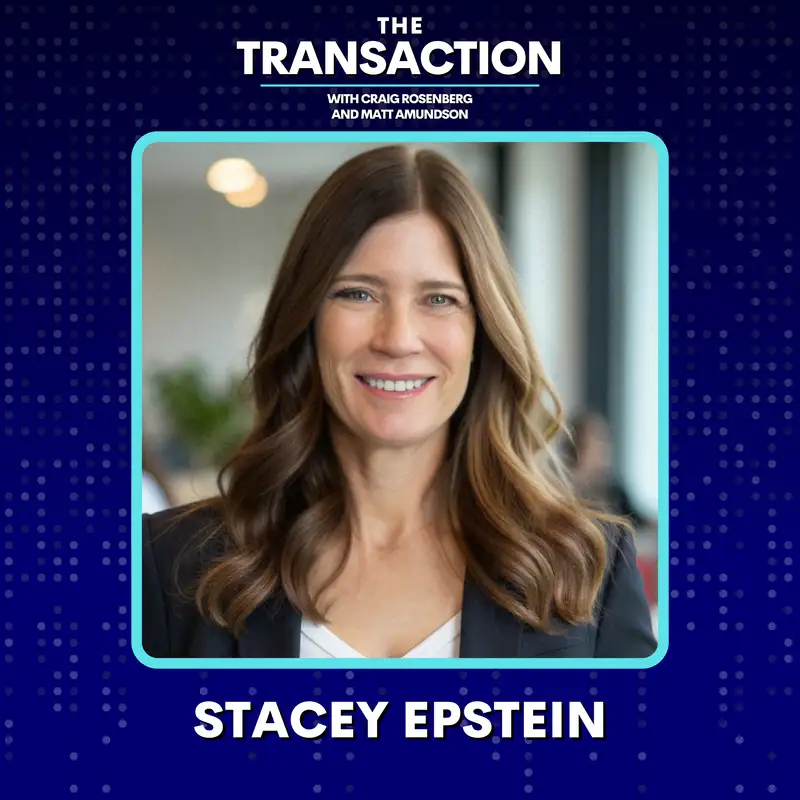
Positioning Needs to Underpin Every Part of Your Brand Strategy with Stacey Epstein, CEO of Structured - Ep 74
TT - 074 - Stacey Epstein - Full Episode 1.2
===
Stacey Epstein: [00:00:00] Brand is the feeling that the audience gets when they learn about the product [00:00:05] or the company.
Stacey Epstein: without a great story that is anchored in a solid positioning [00:00:10] framework, it's just so hard to do that well
Stacey Epstein: The sooner companies document that [00:00:15] positioning and that narrative, the more powerful their message is going to be [00:00:20] in the market.
Stacey Epstein: So many companies still just do what I call random acts of marketing.
Stacey Epstein: [00:00:25] AI lets you completely reimagine new processes.
Stacey Epstein: Not every CEO is gonna be a [00:00:30] great storyteller. Not every CEO is gonna be your spokesperson.
Stacey Epstein: I learned [00:00:35] more from the two hours of interviewing their customers on camera than I learned from [00:00:40] any demo or talking to anybody on the team.
Craig Rosenberg: so when I was having my twins, [00:00:45] um, I, you know, they came early and I, I had to [00:00:50] let a guy go that day, at that time. I'm walking down the [00:00:55] hallway to the conference room to go talk to him. Wendy calls [00:01:00] and she's like, you have to get to Stanford. Now I'm having the twins [00:01:05] and I'm just going, Wendy, I have to go
Craig Rosenberg: let this poor guy go. She's like, I don't give [00:01:10] a sh you know, get down here right now. So I walk in, the guy had only worked there a [00:01:15] week and I had to go in there and I tell him, and he just flips out, [00:01:20] right? He throwing everything everywhere. Like he's pissed. He's like, no way. No way. [00:01:25] Nope. No way. And I just go, dude, I know this [00:01:30] sucks.
Craig Rosenberg: You're, I just have to tell you. I'll talk to you about it another time. [00:01:35] But I gotta go. 'cause my wife's having kids and he, I mean, it was [00:01:40] so bad, so brutal. And he kept going, no, stay in here. You have to stay in here. And I [00:01:45] said, I gotta go. So I literally had to, while he's wigging out, just [00:01:50] leave the HR guy.
Craig Rosenberg: And there was like some, uh, I mean, I, he was [00:01:55] a young, like he was a finance guy, masquerading as an HR guy. I had to leave him in the room [00:02:00] and just go. And then he calls me, he's like, yeah, the guy wants, you know, [00:02:05] whatever severance. And I'm like, just fricking give it to him. I can't. He's like, wait, [00:02:10] he's asking for like four x what we're doing?
Craig Rosenberg: I'm like, I don't give a shit. Just give it to him. So anyway, there you [00:02:15] go. That's a let per people go story and a birth. So it [00:02:20] was, uh, bad and good at the same time.
Craig Rosenberg: How's that? and end.
Craig Rosenberg: Yeah. In many [00:02:25] ways great stories have that.
[00:02:30] [00:02:35] [00:02:40] [00:02:45]
Introducing Stacey Epstein, CEO of Structured
---
Craig Rosenberg: Stacy, welcome aboard. I just wanna say that [00:02:50] you are are pretty famous.
Matt Amundson: Yeah.
Craig Rosenberg: Yeah.
Stacey Epstein: I
Craig Rosenberg: you know [00:02:55] that?
Craig Rosenberg: I knew you wouldn't know that.
Stacey Epstein: Stacey Epstein and [00:03:00] yes, I know my last name is extremely problematic these days, but it must be someone [00:03:05] else.
Craig Rosenberg: I did not get them confused, but that's a good, [00:03:10] you probably get, you probably have a lot of, you get to do a lot of those jokes these days. [00:03:15] No.
Stacey Epstein: Well it's funny 'cause um, I started my career at Oracle [00:03:20] and I don't know if you remember but. The CEO or one of the top guys at Oracle [00:03:25] at Sybase was named Bob Epstein, and my dad's name is Bob Epstein, and [00:03:30] I was this like young whipper snapper at Oracle. And people would say, are you related to Bob Epstein?
Stacey Epstein: And [00:03:35] I'm like, yeah, he's my dad. And they're like, why are you working at Oracle then? And now, [00:03:40] of course, my dad's brother is named Jeff, Jeff Epstein. And so wait, [00:03:45] are you related to Jeff Epstein? That's not the same, Jeff Epstein. But yes, my [00:03:50] uncle. Is named Jeff Epstein, so I am related, but not to [00:03:55] that.
Stacey Epstein: Jeff Epstein.
Craig Rosenberg: dare? I say, that was a twist.
Stacey Epstein: [00:04:00] A Twist,
Craig Rosenberg: Oh
Matt Amundson: it had rising action. [00:04:05] It had
Matt Amundson: a a, it had a cliffhanger,
Craig Rosenberg: Yeah. maybe I'll be famous [00:04:10] someday if I keep doing that.
Craig Rosenberg: oh my God. Well, you are
Matt Amundson: Shalon [00:04:15] film.
Sam Guertin: Yeah.
Craig Rosenberg: on. Let's go through the, the, the big hits, success, [00:04:20] success factors,
Stacey Epstein: Yep.
Craig Rosenberg: ServiceMax, [00:04:25] uh, CEO of your own company, then. Bought back to Service Max, [00:04:30] Another twist. an a, an acquisition Boomerang, [00:04:35] CMO of FreshWorks. Another, uh, big hit, [00:04:40] CMO Aveva, another big hit like, uh, what are we doing here [00:04:45] and now?
Craig Rosenberg: Your recruiter.
Matt Amundson: your recruiter and can I have their direct line?
Craig Rosenberg: exactly. [00:04:50] Jesus Christ.
Stacey Epstein: I think, uh, I think when you're as old as I am, [00:04:55] you have time to do lots of different interesting things, so there you go.
Craig Rosenberg: Oh my [00:05:00] God. Well, speaking of interesting things also, uh, you've got a, [00:05:05] um, an AI podcast, right? That you um, uh, I [00:05:10] believe I remember the name. Ai. I've got [00:05:15] questions, which is,
Craig Rosenberg: that is such a marketer name now
Sam Guertin: That's [00:05:20] wonderful.
Craig Rosenberg: Yeah. It's such a good name. Damnit. Um, so so [00:05:25] that transaction,
Matt Amundson: Jesus.
Craig Rosenberg: talking about ours is hardcore.
Craig Rosenberg: It's a
Matt Amundson: no. [00:05:30] Ours is good, but it's not,
Sam Guertin: it's an SEO Yeah. AI have questions. [00:05:35] I know it is. Yeah. Ai I have questions. Is, is really good. Um, [00:05:40] so anyway, Stacey, that is why we welcome Stacey Epstein to the show. And yes indeed you are [00:05:45] famous. 'cause that's like. You played for the La Yankees, Lakers, uh, [00:05:50] Alabama during the heyday.
Craig Rosenberg: The next, I mean like the, those are, those are incredible companies that [00:05:55] you've, uh, that you've done amazing work for. And now you're, uh, diving deep into a [00:06:00] IC you're the perfect guest for the show, so welcome aboard.
Stacey Epstein: It's great to be here. Thank you so [00:06:05] much. I prefer warriors to Lakers, but whatever.
Craig Rosenberg: Yeah, that's
Matt Amundson: well, not [00:06:10] everybody can be perfect, but.
Stacey Epstein: That's true. Yeah. Matt. Matt is, um, a [00:06:15] Laker a Laker fan so you guys can discuss.
Stacey Epstein: Well, my husband is a huge [00:06:20] Yankees fan, so when he hears this, he's gonna be very happy that you actually put me on [00:06:25] that team.
Craig Rosenberg: oh.
Craig Rosenberg: Well see, I did something good. I mean, okay. [00:06:30] All right. So Stacey, I don't know, um, uh, if you're ready for us, [00:06:35] but like, we are kind of crazy and fun as telling stories about some guy who [00:06:40] definitely didn't listen to the, doesn't listen to the podcast, the guy let go while my wife was having twins. But, [00:06:45] um, the, uh, we basically, you know, the show is.
Craig Rosenberg: [00:06:50] Uh, broken into two, but they often meld together. One, we just like to hear stories from folks [00:06:55] and on the Go-To-Market side, their favorite stories. Uh, you know, one, one [00:07:00] usually leads into the, the rest, and then two, like this will be really interesting, like you're [00:07:05] an. You're a famous OG digging into ai.
Craig Rosenberg: We'd love to find out like what are the [00:07:10] one to three things you're seeing working today in the market? It's a, it's a different world out there. [00:07:15] So those are the two questions, but
Accidentally Sending an Embarassing Email to Every Co-Worker in an Entire Region
---
Craig Rosenberg: we like to start with a story. Could be fun, could [00:07:20] be horrifying, could be, um, you know,
Matt Amundson: is a new, A [00:07:25] heroic.
Craig Rosenberg: Well, have a, I have a story that's borderline horrifying.
Craig Rosenberg: we love [00:07:30] that. See, Matt, what
Matt Amundson: the, is this gonna air on
Matt Amundson: Halloween? Here we go. it
Sam Guertin: we will [00:07:35] make it.
Stacey Epstein: to me. I have gotten over it, but I mentioned I [00:07:40] started my career at Oracle in
Craig Rosenberg: Oh, there's
Craig Rosenberg: lots of horrifying stories there.
Stacey Epstein: the whole [00:07:45] DMD, like inside sales. I was on the channel [00:07:50] side. Um, and I, my very best friend was this woman [00:07:55] slash girl. I mean, we were like 23 named Diane Christophe. [00:08:00] And she was my very, very closest friend. She then got married and changed her name, [00:08:05] but whatever. Um, and you know how it was back in those days, like you, [00:08:10] your, your colleagues were your best friends and your boyfriends and who you spent the weekend [00:08:15] with and whatever.
Stacey Epstein: So there was a lot of extracurricular things that went on, and [00:08:20] this was like in the beginning of F email and that's how I'm dating myself. But it wasn't [00:08:25] like you had a Gmail and then you also had your Oracle email. Right? You everyone just [00:08:30] had their Oracle email and we used that to, to, you know, do work.
Stacey Epstein: And [00:08:35] we used that to figure out what we were gonna do on the weekend. And you would create these [00:08:40] little aliases for all of your friends. And I did it all based [00:08:45] on initials and so my alias for Diane Christophe was DC [00:08:50] so I sent an email to DC and the title [00:08:55] was something like Jason. Because at the time there was make, I [00:09:00] don't know, something going
Matt Amundson: There's always
Matt Amundson: a Jason. There's
Stacey Epstein: there was a, an [00:09:05] extensive email to Diane about Jason
Stacey Epstein: and my thoughts on Jason [00:09:10] and what was going on with Jason and questions, and you know, this was. [00:09:15] What we did when we were 23. Well, what I didn't realize in my youth [00:09:20] was that there were already aliases created for every office, And [00:09:25] I had sent my email to the entire Washington dc, [00:09:30] Oracle, every single person in the DC area got my email [00:09:35] about Jason in depth.
Craig Rosenberg: What?
Stacey Epstein: Horrifying, [00:09:40] but was even more horrifying, was that if you wanna talk about being famous. [00:09:45] Uh, that is what made me famous because everybody wanted to know what ha [00:09:50] what was gonna happen next. I got emails from like [00:09:55] VPs that, I mean, I worked in California. I did not work in dc I did not know any of these people, [00:10:00] but I got.
Stacey Epstein: Hundreds of emails of people like, I need to know, did you talk to him? [00:10:05] What happened next? And I would continue to get emails. I eventually moved up into a global [00:10:10] role and for years people would remember that extensive email that I had sent. So, [00:10:15] yes, horrifying. Even as I retell it, I get a little bit of a pit in my stomach [00:10:20] of when I realized what I had done.
Stacey Epstein: I wanted to quit.
Craig Rosenberg: Oh my [00:10:25] God, that was a great story. Your guys thoughts?
Matt Amundson: [00:10:30] My thoughts are as you moved into the global role, when you sent it to dc did it go to the [00:10:35] Democratic Republic of Congo?
Stacey Epstein: Oh, good
Sam Guertin: That's the DRC?
Matt Amundson: DRC? My
Matt Amundson: bad. [00:10:40] Yeah.
Stacey Epstein: No, it did not. It was, uh, I, I did change my aliases [00:10:45] going forward, my full strategy for alias, and I, I, I can't say I've ever sent an email [00:10:50] to the wrong person again because I am. So, I like read it 10 times [00:10:55] before I send it. I'm still friends with Jason, by the way, and Diane. It's all a good, [00:11:00] good
Stacey Epstein: laugh.
Craig Rosenberg: well, it all worked out. I have 2, 2, 2 things I'll take from that story. You guys [00:11:05] ready? That the, the very straight, like, straight man comments. One [00:11:10] is, um, no, that, that was not the phrase I meant to use [00:11:15] there. I just meant like I'm being very, just normal comments. So one is, you [00:11:20] know, like on the. For SDRs, like, um, in inside sales, that [00:11:25] is why you want them to go to the office together.
Craig Rosenberg: It everyone thinks of it as like [00:11:30] this, the mandate you have no dude, that's where you figure out what you're doing. On [00:11:35] Friday night, they become your best friends. 35% will get married and like. [00:11:40] It's not fun doing s ding or inside sales in your [00:11:45] apartment
Craig Rosenberg: like a, you know, your 600 square foot apartment in whatever city you're [00:11:50] in.
Craig Rosenberg: You want to go and be with a crew. And by the way, Oracle was in Redwood Shores. I [00:11:55] worked at Pure Atrio. We were driving to Sunnyvale, but we would go gladly 'cause we couldn't wait to hang out with [00:12:00] everyone. And it was like. That that piece is the missing piece that we don't [00:12:05] talk about. Instead, it's like, oh God, these kids, they don't want to come in the office.
Craig Rosenberg: Jesus, well, we're gonna mandate [00:12:10] it, you know? Or we're gonna do some trick or gimmick. It's like, no, dude. Like have 'em [00:12:15] come in because it's fun.
Matt Amundson: Yeah, I mean, I think we're at a tipping point there. I [00:12:20] actually not
Craig Rosenberg: oh, tipping point. Look at this guy. Alright, sorry. Go ahead. Yeah,
Matt Amundson: Not at my current [00:12:25] company, but at a previous employer. I actually had BDRs leave the company to go work at companies that [00:12:30] had offices.
Craig Rosenberg: Yeah.
Matt Amundson: They were, they were successful and they liked the work, [00:12:35] but they were just like, dude, I can't sit in my apartment,
Matt Amundson: you know, 10 hours a day just [00:12:40] dialing for dollars.
Matt Amundson: Like, I wanna be around other people. I wanna go to happy hours. You know, I, I wanna [00:12:45] make friends. So it just makes sense.
Stacey Epstein: Also, I think the modeling [00:12:50] after like the top person in your group and you're near them and you see [00:12:55] them and you see what, and it was cool to be the top person in the group. So you aspire, you know, and [00:13:00] you had the role models of the, of the higher ups in the organization that maybe [00:13:05] you would see, maybe you would get to be in a meeting with them.
Stacey Epstein: There's, there's that [00:13:10] aspirational aspect that I think you completely lose if you're just on the phone doing [00:13:15] your calls all day. So I, I totally agree. I think being, [00:13:20] working from home, I mean, I love working from home now, but I, I wouldn't trade [00:13:25] those years I had in the office being on a big team where we're like working hard [00:13:30] together, playing hard together, and, and getting better.
Stacey Epstein: I mean, there's some talk about famous, I mean, [00:13:35] people on my team were, Brian Milam from Salesforce was on that [00:13:40] team. Carl Schachter, who's done a bunch of great stuff. Um, I mean, we had some really [00:13:45] stellar people that we were all just learning and growing together. Um, and like, and like I [00:13:50] said, really cool to be successful.
Stacey Epstein: So you were, it was almost like a competition, [00:13:55] so I, I totally agree.
Craig Rosenberg: So I'm gonna piggyback that [00:14:00] because also part of the story that goes with going to the office is [00:14:05] you could probably do a podcast or a blog [00:14:10] on just. Stories from Oracle DMD.
Stacey Epstein: Oh yeah.
Craig Rosenberg: [00:14:15] Horrifying, horrifying hair raising.
Craig Rosenberg: Uh, [00:14:20] often like scandalous, well, primarily scandalous. Like that [00:14:25] is a but, but those things go together. Like that company was rocking and rolling. 'cause these, [00:14:30] these young folks are going in Oracle, DMD and. You know, [00:14:35] animal house going crazy in there and just fricking selling shit and having fun together [00:14:40] and meeting their friends and like, remember what was the Neil Diamond cover band?
Craig Rosenberg: You'd go, [00:14:45] uh, super Diamond, you go to a super diamond con, uh, concert, and 75% of the [00:14:50] people there were Oracle DMD. Every time I'd just be like, you know what, this is just ridiculous. [00:14:55] Right? Because everyone was trading like that. Yeah. So those two things go together. But, um, [00:15:00] anyway, great job on the story. That was great.
Craig Rosenberg: I I was you. Why I didn't m warn her. So I was a [00:15:05] little worried. Um, and so that, that you delivered. Interestingly, Stacy, [00:15:10] one of our issues is some people dunno how to tell stories.
Matt Amundson: don't, Yeah. And so [00:15:15] that story thing is, is like, really we hold our breath. And that was good. Okay. So [00:15:20] the big one. So, um, with your [00:15:25] incredible experience plus your just deep dive into things and working now as an [00:15:30] advisor, like what are the, uh, we wanna figure out what's working.
Craig Rosenberg: So like
Why Your Positioning is The Foundation of Your Brand
---
Craig Rosenberg: what are [00:15:35] the one to three things that you're seeing out there that are working in today's environment? Um, [00:15:40] and, uh, we'll just go from there. We'll ask questions and dive
Stacey Epstein: well, let's transition because [00:15:45] that's what we do from a story. Um.
Stacey Epstein: I still [00:15:50] think that there are so many companies that can't tell their story [00:15:55] and, and, um, you know, and I, I do [00:16:00] wanna talk about AI and I love AI and I'm, you know, doing my best to learn where we're [00:16:05] headed with ai. But I still see company after company that does not [00:16:10] have a strong positioning framework of.
Stacey Epstein: Uh,
Stacey Epstein: [00:16:15] sure what they do. Everybody talks about what they do. Everybody talks about their features. People are [00:16:20] pretty good at that. Companies are pretty good at that. But the why does it matter? Who [00:16:25] is my buyer? Where is my buyer hanging out? What do they care about? [00:16:30] Uh, why does it matter to them? What makes it different?
Stacey Epstein: And that's a big [00:16:35] one. What makes it different? Uh, so many companies still just do what I call [00:16:40] random acts of marketing. They're like, this is what our product does now. Go market IT team. Go sell it team, and [00:16:45] just say whatever you think, uh, is, are the value props. And so every campaign is [00:16:50] different from what the website says, and there's blogs and content left and right, but none of them are [00:16:55] anchored on this core positioning framework.
Stacey Epstein: That is their story. I, we [00:17:00] talked so much about brand, like brand is having. Uh, a rebirth, which I [00:17:05] love. Um, but to me, brand is. Uh, sure. It's a tagline. It's colors, [00:17:10] it's it's visual, but the brand is the feeling that the audience gets when [00:17:15] they learn about the product or the company. And without a great [00:17:20] story that is anchored in a solid positioning framework, it's just so hard to do that well and [00:17:25] so hard to do that consistently.
Stacey Epstein: And, um, that's where I'm [00:17:30] focusing my work right now. I mean, I'm doing. I'm doing some fractional, some advising, but what I [00:17:35] really love to do is like, let's get to the heart of your positioning. What makes you different? [00:17:40] Why are you important and what is your story? Um, 'cause I [00:17:45] think there's just companies aren't doing that well of that these [00:17:50] days.
Craig Rosenberg: Well, I think thematically, by the way, there is two types of [00:17:55] guests on the show, those that sort of bite on the new shiny object thing. And that's really interesting [00:18:00] for us. But the other is that like, uh, this sort of [00:18:05] uh, the need to go back to just fundamental Go-To-Market [00:18:10] stuff and, um, and so that is a good one.[00:18:15]
Craig Rosenberg: I feel like it's never been good though. Is that a. Weird statement, like [00:18:20] there's always been a market for helping people with positioning. 'cause they just kind of, we're in [00:18:25] tech, we're in tech, and they just build the product and then they go and then it's like, [00:18:30] yeah, I'm,
Matt Amundson: think 'cause there's been so many successful companies that didn't do that piece. [00:18:35] Right. Right. And I think like the one thing that's always true about the Valley is [00:18:40] there are these. Edge case companies who defy basically [00:18:45] every rule that exists. Just because they're [00:18:50] at the right, they're the right product at the right time, and they just achieve PMF so [00:18:55] quickly.
Matt Amundson: They don't really do those things. But I think the other thing that people forget is, you know, these companies [00:19:00] might go zero to, you know, 500 million fast IPO. Then they [00:19:05] have to still do all that work, right? Because now they have to sustain that, and [00:19:10] that's when it matters. So whether the work gets done in the early part of your journey.
Matt Amundson: Which [00:19:15] I think for most successful companies it does or happens later for the few [00:19:20] Edge case companies where they're just so wildly successful. That work always has to get [00:19:25] done.
Matt Amundson: It always has to I think the edge case companies that are wildly [00:19:30] successful, the story is so evident. That it doesn't need to be crafted, [00:19:35] you know, it's just like, let's take Slack. I, I don't think anybody ever, I don't think [00:19:40] Stewart sat down and said, let's put our positioning framework. It just, it took off. People were using [00:19:45] it.
Stacey Epstein: The use case was so evident I didn't have to, you didn't have to really [00:19:50] craft a story. Now, over time, they had to craft a story. They had Yep. They needed [00:19:55] to, you know, have an acquisition or go public. They there, there's a [00:20:00] reason for that, but. As you mentioned, I was at SuccessFactors, which I took [00:20:05] public.
Stacey Epstein: I, I was at FreshWorks, which I took public. The first thing you do when you go [00:20:10] public in the preparation is you write an S one. An S one is the [00:20:15] story of the company. It's a book about the company, and it's exactly that. It's [00:20:20] the why do we exist. What does our product do? Why are we great? What is the [00:20:25] competitive landscape?
Stacey Epstein: What are we gonna do in the future? That is the story of the company. By the [00:20:30] time you get to IPO, you should have that, and I just urge all [00:20:35] companies do it now. I mean, when we took SuccessFactors Public, I, I was the first marketer at [00:20:40] SuccessFactors, so. The, the positioning had kind of always been there, and it was like we sat down with the bankers [00:20:45] and we said, yeah, this is our positioning.
Stacey Epstein: This is what we've been using. FreshWorks was a little different. [00:20:50] FreshWorks was more like an edge case where it was PLG growth super fast. [00:20:55] Um, it just, it was easy to use. It was relatively inexpensive [00:21:00] compared to other tools, and the growth was just organic. But when it came [00:21:05] time to go public and write the S one, the story had never really been crafted.[00:21:10]
Stacey Epstein: And we had to spend a lot of time on like, wow, what a crowded market. [00:21:15] And we're in multiple markets. And I just think the sooner companies [00:21:20] document that positioning and that narrative, the more powerful [00:21:25] their message is going to be in the market.
Craig Rosenberg: Yeah.
Matt Amundson: I've got a, I've got a [00:21:30] quick follow up question because oftentimes. Marketers who, [00:21:35] you know, maybe they join at the Series B or they, you know, they're, they're not a founder [00:21:40] of the company and they're like, Hey, I wanna put this together, uh, because this is an important [00:21:45] part of our marketing, right? Like, we want this on the website, we want this, you know, to, uh, maybe [00:21:50] kick off our sales deck or be interwoven into our sales deck.
Matt Amundson: We want to be a [00:21:55] part.
Craig Rosenberg: sorry. I
Matt Amundson: Yeah, Go ahead.
Craig Rosenberg: As you were, as you were, as
Matt Amundson: [00:22:00] They want to be maybe a part of, you know, uh, email campaigns, et cetera. [00:22:05] Oftentimes it's really challenging to work with a CEO, especially [00:22:10] CEOs that can be like technical founders that, you know, they're just like, Hey, I wanna write code all day and I wanna build the [00:22:15] thing and I want a project management.
Matt Amundson: We get the next set of, of products and features out the door. [00:22:20] How have you found success, especially like, we'll stay on FreshWorks because that was, that was an edge [00:22:25] case. How did you find success working with the founder in order to bring that to [00:22:30] life?
Stacey Epstein: Yeah, I think, You know, I. came into FreshWorks pretty late in the [00:22:35] game. I came in literally six months before the IPO. In fact, my second day on the job, we [00:22:40] were in the S one meeting, um, which I didn't, I knew That it [00:22:45] was coming. I didn't really know it was gonna be my second day on the job. Um, and I was [00:22:50] like, okay, where is all this stuff? and It didn't exist. Now, they also hadn't had a [00:22:55] CMO in a year and a half. Um, and. He [00:23:00] wanted to hit the IPO date and so, and he had bankers saying, we gotta write [00:23:05] this story. So he, and I think, gee, who garish, who is the, was [00:23:10] the CEO at the time was so, he was just fully on board, let's go. And, [00:23:15] um, yeah, highly motivated. I mean, it was a little hard for me being new because I was like, I [00:23:20] gotta herd a bunch of cats and we can't slow down and I'm gonna have to like, you know. [00:23:25] Bust some balls to do this, which is not really how I wanted. My first [00:23:30] few months on the job to be, um, but everyone was kind of pretty much on [00:23:35] board that we we had to do it.
Stacey Epstein: Um, I have worked with plenty [00:23:40] of CEOs and you're right, it's typically the ones that are more of a technical background [00:23:45] that are just like, I don't wanna waste my time doing some positioning [00:23:50] framework. Can we please just do some great marketing? and you know, sometimes I [00:23:55] have to like quiet myself from, um.
Stacey Epstein: From [00:24:00] disagreeing vehemently, but I, where I usually can [00:24:05] have success is, is like just, chunking off the, the tip of the [00:24:10] iceberg for them and doing the bulk of the work myself or with the marketing team [00:24:15] because we need a lot more of a framework to execute campaigns and to be [00:24:20] consistent, like what the marketing team needs is fairly extensive to use as [00:24:25] their anchor. what the CEO needs to see And agree on is. Really just the tip of the [00:24:30] iceberg. And a, a great way to go about it is, okay, what do you want the homepage of your [00:24:35] website to say? Because if you don't want to talk about benefits or value [00:24:40] props or differentiators, but let me show you the website today. It's really not [00:24:45] that compelling.
Stacey Epstein: And I don't think your buyer is gonna take action. And let's remember the [00:24:50] website is for the uninitiated. People that know you aren't gonna go to your website. It's the people that don't know you and you [00:24:55] wanna immediately grab them with why you're different and why they should pick you and why they should have a call.
Stacey Epstein: And [00:25:00] so there are some tricks of the trade to, to get the CEO to at [00:25:05] least agree to the top level stuff. And then do what needs to be done with the marketing [00:25:10] team. They don't need to be involved in that. Excuse I love that. [00:25:15] You know, because like I, my experience like with. Fundamental things that [00:25:20] need to get done don't get done. And it's because you can't, you [00:25:25] have to find that thing that they actually care about. So like ICP work [00:25:30] so necessary, I'm working like really early stage, right? These guys are off to the [00:25:35] races and probably in the wrong way.
Craig Rosenberg: But if you go to 'em and say, well, you need an ICP, they'll say yes. But [00:25:40] when you want to go through the process of putting it together, they don't. They don't jump on board. [00:25:45] What in Yeah, what instead you want to do, and we learned this at Topo, like at [00:25:50] Topo, we, we, we had, that was like the core product. If you asked like [00:25:55] 40% of the customers, they'd be like, God, they just helped with the ICP.
Craig Rosenberg: We never [00:26:00] pitched it because we would go in and they'd say, our SDRs are not doing well. We'd be [00:26:05] like, great. Well look at it and we just go, well, first of all, you don't have an ICP, [00:26:10] and so we gotta go. So we took that thing that they cared about, which was conversion of [00:26:15] SDRs, and then we're able to weave in those fundamental things that they need to go do.
Craig Rosenberg: Had we [00:26:20] pitched just the fundamental things that we go do. Not everyone would a bid, but when we focused [00:26:25] on like one thing, it's like the website. I love what you just said that they can relate to. It's [00:26:30] like, you know, your website's not converting. Okay, great. So to do that, we gotta go through this [00:26:35] positioning exercise.
Craig Rosenberg: So you, the chipping off the pieces of the iceberg, particularly the ones that [00:26:40] they care about, is brilliant. I get it. Well, you gotta live you, you're living it, so you gotta
Craig Rosenberg: go figure this things [00:26:45] out. But
Stacey Epstein: no, I live it and I, I think that the other tip in there is [00:26:50] do as much of the work. As you possibly can without needing [00:26:55] the approval and involvement of the CEO, um, [00:27:00] because. Having been a CEO, you're doing a million things and I, I do [00:27:05] think marketers sometimes tend to get a little bit miffed if they're not getting the constant [00:27:10] interaction and the approvals and the feedback.
Stacey Epstein: And my response to that is it's [00:27:15] nothing personal. They're, they're doing, and especially if they are technically oriented, they're [00:27:20] doing what they're great at, which is driving product vision and executing on the product side. The [00:27:25] last thing I want is to drag them into. To marketing, like that's my expertise.
Stacey Epstein: [00:27:30] So just, I'll just do it all and I'm gonna share it. And if you wanna see it [00:27:35] and you have thoughts, great. Otherwise I'm just gonna keep executing and you know, I do think [00:27:40] there are key, you know, again, like I need you CEO to agree [00:27:45] with me that these are the top three. You know, benefit statements. These are the top three [00:27:50] differentiators.
Stacey Epstein: And then I'm just gonna go do a whole bunch of shit without you even needing to know. [00:27:55] And the next thing you, you know, you've got a great marketing program and you barely [00:28:00] lifted a finger. That's a CEO loves that. Um, so that's, I think the other [00:28:05] key tip is just go, just do work. Just do great stuff. [00:28:10] Try to get it aligned.
Stacey Epstein: You know, if you have that skeletal alignment and then you build great [00:28:15] stuff from that, you can do a lot of awesome stuff.
Matt Amundson: Yep. Okay. I got [00:28:20] another scenario on this one. The, yeah, sorry to keep harp, but this, you nailed it, right?
Craig Rosenberg: [00:28:25] So we gotta talk about it. The other thing is, so let's say. [00:28:30] The often the CEO and founder, let's go back to the, the technical founder. They [00:28:35] love the product. So how do we unwind them to a messaging platform? [00:28:40] Because when you ask them what's great about what you do, it's often really tactical [00:28:45] and, um, like when, when I was a analyst, right?
Craig Rosenberg: I was an analyst for [00:28:50] a while. Um. And, uh, you know, we'd say we would, [00:28:55] you know, lead with like, you know, tell us your story and like we would ask the questions you [00:29:00] are bringing up Stacy. And they would immediately, oftentimes go, well, let me show you [00:29:05] the product.
Stacey Epstein: Yeah.
Craig Rosenberg: Or it'd be something really tactical like
Stacey Epstein: [00:29:10] yeah, it's hard. I, I like to go to use cases. Um, I, I just, I took on [00:29:15] a new client about a month ago, um, that I'm helping launch out of stealth. It's gonna be super [00:29:20] interesting and I'll tell you about it when it comes out next month. But, um,
Craig Rosenberg: Oh,
Matt Amundson: Oh, [00:29:25] maybe
Matt Amundson: offline.
Stacey Epstein: I could probably tell you about it. Um,
Matt Amundson: Well, you can talk. Tell us
Craig Rosenberg: well, you don't [00:29:30] have to. Stacy, come on. Let's not but
Stacey Epstein: it's it's a really cool AI company that isn't just [00:29:35] automating a process. They're doing, they're like changing the way work is done. [00:29:40] Um, and it's actually not very hard to understand, but, um. [00:29:45] But the CEO is very technical and, and was talking about the product and I [00:29:50] kept saying, give me an example, what would be a use case?
Stacey Epstein: I love coming back to use cases, 'cause [00:29:55] use cases come back to the benefit for the the company. So instead of telling [00:30:00] me what the product does, tell me how that would be used. Give me an example of how A [00:30:05] CEO would use that. Give me an example of how an end user would use that. And then I can [00:30:10] start to get the story.
Stacey Epstein: And the other thing here is that. You sometimes you just have to [00:30:15] know that not every CEO is gonna be a great storyteller. Not every CEO is [00:30:20] gonna be your spokesperson. It's harder 'cause press only wants to talk to [00:30:25] CEOs and you know, when you get to to near liquidity events, [00:30:30] bankers only want to talk to CEOs.
Stacey Epstein: But you, you know, if you're creating a, a [00:30:35] really cool video for your hero, um, on your website, it doesn't have to be narrated by the [00:30:40] CEO. You don't, you can. Find other ways to tell the story, but I think [00:30:45] to pull the story out of them, again, I go back to use cases. The other thing [00:30:50] is talk to customers. You got you, you absolutely have to talk to customers.[00:30:55]
Stacey Epstein: This same company that I'm talking about that I'm helping launch out of stealth, um, [00:31:00] we filmed some customer testimonials. They have great early customers and. [00:31:05] I learned more from the two hours of interviewing their customers on camera [00:31:10] than I learned from any demo or talking to anybody on the team. And I literally just [00:31:15] went through the transcript and pulled out 10 quotes and said, this is our video.[00:31:20]
Stacey Epstein: Like this is just the customers talking about why it's great and there's an art asking the questions. [00:31:25] Um, you know, you have to ask questions like define what it means. To [00:31:30] you, like make them define the product, especially when it's sort of an esoteric AI thing that's [00:31:35] new, but having customers talking about it is [00:31:40] such an awesome way of pulling out all the value, the benefits, what better, what a [00:31:45] better way than hearing it from them.
Matt Amundson: Mm-hmm.
Craig Rosenberg: I like it.
Matt Amundson: Love [00:31:50] it.
Craig Rosenberg: Yep. Let's, let's chalk that one up for a good one. All right. What else you got? Any other things you're [00:31:55] seeing out there that's, that we should be thinking about that are working? Um,
What Stacey's Learned about AI From Hosting her Podcast
---
Stacey Epstein: Um, I mean, we can [00:32:00] evolve to AI a little bit. So we talked about my podcast, ai. I've got questions. [00:32:05] I, I know you love the name. I mean the
Stacey Epstein: name, it up just to make Sam's heart Yeah. [00:32:10] Yeah. Just to get let's
Stacey Epstein: talk about naming. Um, no, I, I went very literal. [00:32:15] Uh, the reason I started the podcast is 'cause I ha, I felt like I'm not in a full-time [00:32:20] CMO job right now, and I'm like missing the boat.
Stacey Epstein: And I, and I wanna know [00:32:25] what's going on out there. And, and honestly, that's why I started. It was sort of self. Uh, [00:32:30] self-interested motivations for starting it. And the season one, which I'm just about to [00:32:35] wrap up, was all me interviewing founders of AI for marketing [00:32:40] companies. Um, in fact, I interviewed a couple of scale portfolio companies, [00:32:45] which was very fun.
Stacey Epstein: Um, thank you Craig, for some of those introductions, [00:32:50] but, um.
Craig Rosenberg: um,
Stacey Epstein: The, as I was asking for [00:32:55] feedback on like, what do CMOs wanna hear about, what do marketers wanna hear about? What I kept hearing [00:33:00] was, we still need help getting started. It's amazing how many companies I [00:33:05] talk to that are like, I'm not at the point where I'm picking three different vendors to do [00:33:10] cool AI stuff.
Stacey Epstein: I, I haven't even gotten my team really going, which might be [00:33:15] shocking to us, but there are still, especially outside of tech. So many companies that are [00:33:20] doing just like barely have ChatGPT going. So season [00:33:25] two of my podcast is I'm only interviewing CMOs, uh, and I'm having CMOs [00:33:30] tell me what are they doing?
Stacey Epstein: And there have been some really interesting things. I haven't [00:33:35] launched season two yet, so, so just a couple of spoilers. Like I interviewed A CMO [00:33:40] who took away all role definition on our team. Her marketers [00:33:45] do everything, and it's a small team. Um, I think she's got like 10 or 12 people, but she [00:33:50] doesn't have product marketing, demand, gen brand, everybody does [00:33:55] everything because they can, with ai, you can use AI to do positioning.
Stacey Epstein: You don't [00:34:00] necessarily need product marketing. You can use AI to segment and create a [00:34:05] campaign and distribute, you know, figure out how to run the campaign. So she's [00:34:10] like, I don't know if it's gonna work. I'm giving it a try, but it's. Interesting to see some [00:34:15] of these new ways of, not just like what AI tool am I [00:34:20] using, but how is it changing the way I'm running my team?
Stacey Epstein: Because I can [00:34:25] do things so much more effectively with ai. So that's just one example, but again, [00:34:30] I'm, I'm trying to learn too. It's, it's changing so fast. Um, [00:34:35] it's, it's really pretty amazing how AI is changing the, the marketing world, maybe [00:34:40] more than any other function.
Craig Rosenberg: Yeah. So, um, [00:34:45] by the way, that was amazing. The, uh, all free safetys marketing [00:34:50] team.
Matt Amundson: Yeah,
Craig Rosenberg: that. Um, that, that, that's definitely new by the [00:34:55] way. I this, um, uh. I, I met this woman, [00:35:00] Lisa Cole. Do you guys know her? She's like based in like Detroit. [00:35:05] Um, and she runs like a ai,
Matt Amundson: a lot of time in Detroit. Not well, she's, [00:35:10] anyway,
Craig Rosenberg: she's a CMO of two acts, was like a, I think a ai, well, like a, some kind of [00:35:15] services firm.
Craig Rosenberg: But I met her because like I was doing a presentation on Go-To-Market AI data [00:35:20] and she, her comments were. Amazing. And um, so one [00:35:25] thing Stacey, uh, I'm go, I will circle back to Lisa, was [00:35:30] I was talking about how uh, we had a guy, David [00:35:35] Boskovich, who's like. Uh, on the show. He is, it's, well, it's the most amazing episode, [00:35:40] and like he spoke at, uh, Go-To-Market, uh, summit for us.
Craig Rosenberg: Um, [00:35:45] and, uh, you know, he is done incredible stuff with ai. And one of the things that he was talking about is [00:35:50] like when you hire now. With ai, you're hiring [00:35:55] because for taste, it was such a good word, like the pe you know, it's like he was [00:36:00] talking about content marketing. He interviewed like 37 people and the person he hired, like [00:36:05] showed him a, didn't bring a book of all the articles that they'd written.
Craig Rosenberg: It was like, here's how I use AI to [00:36:10] get here. And he or she said, and this is like. An example of, and she was able to [00:36:15] present her remarkable taste. And so, uh, I knew, [00:36:20] this is how I knew I liked Lisa. I told that story while doing a presentation and she [00:36:25] said, um, right now we only hire for taste and [00:36:30] we call them taste makers.
Craig Rosenberg: Her marketing team is filled with [00:36:35] taste makers. Isn't that great?
Craig Rosenberg: What do you think of that? Name or naming [00:36:40] because like when you bring people in and you could do a lot instead, you're sort of moving, you're [00:36:45] actually, you're able to, uh, make your team and the people that work for you more [00:36:50] strategic because they're not doing all of the like, little things that they used to have to [00:36:55] deal with.
Craig Rosenberg: Like marketing teams were just always having to, to do all of [00:37:00] this, like minutiae work. Um, and the good ones were organized in a way to [00:37:05] get it done, but now they can. Uh, they can, uh, you know, capitalize on being a [00:37:10] taste maker and being able to leverage that for some bigger things and [00:37:15] bigger ideas and more ideas.
Craig Rosenberg: You know, it's kind of, it's really an amazing time.
Stacey Epstein: Yeah, [00:37:20] I, I, another CMO, um, that I talked to. [00:37:25] Did, uh, like an offsite, got her whole team in the room and said, let's make a list of all the things [00:37:30] that we hate to do in our jobs. That was the subject of the offsite, and they made a big [00:37:35] list of all the things they hate and they were, all of those things you're talking about, all that [00:37:40] minutia, administrative.
Stacey Epstein: Dealing with systems [00:37:45] and then they, and they have, this is another interesting thing we should talk about, [00:37:50] is like who owns AI in the company? But they had a really good, like Mark Ops person on their team [00:37:55] that was their AI like czar and the AI czar took the [00:38:00] entire list and then spent a week figuring out how to do it all in ai.
Stacey Epstein: So [00:38:05] it just basically took away all the painful part of being a marketer. And left [00:38:10] me with all the fun, creative, the things that I'm good at, the things that I enjoy. [00:38:15] I mean, talk about the future of work. How great is that? That all I get, I get to only do the things [00:38:20] that I love and, and AI is doing all that crappy work that I hate.
Stacey Epstein: Like [00:38:25] what? What a great world this is gonna be.
Craig Rosenberg: Yeah. I love that. So [00:38:30] let's talk about the AI czar, by the way, Matt, you need a czar [00:38:35] in your organization.
Craig Rosenberg: Do you have anybody with the title Czar?
Matt Amundson: No, but [00:38:40] we are, we are putting out a wreck for something similar.
Craig Rosenberg: [00:38:45] Okay,
Matt Amundson: They don't have to be Russian though.
Stacey Epstein: And what team,
Stacey Epstein: what [00:38:50] team what, what team are you putting 'em on? Because
Matt Amundson: Uh, it's gonna be a part.
Stacey Epstein: the big [00:38:55] question. Is it, is it on ops? Is it in it? Does it
Matt Amundson: It's in. Yeah, it's, [00:39:00] it's, it's in ops. It's interesting. Our, my CRO and I are kind of going back and forth in terms of like [00:39:05] where it lives. Like is it, like, is it. You know, part of [00:39:10] rev ops or like, um, is it a part of it? I would [00:39:15] say like, given the scale of our company today, ops probably makes the most sense 'cause our, IT is still [00:39:20] just very focused on product delivery, uh, and doesn't have a lot of time for GTM [00:39:25] execution.
Matt Amundson: So I, I think it just makes the most sense.
Stacey Epstein: Yeah, I think it's fascinating because, [00:39:30] you know, FreshWorks when, when I was at FreshWorks, when. ChatGPT came out [00:39:35] and I feel like that was just a point in time where every company was like, holy shit, we gotta get on board. And I [00:39:40] remember our CFO saying, you know, basically any AI project will be [00:39:45] funded, um, as a way of just getting people going, which was great at the time.
Stacey Epstein: But [00:39:50] I think now here we are a couple years later and you would never wanna do that 'cause you would just [00:39:55] bury yourself in all these like disjointed AI projects. You sort of need [00:40:00] that central location. But then there's the whole, you know, it [00:40:05] is where projects go to die and you know, not, and I'm not saying that I believe [00:40:10] that about, there's a lot of great IT teams, but there, I think there is a little bit of a debate [00:40:15] of who is who in the org is the one that's saying, Hey, let's do [00:40:20] a bunch of ai, but let's like do it in some sort of an organized way where we aren't just [00:40:25] burying ourselves with all these like disjointed AI [00:40:30] projects that aren't helping.
Matt Amundson: Yeah,
Craig Rosenberg: That, that's a good call. Alright, I'm gonna [00:40:35] give you guys some data.
Craig Rosenberg: You ready?
Matt Amundson: I accept data.
Craig Rosenberg: Data [00:40:40] challenge accepted. Um. I'll interwove, I will [00:40:45] interweave it with other things we've discussed.
Matt Amundson: you really liked that word earlier.
Craig Rosenberg: I [00:40:50] don't know why it's not that great, but I just
Craig Rosenberg: did I lock in? I can't get off it yet. [00:40:55] Um, all right, so in our, we did a survey with Be Market [00:41:00] on Go-To-Market ai. Um, the data's done. We're just going through everything, but one of the [00:41:05] things we want to dig in on was the Go-To-Market engineer. Okay. [00:41:10] So according to the data we did over 200 people, 50% of [00:41:15] organizations have hired or considering hiring a go-to-market engineer.
Craig Rosenberg: I'd say most of 'em are in considering [00:41:20] we didn't break it up. We, we kind of kept it in the, um, big bucket. We'll break it up in the next survey. [00:41:25] One thing you guys brought up that we didn't ask that I need to ask is where do they [00:41:30] report?
Matt Amundson: Yeah.
Craig Rosenberg: That's interesting. That was a really, when you guys went on that track, [00:41:35] I was like, Ooh.
Craig Rosenberg: Did not, did not pick that part up. But the key there is like having [00:41:40] someone who is, I mean, Go-To-Market engineer is the czar of ai, [00:41:45] right? Especially if they're Russian. They might It's clear. know.
Matt Amundson: [00:41:50] Yes.
Craig Rosenberg: What's the,
A Brief Aside on the Etymology of Czar/Tsar
---
Craig Rosenberg: by the way, what's the difference between the CZAR and the TSAR [00:41:55] is there? They're both czars, right?
Craig Rosenberg: It's the same thing. It's just different spelling.
Matt Amundson: Uh, Sam's [00:42:00] saying yes, I'm feeling like it's a no, but that's okay.
Sam Guertin: I believe so. Uh, I'm gonna go out on a [00:42:05] limb and say that the CZAR is, uh, the [00:42:10] etymology, uh, comes from Caesar.
Craig Rosenberg: Oh God, Jesus. All right.
Sam Guertin: [00:42:15] I'm, that's completely out on a limb. And if that's wrong, I'm gonna edit this entirely out.
Craig Rosenberg: [00:42:20] This is an AI show. You should be looking it up on
Craig Rosenberg: chat, GPT. a
Stacey Epstein: moment. I,
Craig Rosenberg: [00:42:25] here she goes.
Sam Guertin: Oh boy.
Stacey Epstein: I, you know, I am part, well actually not [00:42:30] Russian, but now Ukrainian. Hold on. Let's see.
Matt Amundson: Oh yeah.
Matt Amundson: Slava, Ukrainian.
Stacey Epstein: [00:42:35] Oh, I
Matt Amundson: Uh oh. I lost a solicit
Sam Guertin: Matt, what is the role, um, that [00:42:40] you're, you're adding? Is it like exalted one or if it's [00:42:45] not czar.
Craig Rosenberg: All right. As she looks it up, here's
Craig Rosenberg: the second [00:42:50] part you.
Craig Rosenberg: Go.
Stacey Epstein: SAR and Czar are both English [00:42:55] transliterations of the Irish Word Czar, which itself comes [00:43:00] from the Latin Caesar. Caesar. I bet you never
Craig Rosenberg: Wow. Look at this [00:43:05] guy. Boom. All means emperor or supreme. Ruler. [00:43:10] TSAR is the more common moderate spelling. And CZAR [00:43:15] is an older angel anglicized version. There you go.
Stacey Epstein: [00:43:20] word comes from Caesar. Now we're
Matt Amundson: Yeah.
Stacey Epstein: smarter.
Craig Rosenberg: Uh, you know [00:43:25] what? You just made us smart. See AI enabling us strategic folks. So now we can think [00:43:30] big.
Sam Guertin: Etymology for 800.
Craig Rosenberg: yeah, that's right. You would've got that. All right, so the [00:43:35] second data point,
Why Companies are Hiring GTM Engineers & The Impact They're Having
---
Craig Rosenberg: so 50% are either hire, have hired or considering hiring, [00:43:40] Go-To-Market engineer. And then the second part is organizations [00:43:45] hiring a go-to-market engineer are 30% likelier to be seeing big impact [00:43:50] from ai.
Craig Rosenberg: So that, [00:43:55] that's, uh, that's a good, good, uh, data point for [00:44:00] where we are right now. I think, um, as you were, as you guys were, we do need [00:44:05] someone. To, to own this process and, and people sort of [00:44:10] push back. It's like, because you know, a lot of really good, um, AI [00:44:15] shops that we've seen, like it's so democratic that a lot of people are just building [00:44:20] stuff and going, Hey, look what I built.
Craig Rosenberg: And it sort of takes off from there. But like, then you end up [00:44:25] with. Like massive, uh, just not chaos, but you've got sort of AI [00:44:30] everywhere and you need someone to go help sort of get these things going. [00:44:35] And the Go-To-Market engineer role, whether you call it that or not, you can call it a czar or you can call it [00:44:40] whatever.
Craig Rosenberg: Like that seems to be one of the key, uh, hires you would [00:44:45] make or yeah. Hire or hires you would make in order to sort of lead your AI [00:44:50] transformation.
Stacey Epstein: when I think of a GTM engineer, I think of somebody who's like [00:44:55] hacking through that whole. SDR [00:45:00] process that like lead conversion process. Um, [00:45:05] and, but there's also so many [00:45:10] other ways that you could be using AI in your Go-To-Market function.
Stacey Epstein: For [00:45:15] creating content for, you know, authoring, executive [00:45:20] bylines. Uh, there's like, to me there's like the GTM engineer is one [00:45:25] distinct part of like the inbound flow or the funnel, but there are [00:45:30] also other AI things going on that marketing and sales and customer [00:45:35] success and that are happening in the company that also sort of need a czar.
Stacey Epstein: It's like two levels of [00:45:40] AI stuff.
Craig Rosenberg: of stuff. Yeah. Yeah, that's a good point. Um, I [00:45:45] should have led with the, the top part. Let give you guys one more thing.
How to Lead AI Implementation in Your Company
---
Craig Rosenberg: So we asked about [00:45:50] AI transformation. So like who in your organization is [00:45:55] the primary transformation driver? So 41% said [00:46:00] company leadership. So those at the top and then 34% [00:46:05] said functional leadership.
Craig Rosenberg: Right. So basically leadership is, is, [00:46:10] is driving this and starting this process. If you combine that with having someone in [00:46:15] charge and that's sort of your recipe for success, you're sort of leading from the top. But when [00:46:20] we looked at the data, the one, like only 14% said individual team [00:46:25] members, but we didn't really see that big of a difference in impact, [00:46:30] um, uh, between where it started.
Craig Rosenberg: Right. It's just [00:46:35] the, the, in my opinion, the main message is you just gotta start doing. [00:46:40] Right, and talking to the machines and then the power can unlock. Um, so anyway, [00:46:45] I thought I'd, I, based on what you guys were saying, I thought I would share some data points. Um, I, [00:46:50] uh, I think those are, I think that's really interesting as we sort of figure out kind of how we're gonna go [00:46:55] do this, like going forward on the.
Craig Rosenberg: You know, when I was at Gartner, what I did [00:47:00] learn in some of the big mainstream organizations was, you know, even [00:47:05] back then there was like, they were trying to sort of, uh, repurpose the [00:47:10] IT group, right? And one of the things they were doing, they would assign, I mean, Matt [00:47:15] used to run 'em with, run into them in EverString, right?
Craig Rosenberg: They were like. Big centralized [00:47:20] groups that would assign like 40 people to go think about [00:47:25] transformation of sales or transformation of marketing. It wasn't like what we thought of as [00:47:30] traditional in tech. It's like marketing ops goes figure this out and tells it what they're gonna do. And [00:47:35] those organizations, you talk to A CRO, it'd be like, well that's what it it does for me.
Craig Rosenberg: [00:47:40] Right. Um, and. And what I found working with them is they were ahead of the [00:47:45] game. They were looking at all this stuff, but because they didn't have a Go-To-Market background, they didn't know what to [00:47:50] do first,
Stacey Epstein: Yeah.
Craig Rosenberg: and they had trouble selling their ideas. [00:47:55] You know, and so that, that's why, you know, like, it, it, it is kind of, it [00:48:00] is important to have that combination of understanding what the Go-To-Market looks like and this [00:48:05] level of curiosity and um, and then eventually know how to be really [00:48:10] effective in driving AI transformation in the Go-To-Market.
Stacey Epstein: Yeah, I agree. I think it in the [00:48:15] past has helped us automate. Our processes [00:48:20] and you know, look back at SuccessFactors way back when, one of the first SaaS products was just [00:48:25] automating performance reviews, which used to be done in Word documents and now it's [00:48:30] done online. And the thing with AI is that AI lets you completely [00:48:35] reimagine new processes.
Stacey Epstein: And if you don't understand the function [00:48:40] and like what happens in marketing and what happens in sales, then you, [00:48:45] you, you can't reimagine. With ai. So it [00:48:50] was just like, okay, well let me learn how you did performance reviews and let me go find a, a software [00:48:55] program that does that online. Great. You know, same with ERP.
Stacey Epstein: Like pick a product [00:49:00] that it has implemented. It's just automating something that we're already doing. But [00:49:05] I think AI is doing things in completely new ways, and that's [00:49:10] why. You need somebody who isn't just technical, but also has that functional [00:49:15] knowledge and like you said, the curiosity and the willingness to just think of new [00:49:20] ideas and, and creativity.
Craig Rosenberg: I love it. [00:49:25] Hey, can, can I ask you guys a quick question on the way out? Yeah.
Stacey Epstein: Oh, we're just getting [00:49:30] started.
Craig Rosenberg: I know I mean, have a cup of coffee. Let's go.
Craig Rosenberg: [00:49:35] What? Oh. Have a cup of, yeah. Got it. I was I low energy? Do I need
Matt Amundson: [00:49:40] No, I'm just saying we're,
Craig Rosenberg: oh, okay.
Matt Amundson: we're, we're, we're not going anywhere.
Stacey Epstein: I was going anywhere. Yeah.
Craig Rosenberg: Yeah.
Stacey Epstein: way.
Craig Rosenberg: [00:49:45] Yeah, I remember, uh, yeah. Okay. I won't tell a story.
Craig Rosenberg: I'll go into my thing. [00:49:50] Are consumer, are B two, like consumer companies better at positioning [00:49:55] and like going gravitating to positioning than our world of B2B in [00:50:00] particular tech.
Stacey Epstein: I think so, and part of the reason why is that consumer [00:50:05] companies don't have sales in between them and the customer. They, marketing goes [00:50:10] straight to the consumer like what I put on my website. If I'm selling, if I'm [00:50:15] Nike and I'm putting, just do it. That's going straight to, to the, [00:50:20] that has to sell. Right.
Stacey Epstein: If I am, if I'm a, if I'm a B2B [00:50:25] company, I'm putting my messages out, but. But I still can rely on a [00:50:30] sales person to do a demo and a sales cycle and show you the value [00:50:35] prop and it, I can, it's a shared [00:50:40] sale, but consumer companies, they have to grab the customer because they're con convert, they're responsible for [00:50:45] that conversion.
Stacey Epstein: I think it just puts more, more emphasis [00:50:50] on the need for that positioning to sell versus create interest.
Matt Amundson: [00:50:55] I mean, I started my career in, uh, consumer packaged goods, and you can't even [00:51:00] launch a product unless you have a positioning statement because you can't get it. You can't get it [00:51:05] into, uh, retail, you know, nobody knows who it's for. You have to, you have to be very [00:51:10] definitive. Like, you know, I worked at Red Bull.
Matt Amundson: It was like. This is a functional beverage. We had to just sort of define what a [00:51:15] functional beverage was, and then we had to define who was the buyer. Uh, uh, [00:51:20] ultimately we wanted more people to buy it than who we started off with, but like, this was for a certain [00:51:25] subset of, of the population, and we, we were very clear about that.
Craig Rosenberg: [00:51:30] Yeah, it feels, it feels that way. Okay. That makes total sense. 'cause it does feel like, [00:51:35] well yeah, because I guess also 'cause I'm surrounded by [00:51:40] consumer marketing and also the, it's interesting how the sort of [00:51:45] stories we tell on brand transformation's gone wrong are like consumer [00:51:50] because brand is so important.
Craig Rosenberg: Right. Um, and yeah, it [00:51:55] makes total, I remember you talking to a, a brand agency person. They were saying [00:52:00] like what Stacy just said, which is like, no, they're, they're looking at the revenue [00:52:05] number and what their, you know, campaign and message will do to the [00:52:10] bottom line. It feels like we could in B2B do a great campaign, [00:52:15] um, and God willing, we're saying it's gonna move the needle, but it feels like the needle's either [00:52:20] moving or it's not.
Craig Rosenberg: Yeah.
Matt Amundson: Yeah.
Craig Rosenberg: Yeah. All right. Sorry, I had to throw that in there. That [00:52:25] was helpful. Um, cool. All right. So Stacy, to the show. [00:52:30] You have now broken the ice. Um, I really want to meet this person [00:52:35] that's running the free safety marketing team. I
Matt Amundson: Yeah. That's really cool. I
Matt Amundson: like that. can [00:52:40] intro you to her for sure.
Craig Rosenberg: God, that's great. Um, all right, so Stacey, we hope we [00:52:45] can make you more famous.
Craig Rosenberg: Everyone should listen to. Uh, your podcast [00:52:50] and, um, if, if you have ideas for her on her podcast and she's [00:52:55] learning, I think that could be a good, uh, place to go do that. Um, and, [00:53:00] uh, um, I'm really, I'm, I'm just glad we were able to have you on. I'm been, we do the, [00:53:05] like I said, we're doing this mix and like last week we, well, it's, we, we released the Tom [00:53:10] Murtaugh.
Craig Rosenberg: We had a guy named Tom Murtaugh and he was like, I don't wanna bore you guys with this old school thing, but [00:53:15] like, you know, he does sail. But the most important thing you could do right now is deal control. And he's [00:53:20] like, sorry, it's old school. We're like, no, not sorry. It is interesting that like a lot of the [00:53:25] fundamental things, once again, are getting lost as we get awash in like [00:53:30] Go-To-Market AI in new, right?
Craig Rosenberg: Like we can't forget like the most important things you have [00:53:35] to do to sell. Sell shit. And market shit. Yeah. All right. Well [00:53:40] sta Stacy, have a great weekend. Thanks for coming on. Yeah, that was awesome. Appreciate [00:53:45] you, Matt. Thank you, Sam. you. you. Yeah.
Sam Guertin: You are [00:53:50] welcome.
Thanks for joining us for another episode of the Transaction, Craig, and I really [00:53:55] appreciate the fact that you've listened all the way to the end. What are you actually doing here? For [00:54:00] show notes and other episodes, please visit us@thetransactionpod.com, like and subscribe on [00:54:05] Spotify, apple Podcast or any other place you get your podcast from.[00:54:10]
Either you have walked away from your [00:54:15] podcast device. Or this is playing somewhere in the background. Someone in your house would [00:54:20] really like for you to shut this off [00:54:25] [00:54:30] now.
Creators and Guests