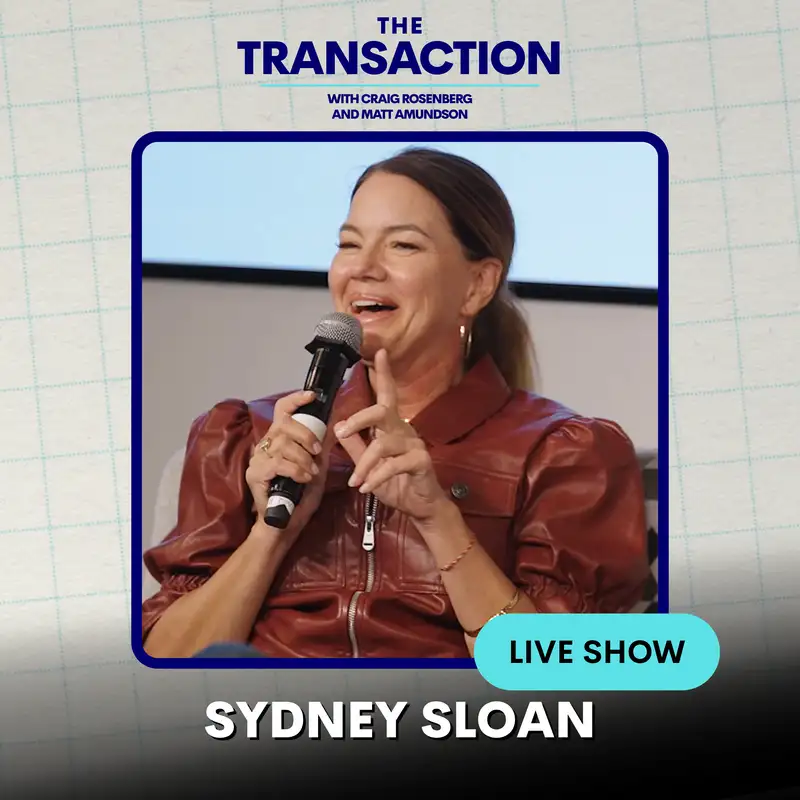
The AEO Playbook: Own the AI Shortlist - Live with Sydney Sloan at GTM Tailwinds - Ep 80
TT - GTM Tailwinds - Sydney Sloan - Full Session
===
Sydney Sloan: [00:00:00] AI's changed everything. Including where your buyers go to do their research, discovery and shortlisting. [00:00:05] What's crazy is that a year ago when we asked the question for the first time, [00:00:10] where do you start your research?
Sydney Sloan: It was like 24% of people said, I start in an LLM, not [00:00:15] Google search. A year later, that's 51%. So 71% change.
Craig Rosenberg: [00:00:20] [00:00:25] [00:00:30] [00:00:35] [00:00:40] Hi Sydney. We talked. Hi, Craig. Yeah, we talk every day, so it's good [00:00:45] to see you live. Um, but uh, I cannot wait to hear a [00:00:50] Go-To-Market. I think you've delivered really good Go-To-Market stories to me and Matt on our [00:00:55] podcast and, and other in the past. So I'm looking forward to, for the crowd hearing yours, what's, give us a [00:01:00] funny Go-To-Market story from your past.
Sydney Sloan: Uh, funny Go-To-Market story from my past. Um, [00:01:05] okay. First of all. Yes, I am a, a double on scale ventures. This is also [00:01:10] my, can I count this as my third time on the transaction? Absolutely. Okay. And I know Scott Albro [00:01:15] has more. Um, but on the fifth time, can we do custom sweatshirts? 'cause you got a sweatshirt game.[00:01:20]
Sydney Sloan: Leather jackets. Thank you. Yes. Leather jackets. Leather jackets, leather. Of course. I love [00:01:25] them. Okay. Um, funny Go-To-Market story. Um, how many could I [00:01:30] tell? This isn't a, actually a funny Go-To-Market story, but it's the story that popped into my [00:01:35] head. Um, and it was going a little bit off the last conversation.
Sydney Sloan: Um. And it's [00:01:40] around my favorite, uh, F word, uh, which is focus. If you haven't been in the hallway, [00:01:45] there's really cool visual there too. Um, and it's because, um, it was actually a board [00:01:50] meeting here in San Francisco when I was at SalesLoft and you know, the board members, and I'm [00:01:55] one now so I can make fun of us, um, was like, you should do this, this, and this.[00:02:00]
Sydney Sloan: And you were part of this. We did this whole process around segmentation [00:02:05] and strategy and decided what we were not going to do. Had the data to prove it. [00:02:10] And I remember our co-founder, Rob, was like, actually, no, we're not gonna do that. We're not gonna move [00:02:15] vertically, we're not gonna expand because we've already done the work and these are the two or three things that [00:02:20] we're gonna go after.
Sydney Sloan: Yep. And so it, it's, sorry it's not funny, but it's very important to [00:02:25] Go-To-Market, is to stay focused on what you know is the right thing to [00:02:30] win. And Katie Doyle's in here, so I'm gonna give her a little inside scoop that. I [00:02:35] was like, we've only penetrated like 20% of the, the sales engagement market [00:02:40] outreach probably has 25%.
Sydney Sloan: There's still 50% to win, and I'm not gonna [00:02:45] stop focusing on that and just give it to my competitor. So that
Craig Rosenberg: was a really [00:02:50] instructive story. Sorry.
Sydney Sloan: No, I liked it. I was part of
Craig Rosenberg: that,
Sydney Sloan: but it didn't, it was focus.
Craig Rosenberg: You [00:02:55] can see I really enjoy when they tie back to me. That's really cool. Yeah, we bought Craig Chicken too, [00:03:00] that trip.
Craig Rosenberg: All right, so we're gonna talk about a o Oh, sorry. [00:03:05] A O or G, you might want to, we'll have to start with clarifying that for,
Sydney Sloan: well, apparently all the cool kids [00:03:10] are calling it GEO. Um, and when I was at G2, we started with [00:03:15] GEO but then moved over to AEO, uh, last fall [00:03:20] because what we were focused on was answer engine optimization, uh, less on the GEO [00:03:25] side.
Sydney Sloan: GEO is like, how do you program the LLMs to like, learn your [00:03:30] content? But what the, why we picked AEO was. Because you wanna own the [00:03:35] answer. I know a lot of people are like A e, OGEO, whatever, B-I-N-G-O. [00:03:40] Um, it's all the context is, and this is the big, you know, the big [00:03:45] reveal is ai. AI has changed everything.
Sydney Sloan: I think I'm the first person talking about ai. [00:03:50] AI's changed everything and including where your buyers go to do their [00:03:55] research, discovery and shortlisting, and we study this at G2. I do have a slide for [00:04:00] this. Um, and uh, and what's crazy is that a year [00:04:05] ago when we asked the question for the first time, where do you start your research?
Sydney Sloan: It was like [00:04:10] 24% of people said, I start in an LLM, not Google search. A year [00:04:15] later, that's 51%. So 71% change. I [00:04:20] actually thought it was gonna be higher. We just did the study in March, so it's hot off the press. But [00:04:25] what was interesting about the shift between August of last year and [00:04:30] now is how much deeper they're going.
Sydney Sloan: So their productivity is like, [00:04:35] 93% of people say I'm more productive because I'm using the [00:04:40] LLMs to do my research, and it's making that go faster. The questions are deeper and more [00:04:45] complex. So that's the giant shift that's happening. Buyers are starting there first, and they're [00:04:50] doing all their research there before they come to call on a sales rep or show up on your [00:04:55] website.
Matt Amundson: Yeah. One of the big changes is before you just ask the question and you get a list. [00:05:00] Now you ask the question and you say, put this into a presentation for me. [00:05:05] I'm gonna move it. I'm gonna present this in front of, you know, this audience. And it goes [00:05:10] from being something that you might offhandedly say to something that you're now presenting in front of an [00:05:15] organization.
Matt Amundson: So it's even more important than ever.
Sydney Sloan: Yeah. And one of the [00:05:20] questions that I get, um, is like, how do I build my brands on the LLMs? [00:05:25] Um, and it's a strategic shift for not just marketers, I mean like. [00:05:30] All the entire executive team has to care about this. Um, and I think there's a [00:05:35] couple things you can do. I mean, when you understand where the L LLMs [00:05:40] go to answer the questions, which is what the AEO tools do, [00:05:45] um, then you can start to understand, oh, that's where my, you know, that's where the sources are.
Sydney Sloan: [00:05:50] That's where my buyers are. And I like to recommend like. [00:05:55] You don't just wanna answer the specific product question anymore, you [00:06:00] actually wanna answer the questions of the person you're trying to influence. [00:06:05] So if you're trying to, you know, influence a product leader, then what are the jobs to be [00:06:10] done for the product leader, and how do you write all the questions for that person and have all [00:06:15] the answers for that person that's brand building, right?
Sydney Sloan: We used to hack our way into it with [00:06:20] SEO, and you know. Like HubSpot was building content for non marketers. [00:06:25] Um, and I'm not sure if that was a great strategy. They, you know, 'cause they were getting a lot of people to their site that weren't their future [00:06:30] customers. But, so that's number one is that, that's how you, you know, I, I start to think about it like the [00:06:35] easy hack and then this, the second thing is, um, you have to [00:06:40] get on like the other, the things that are influencing it the most.
Sydney Sloan: They're going to [00:06:45] the LLMs first, and then where they go second is the citation source or that validation. [00:06:50] And it's two places. It's Reddit and like the [00:06:55] G2 ecosystem now that they've acquired the Gartner stuff and, and so. [00:07:00] A lot of people I in, in San Francisco, I would imagine are a little bit further ahead and like, I gotta get [00:07:05] my Reddit game on.
Sydney Sloan: I gotta get my G2 game on. Um, but when you really start to [00:07:10] understand what is it looking for, it's looking for best of lists. It's, [00:07:15] it's looking for, um, listicle content, it's looking for FAQs, [00:07:20] things that match the structure of the question. Um, and so that's what you need [00:07:25] to think about building is like understand what are the questions being asked and then how do I provide that answer and [00:07:30] then how do I make sure that answer in all the other places that the LLMs [00:07:35] are, are researching.
James Kaikis: Is it true that G2 is the fourth most [00:07:40] referenced product by the LLMs? Like I was reading something along that, that data point, [00:07:45]
Sydney Sloan: it depends on the category, but it's usually somewhere between. Eight and [00:07:50] 15% of the citation source. There was a little bit of an algorithm change that [00:07:55] GPT did to Reddit back in the fall.
Sydney Sloan: Like someone pissed somebody off. Um, [00:08:00] oh, this is recorded. Um, and, uh, and so, you know, their, their [00:08:05] numbers started going down in terms of percentage of citation around B2B buyers. That's what we research. [00:08:10] Um, but it's, it's. We're usually in the top three to five.
James Kaikis: [00:08:15] Wow. Yeah. How did you, you know, you said that you know, the executive team, everyone's gotta be on [00:08:20] board.
James Kaikis: Obviously with a company like G2, it's very important to the core and the acquisition of the garner data. [00:08:25] But like, how does, does that happen? How do you get the executive team bought in on this? [00:08:30] Right. I think we've talked about SEO and SEO not being, you know, as popular anymore, [00:08:35] but this is really imperative to make this switch.
James Kaikis: And make this switch as fast as possible, [00:08:40]
Sydney Sloan: right? Yeah. The interesting, I mean like SEO still matters. Right. 'cause the other 49% are still going to Google Dunno who those [00:08:45] people are. Um, and uh, and so you still have to manage your SEO [00:08:50] game for now. And like PC's gotten way more expensive 'cause there's less buyers going that people are still [00:08:55] trying to acquire them.
Sydney Sloan: What's interesting is why does it matter? Uh, it's [00:09:00] because that's where the buyers. So if it's not a strategic initiative at this, at the [00:09:05] C level, it definitely has to be a strategic initiative within the marketing team [00:09:10] because that's our job, is to find where they're at, build our brand and go capture those people.[00:09:15]
Sydney Sloan: And if you're not on the short list, which you're shrinking, uh, you won't be able [00:09:20] to build your business. And I mean, founder brand and all that is great too, but like where they're actually [00:09:25] going to do the research on what they're going to buy is where you need to make sure that you're, you're showing [00:09:30] up.
James Kaikis: Where does somebody start? Like where do they start on this project? You mentioned like lists [00:09:35] and FAQs, but. Where's like the zero to one?
Sydney Sloan: The thing that I would recommend and [00:09:40] then, and I did this to a couple of the scale port codes and they're like, we don't have that much money. We have to hack it. So I'm like, [00:09:45] okay, I'll figure that out.
Sydney Sloan: But if you do have some funding, the first thing I would do [00:09:50] is, um, buy an AEO tool. If you don't know what questions people are [00:09:55] asking and the citation sources that are influencing the answer, how do you know [00:10:00] what to. Write about and how can you track that you're actually starting to build your brand.[00:10:05]
Sydney Sloan: So first is the, the AEO tool to, in order to get [00:10:10] visibility. Um, and then the second is a, a content strategy. Now the cool kids [00:10:15] are calling it content engineering Now, if you haven't heard that term. And [00:10:20] um, and so it's really interesting 'cause if you think like writers and engineering, hmm, two things [00:10:25] that I didn't really think went together, but, um, but.
Sydney Sloan: They, you know, they're being very [00:10:30] curious. Like my writing team, they were the first ones di diving in Claude and, [00:10:35] and using it for ideation. So it could be, I love where I'm starting to see this [00:10:40] go and the AEO vendors are kind of coming at it from one direction and then you've got like [00:10:45] the Air Ops and Growth X and all these folks coming it up from the other, and I think they're going to [00:10:50] converge very soon.
Sydney Sloan: Where they have some AI content [00:10:55] ability inside the tool itself. Um, so it is, it's like mining for the [00:11:00] questions, sourcing the content for the answers, and then you still have to [00:11:05] make sure it's. Timely. Like you can't leave it there. You have to keep refreshing it. You have to. [00:11:10] So there's a management side that goes along with that, and then just keep on continuing like [00:11:15] it goes.
Sydney Sloan: I think, Matt, what you said, um, the complexity of the [00:11:20] prompt is changing as well. So a year ago people might have [00:11:25] asked a single sentence prompt. Now they're like. Four to five sentences. [00:11:30] And, and so it's, the questions are, what is, you know, I, I'm looking for a solution to [00:11:35] solve this problem. I wanna replace these two products.
Sydney Sloan: Um, I'm in this [00:11:40] industry and, um, and I wanna spend this much. And [00:11:45] so how do you build your content to that? Right? So you have to like, you have to have comparison content, you have to have [00:11:50] industry content, you have to have pricing. And, and so the complexity of. [00:11:55] The structure of the content is increasing dramatically.
Matt Amundson: Yeah, I think when, whenever I'm [00:12:00] performing a search where I'm doing a comparative search, um, you know, a prompt that [00:12:05] I might put in is like, Hey, I'm considering buying a product that does X. Find me the [00:12:10] three or four brands in the space that are a good fit. Give me a t chart for the [00:12:15] pros and cons of each, and stack rank them based upon how expensive they are [00:12:20] initially and what the total cost of ownership would be for them.
Matt Amundson: A year ago, I would've been like, [00:12:25] what's a good au AO tool? Right, right. So the change [00:12:30] there is super complicated and highly, highly specific. [00:12:35] But what I tend to get when I put up a, a, a prompt like that is [00:12:40] a lot of data from G2.
Sydney Sloan: Yeah. That's because we've architected, and I love that you mentioned the [00:12:45] pro we we're seeing, you know, we have our own AEO tools, so we see all the questions for [00:12:50] all the prompts across all the categories and can start seeing that pattern.
Sydney Sloan: And so ProCon [00:12:55] started coming up more frequently about six months ago. So we created pro and con [00:13:00] list for every category and every product. 'cause we knew that's what it was looking for. We knew it was looking for [00:13:05] pricing. So if, if a, if a person who claimed their G2 profile [00:13:10] hadn't yet put pricing on, because we know that's the one way we can get a customer to talk to [00:13:15] sales, um, is, and so we're like, okay.
Sydney Sloan: The customer's not gonna put pricing [00:13:20] on, we're gonna put pricing on. So we looked at the reviews that were left and tried to [00:13:25] infer from that data what the pricing was and pre-populated it into the [00:13:30] profile because we wanna make sure that, you know, the data there is relevant. Now you can go in and [00:13:35] change it.
Sydney Sloan: I think you have to pay us to do that. Um, but that is [00:13:40] what we're looking at. We're continu, we're con, uh, continuously like trying to understand that [00:13:45] structure. Um, the other thing that. Um. [00:13:50] Is interesting is then how do you start to track and measure it? Yeah, too. [00:13:55] And um, and I've been getting this question a lot more from the folks I advise.
Sydney Sloan: Even [00:14:00] we had one of our, our people, she's like, the board is asking me for my [00:14:05] AEO dashboard, which should I do? I'm like, huh, that's a good question. [00:14:10] And so I went to some of the vendors, I'm like, what's your dashboard look like? They're like, we don't have one. I'm like. Huh. Nobody's [00:14:15] tracking it yet. This is great opportunity.
Sydney Sloan: Um, and, and so, you know, it, it is a [00:14:20] thing of like, you know, how, what percentage of, um, of answer do you [00:14:25] own? So what, what mentions versus your competitors? What is the [00:14:30] citation and is it trending up? Like how many, how many of your content, how much of your [00:14:35] content that you directly own is cited? But I also like to look at indirect because when you [00:14:40] look at what are the citation sources.
Sydney Sloan: It might be G2 and so like [00:14:45] you've invested in G2, but it might be some random blogger that just like is passionate [00:14:50] about what it is that you do. And so that's why the influencer strategy is so important. And so [00:14:55] an influence on citation could be other people you've parted with your partnerships.[00:15:00]
Sydney Sloan: You can put your content in FAQs in their areas. Um, and you could do [00:15:05] that as a. A trade off. We used to do back linking all the time. We're getting marketing nerdy here, but [00:15:10] you know, now why, why don't you put your FAQ on my site and I'll let you put yours? You know, like [00:15:15] we could trade it off, um, because it's looking for the right answer and consensus.
Sydney Sloan: So if it finds it in a few [00:15:20] places, you're, you're good to go. So, um, measurement is really [00:15:25] important.
Matt Amundson: I think that's great because the, my next question was gonna be like, what are some of the things that no one's [00:15:30] thinking about? Because yes, people are trying to protect reputation [00:15:35] on places like Reddit and, and other social media channels.
Matt Amundson: Yes. People, I [00:15:40] mean, even before the rise of this category, people were always trying to have good scores on G2 [00:15:45] and mitigate bad scores and have as many positive reviews as they possibly could show up in quadrants [00:15:50] there, et cetera. But what are some of the things that are non-traditional that maybe we're not thinking [00:15:55] about?
Matt Amundson: Uh, I mean, the FAQ's on a partner's page is a perfect example of that, but. Are [00:16:00] there other examples Yeah. That, that are pushing the needle?
Sydney Sloan: Two, two that come to mind that will give you a [00:16:05] leapfrog over everybody else. 'cause I haven't heard these yet. The first is, um, [00:16:10] on G2, there's, we've had this concept of discussions for years.
Sydney Sloan: [00:16:15] Discussion. We try to like build a Reddit dish. Uh, if you look at most pages, the last discussion was [00:16:20] six years ago. Nobody was wanting to discuss. Um, but [00:16:25] we figured out that, oh, that's another question answer format. And that is easy to [00:16:30] tokenize and easy for the bots to read. So go get your discussion game on.
Sydney Sloan: You [00:16:35] can put whatever questions you want. And have anybody answer those questions. And that's going to then get [00:16:40] indexed on the LLM. So that's just another place to put it. So discussions on G2 is one, and then the [00:16:45] other one that, um, I. Uh, I want people to make sure that they're doing it. You, you just [00:16:50] have to figure out where are natural conversations happening, and that's in your community.
Sydney Sloan: If you [00:16:55] have communities and community forums, developer discussions, [00:17:00] how do you optimize that for the LLMs? And there's, um, two, uh, [00:17:05] tools that I'm aware of currently. Um, HubSpot has, uh, a ai, [00:17:10] AI or AEO website greater. It used to be the website greater. Now it's an. EO [00:17:15] grader and so does webflow webflow.com, AEO, and then you could just put in [00:17:20] your URL and it will tell you what to do technically, to open it up to make sure it's readable.
Sydney Sloan: So those are [00:17:25] some super tactical things just to like give access to content.
Craig Rosenberg: Love it. [00:17:30] Here's the thing I don't get, so you're trying to make sure that your [00:17:35] website has all these answers, okay? And then you want to make sure that [00:17:40] you're. Uh, present in all the like Reddit [00:17:45] conversations, et cetera.
Sydney Sloan: You wanna be understanding what the LLMs are [00:17:50] using to find the answer.
Sydney Sloan: That's what the citation is. So once you see that, you'll see it's, [00:17:55] oh, this Reddit discussion thread, not just your Reddit presence, but the threads [00:18:00] themselves,
Craig Rosenberg: right?
Sydney Sloan: And how do I then own that answer? How can I influence the [00:18:05] ownership of that answer? And so that's what the AEO tool will give you is like, okay, what are those citation [00:18:10] sources?
Sydney Sloan: How do I then go own that answer? Oh, by the way, sentiment matters. [00:18:15] So if they're negative answers, how do I put positive answers out there? You can change it or you can [00:18:20] create. New places to ask the same question with more up-to-date [00:18:25] content, and it will maybe favor that over the other one. It's a game.
Craig Rosenberg: Yeah.
Sydney Sloan: Um, [00:18:30] and yes, you want to be able to have your content [00:18:35] replicated in multiple places. It's, it's the fancy term is consensus signal [00:18:40] amplification, which basically means when you go and do a search on [00:18:45] your LLM of choice, it's. Searching. You see it, right? Spinning. And then it's like checking [00:18:50] this, checking that, checking that, checking that.
Sydney Sloan: Well, it's looking for the right answer. [00:18:55] And if it sees in multiple places that question with the the same answer, [00:19:00] it's like, ah, that must be the right answer. So that's why you wanna have your content in multiple places, [00:19:05] because if it sees it three or four times, then it's gonna give the answer that you [00:19:10] want to have.
Sydney Sloan: Who cares if it came from a partner website or [00:19:15] G2 or your website or some influencer blog? The right answer is there. [00:19:20] That's what you're going for.
Craig Rosenberg: Right? But if it's an influencer blog and that's what you get from the citation, [00:19:25] how do you change that?
Sydney Sloan: You pay the influencer. [00:19:30] That's what I was gonna ask.
Craig Rosenberg: I I, I get it. I mean, I, yeah.
Sydney Sloan: Let me sponsor [00:19:35] you. Yeah. By the way, can you update this?
Craig Rosenberg: Yeah. But what about all those people that are doing like. They're [00:19:40] taking the a hundred questions and they're having AI answer 'em and put 'em on their website. I mean, like [00:19:45]
Sydney Sloan: that can work. Um, and you can construct your [00:19:50] pages in a way that favors the AI bots.
Sydney Sloan: And that's another thing you can track is like how [00:19:55] much of the traffic to my website are bots versus humans? Um, and that will also give you an [00:20:00] indication if you're being cited more often. Um, so yes. Uh, I've [00:20:05] landed on a bunch of those pages lately, and I'm like, oh, this isn't for me. This is for a bot.
Sydney Sloan: Yeah. Where is the answer [00:20:10] I'm looking for? Yeah, it's like buried.
Craig Rosenberg: Yeah, I got it. Okay. Because I'm, I've [00:20:15] always, even though I've heard your preso a bunch of times and I get it, I'm like, like, I feel like [00:20:20] the best recommendation I can make is to start with G2 or one of those [00:20:25] and just try to optimize one.
Sydney Sloan: I would start with the tool, [00:20:30] understand the citation source and where they're going to get answers, and go own those [00:20:35] answers first. Right? If it's all, and I would replicate that same question, answer format across many [00:20:40] places as I can't. And yes, I mean, if like. You're asking me to, should I pitch G2 or [00:20:45] not?
Sydney Sloan: But yeah, G2 is one of the top sources. You'll see that, you'll see it on G2 like so yes, you [00:20:50] wanna build your brand on there, you wanna make sure you have your FAQs there. [00:20:55] By the way, they can't be in PDFs 'cause they don't wanna open PDFs anymore. Um, and so you wanna [00:21:00] have, you know, your content in the places that it's citing.
Sydney Sloan: And I'm confident that [00:21:05] G2 will be on that list, so. Right.
Craig Rosenberg: Well we can talk about, I mean, like Reddit, if you try to [00:21:10] game re like that's a dangerous game. Right. I mean, 'cause if everyone's gonna go try to [00:21:15] optimize the answers, you said, I mean, if, if you're in the developer community, we were just talking about it, you go fuck with the [00:21:20] people on Reddit, you are in, I mean, they're gonna get you dude.
Craig Rosenberg: Right. Which is
Sydney Sloan: why the influencers. Yeah. Yeah. Um, [00:21:25] which is why the influencer part of that is, is, is part of the, is concentric pieces. [00:21:30] 'cause you still wanna, you have to have influencer game here. You just do. And, [00:21:35] and you want them to be educated and passionate about what you're doing and willing to go in and.
Sydney Sloan: [00:21:40] Authentically answer those questions, but. Y we played this [00:21:45] game, right? Like we hired at SalesLoft, like all these great advisors and [00:21:50] people like Matt and to, you know, they were happy customers to talk about us, but they were [00:21:55] ans like, how many times did someone on LinkedIn say, I don't know, SalesLoft or [00:22:00] Outreach, you know?
Sydney Sloan: And I was like, dad, call down everybody. And they're, you know, the, [00:22:05] how many answers do we get versus a, it's the same game.
Matt Amundson: Yeah. I remember once, actually a funny [00:22:10] story, I was talking to Craig. In like 2017 and I was like, I wanna start a [00:22:15] fire on LinkedIn. Like how do I, how do I start a fire? And he was like, just post SalesLoft versus [00:22:20] outreach.
Matt Amundson: And like within a day, I think there was a thousand comments and [00:22:25] 1800 likes like that, that there was a time when like men, you could really stir up some shit on LinkedIn [00:22:30] by just, uh, talking about two different vendors. One question that I have, um, [00:22:35] on this topic is like we talk about content freshness.
Matt Amundson: And we [00:22:40] want to be updating and, and constantly have a, a new content stream there. [00:22:45] What about like content age, like older content? Right. And the reason [00:22:50] why I asked the question is like, if you're a business that's been in the game for a while, [00:22:55] how do, and maybe you don't know the answer, maybe no one's ever asked this answer, but like, I find [00:23:00] myself at a company that's just now 25 years old.
Matt Amundson: We have content that's very [00:23:05] old, but we've been an authority in the space for a long time. Like does [00:23:10] content age actually create a little bit of additional relevancy considering the fact that like, [00:23:15] we've been around for a while, or
Sydney Sloan: this is the interesting thing in the SEO versus [00:23:20] AEO, uh, because like if you have a high ranking page in a, in SEO, it [00:23:25] could be super old.
Sydney Sloan: Right. Um, I would create a newer version of those high [00:23:30] ranking pages that are optimized for AEO, uh, be because the first thing that's [00:23:35] likely to happen is if you actually read it, is it written in natural [00:23:40] language? Sure. Right. So you want the structure to be like, question and answer, insight focused [00:23:45] definitions, things like that.
Sydney Sloan: So I would just take your top performing SEO pages and then like, how do I [00:23:50] create AEO versions of them? We did a massive cleanup of the G2 [00:23:55] infrastructure. We had millions and millions of pages 'cause we had optimized for um, SEO for [00:24:00] so long. And so like literally the dev team took two months to purge all [00:24:05] the content that wasn't performing because it was counting against us.
Sydney Sloan: 'cause you're it, when [00:24:10] you think about the math of it. When, when an LLM is going and searching, [00:24:15] um, it costs more furthermore pages that you're trying to get through. And so if we could [00:24:20] make that easier and better, so we prune down the, the page, the website [00:24:25] by like 25, 30% was huge. Um, we also thought Google was [00:24:30] dinging us for that at the same time.
Sydney Sloan: So we, we did it for both. Um, [00:24:35] and, uh, and it does, uh, the LLMs do want recency. So [00:24:40] refreshing is a good strategy.
Matt Amundson: Great.
Sydney Sloan: Thank
Matt Amundson: you.
Sydney Sloan: Yeah,
Matt Amundson: that, that is literally [00:24:45] like a tactical question that I have to go answer at work later. [00:24:50]
Craig Rosenberg: I was, I mean, he was really happy about that. Yeah. But tell, can we do the PR thing?
Craig Rosenberg: Can we talk [00:24:55] about that? 'cause I think the recency thing is a, it's one of my favorite parts of what you [00:25:00] talk about here. Yeah.
Sydney Sloan: So, um, PR is comeback for [00:25:05] those of us who have been doing this a long time. Uh, you know, the, the game was like, get [00:25:10] mentioned in the, the, the publications and, um, they would do [00:25:15] product demos.
Sydney Sloan: Remember PC week? Am I that old? Oh wow. Right. Yeah. I guess that's trouble. I [00:25:20] demoed a PC week, um, when we had a new product coming out. But uh, you know, they, a [00:25:25] lot of those went away just 'cause they weren't paying the reporters anymore and there weren't as many people [00:25:30] to pitch, frankly. Uh, so it was just really hard for the PR firms [00:25:35] to get you coverage 'cause there was less coverage to be had.
Sydney Sloan: Um, and. [00:25:40] So, um, now when you look at the, the [00:25:45] citation, like the influence, like Forbes did a really good job. I think they did a deal with, uh, [00:25:50] GPT or OpenAI. So some of the publications have created formal relationships [00:25:55] with the AI vendors and opening up content and structuring in a way that they like. [00:26:00] So they've started to be cited more great strategy on their part.
Sydney Sloan: Um, what you can [00:26:05] do. Craig, since you asked the question, you can still do the old school [00:26:10] pitching, right? That, that VentureBeat article is, um, we, we [00:26:15] didn't believe in the MIT study that said AI was bad. And so we, we pitched on that and we got [00:26:20] a bunch of, of, uh, coverage for it. So, and we had, we went back and hired an agency.[00:26:25]
Sydney Sloan: I know a lot of people are doing press releases again because. New PR Newswire gets picked up [00:26:30] so it gets indexed. If people didn't know this, you can buy your way into Forbes. [00:26:35] So when people see, like Forbes Council, Forbes contributor, that's only $1,600 a year, [00:26:40] um, in order to do that. And so hashtag founder branding, why not have your [00:26:45] founder also be a Forbes contributor?
Sydney Sloan: Because it will be. As, uh, authenticated [00:26:50] content on a, on a good media publication. And then I still say organic social there because, [00:26:55] um, it will still crawl that too, right? And so you don't want to not, um, put your [00:27:00] content in that space too.
Craig Rosenberg: So if I'm a series A founder, should I hire a [00:27:05] PR agency?
Sydney Sloan: Did anybody hear Craig's question?
Sydney Sloan: No. Yeah, I didn't think so.
Craig Rosenberg: What, what's the, [00:27:10] you can't hear you. Who said that? Isn't my mic that bad? Hold on. Thank you. [00:27:15] Uh, what did I ask?
Sydney Sloan: If you're a founder, series A founder.
Craig Rosenberg: Oh, yeah, yeah, [00:27:20] yeah. If you're, if you're a founder, like series A let's start Or C, there's [00:27:25] some C. Yeah. I mean, to get to this, I mean, do you hire a PR agency?
Craig Rosenberg: [00:27:30] 'cause that would, the chart on PR agencies would be like really high. Then they've cratered [00:27:35] and now they're coming back. If your answer is what I think it's,
Matt Amundson: yeah. The, the future of P [00:27:40] agencies in the Bay Area hinges on your answer to this question. [00:27:45]
Sydney Sloan: I was just asked this question by thread.ai yesterday.[00:27:50]
Sydney Sloan: Really? Again. Oh, cool. I'm like, well, do you have news? Was my first question, [00:27:55] like you have product announcements, are you're getting funding announcements because that's that you gotta give the PR [00:28:00] agency something to work with. If you're so early that you don't have anything [00:28:05] newsworthy, I would buy the AEO tool first.
Sydney Sloan: Um, and build your brand [00:28:10] there, um, and just do really good on LinkedIn. I don't know what he's gonna do, my advice, [00:28:15] but, um, that's what I would personally do.
Craig Rosenberg: What, what do you mean do really good on LinkedIn? [00:28:20]
Sydney Sloan: Do everything Scott said. Right?
Craig Rosenberg: Okay.
Sydney Sloan: Unfounded branding.
Craig Rosenberg: Like,
Sydney Sloan: you know, be your [00:28:25] persona. Find your story and your narrative and, you know, think about your distribution channels.
Sydney Sloan: Did I [00:28:30] list right? Those were the three things. Okay. Yeah.
James Kaikis: I've got a question on this because I think to both their points, [00:28:35] right? It's, it's like what was. The PR game was so important years ago. It's [00:28:40] really kind of diluted itself and died off. Mm-hmm. Is there any other bet [00:28:45] that you are making that you think is gonna come back?
James Kaikis: Right? Because you mentioned Reddit, you mentioned [00:28:50] pr. These are different strategies than B2B companies have been taking over the last couple of years. Right? So is [00:28:55] there something else you're betting on?
Sydney Sloan: I mean, being back in person [00:29:00] is, is cool again. Um, and I've always been a fan of partnerships. [00:29:05] I think that's an amplification, uh, strategy.
Sydney Sloan: You wanna hang out with [00:29:10] cool kids? I did. I did a road show in this, in right here. [00:29:15] Last, um, when was it? May it During the Saster. Crazy. I raised your hands. [00:29:20] You were here. I know you were right. I intentionally picked Clay to be a partner 'cause I wanted to [00:29:25] ride there, you know, there hype and, and it was relevant to what we [00:29:30] were doing.
Sydney Sloan: So the audience, we all had the shared audience like Clay and Six Sense and LinkedIn [00:29:35] and, and so I think who you picked to partner with says a lot about. Your brand as well. [00:29:40] And if you could get the leverage of, of amplification on a single [00:29:45] narrative that it connects all the dots, all of the partners benefit from that.
Sydney Sloan: [00:29:50] So in-person events with partners.
James Kaikis: Love that. What, where do you think about the partner strategy [00:29:55] as like, products are starting to go wider platforms and starting to compete with [00:30:00] each other, right? Like for, even for this event and the partners we were talking to, you know, some people are like, oh, well they're, they're a [00:30:05] competitor now.
James Kaikis: Like, uh, six months ago I would've said that company's not a competitor to you. Right? So how do you think about [00:30:10] that, you know, frenemy strategy as well?
Sydney Sloan: I think as a good [00:30:15] partner, like. Like if you're, if you're the core pro platform that they're all [00:30:20] integrating with, like, you know, you, you know, you got it, but to be a good partner, you're like, here's my swim [00:30:25] lane, this is what our roadmap is doing.
Sydney Sloan: This is outside my swim lane. And, and therefore, you [00:30:30] know, for the next year at least, I promise, you know, pinky promise not to, to go there. That's, that's [00:30:35] one thing. Um, the, the actual way that I usually think about this as a [00:30:40] market leader is I, first, I always wanna start with the customer and what does [00:30:45] their world look like?
Sydney Sloan: What are the influential things, product, services, et [00:30:50] cetera, in their world? What piece do I play? I just play a little piece. [00:30:55] I'm not, I am not the end all, be all. And so it bothers me when I see people like [00:31:00] telling a story from their point of view. Like, they're the only thing you're not right. So what is the bigger [00:31:05] picture?
Sydney Sloan: How do I fit? And then who are the leaders in the other pieces of that [00:31:10] pie that I can go be friendly with? And, and then how do we, you know, surround the [00:31:15] customer in a meaningful way? How do we create differentiation? You know, I'm gonna, I [00:31:20] remember a few years ago. When I was at SalesLoft, we did a [00:31:25] partnership with Six Sense, and we built a specific integration and I'm like, an outreach can't [00:31:30] have it for a year.
Sydney Sloan: And that's what happened. So we had this unique [00:31:35] integration in their sales product, um, that created differentiation for both [00:31:40] our companies. And so I love doing that too. Like how can you create unique differentiation to [00:31:45] both win together?
Matt Amundson: So I watched Sydnee do this presentation at Saster and just absolutely blow the roof [00:31:50] off.
Matt Amundson: That's why, uh, I wanted her here again. And she thinks that, I say that because we're friends, but I [00:31:55] say that because dozens of people were like, did you catch that presentation? If there was [00:32:00] one thing that everybody in the room could just, like, if they haven't started on their journey just, [00:32:05] or maybe they have, but like there's one piece of advice that everybody in the room needs to know on [00:32:10] this topic, what is the one thing that you want them to know?
Sydney Sloan: It is happening. This is [00:32:15] the future and you just should start today. Like this is not, not gonna happen. [00:32:20] This is, this is a hundred percent happening. And imagine I, I was talking to [00:32:25] a founder the other day. Like really like seed stage. And he's like, [00:32:30] imagine the LLMs and you can, because now we're using Claude.
Sydney Sloan: And Claude Cowork [00:32:35] actually does all the research for you, including the demo, right? And so it, [00:32:40] it does the comparison side by side of the in product experience, like how far is [00:32:45] this gonna go? It's gonna go really far. Um, and so the faster you [00:32:50] can think of where is this gonna go and how do I build for that?
Sydney Sloan: Um, [00:32:55] we'll get you that first mover advantage. And so like this, this is [00:33:00] happening. You, you need to play the game and if you can think three steps ahead, [00:33:05] even better.
James Kaikis: Amazing. Uh, last maybe part two on that question is, [00:33:10] you know, is it true then you need to have an AEO strategy tomorrow, but you [00:33:15] still need to have the SEO strategy for the time being.
Sydney Sloan: Yes, I [00:33:20] think so. I mean, like the data says that, um, the things that you can't tell, uh, and this is, [00:33:25] um, one of the things I struggle with is did they go to the LLM first? [00:33:30] Then go to Google 'cause they do, right? And then you just spent that. And then so who, what are you giving [00:33:35] credit for? Are you giving it the credit to the SEO or the AEO?
Sydney Sloan: So, um, also, [00:33:40] you know, PR is cool again, so is self-reported attribution, um, which means. [00:33:45] You know, ask the person how did they find you? When, when did they decide what did they [00:33:50] use? Uh, and I am, I'm talking to people now who are like, can you pull it out of a gong call? How do you [00:33:55] automate that? Could you put a questionnaire in front of that first, uh, opportunity meeting?
Sydney Sloan: [00:34:00] Like, like before they enter the call? Like, how do you make, like, I don't, it doesn't have to be a form [00:34:05] on the website. It just has to be asked. I don't care
James Kaikis: where, yeah. This has been [00:34:10] a fantastic conversation. Where can more people learn about this topic? Right. Do they follow you [00:34:15] on LinkedIn? Yes. Tell us, tell us where to go.
Sydney Sloan: Yeah, I mean, I, I, the, ooh, [00:34:20] the slides are posted. Yes, please go follow me on LinkedIn. Um, and give it a, like, so it [00:34:25] gets boosted 'cause it's your content. Um, and I did put the slides that I didn't share [00:34:30] on there, so if you want to know with all the slides, uh, they're, they're on my [00:34:35] LinkedIn right now. Yes.
Craig Rosenberg: Everyone go check it out.
Sydney Sloan: Yeah, there's other, oh, there's like, everyone [00:34:40] go check it out. Four fun. Four fun facts on LinkedIn strategy. Where did I put that? That's [00:34:45] backwards. Always post from your personal account, not the branded account. Um, [00:34:50] respond to the comments in the first five minutes. So I like to schedule, like I scheduled [00:34:55] my post code at two 30 and then set time aside to, to like be on, [00:35:00] to comment on people commenting.
Sydney Sloan: It, it, that's what creates virality. [00:35:05] Um, and if you're doing a FFR a favor to a friend, like when Lars [00:35:10] used to ask people like line up to, Hey, I'm gonna do a post. Um, you know, if there's people in the crowd that did that, [00:35:15] um, like, and then comment and you have to comment more than eight words for it to count.[00:35:20]
Sydney Sloan: Right? Yeah. So don't just go, Hey, congrats. Right? It needs to [00:35:25] have more than eight words for it to count. And here's another one. If you [00:35:30] tag other people in your post, hoping those people with large followers are gonna do something, [00:35:35] if they don't respond, it actually counts against you. So don't do that unless you know the person's [00:35:40] gonna respond.
Sydney Sloan: Some fun facts on LinkedIn strategy.
Thanks for joining us [00:35:45] for another episode of the Transaction, Craig, and I really appreciate the fact that you've listened all the way [00:35:50] to the end. What are you actually doing here? For show notes and other episodes, please visit [00:35:55] us@thetransactionpod.com, like and subscribe on Spotify, apple Podcast or [00:36:00] any other place you get your podcast from.[00:36:05]
Either you have walked away from your podcast device. Or this is [00:36:10] playing somewhere in the background. Someone in your house would really like for you to shut this off [00:36:15] [00:36:20] now.
Creators and Guests