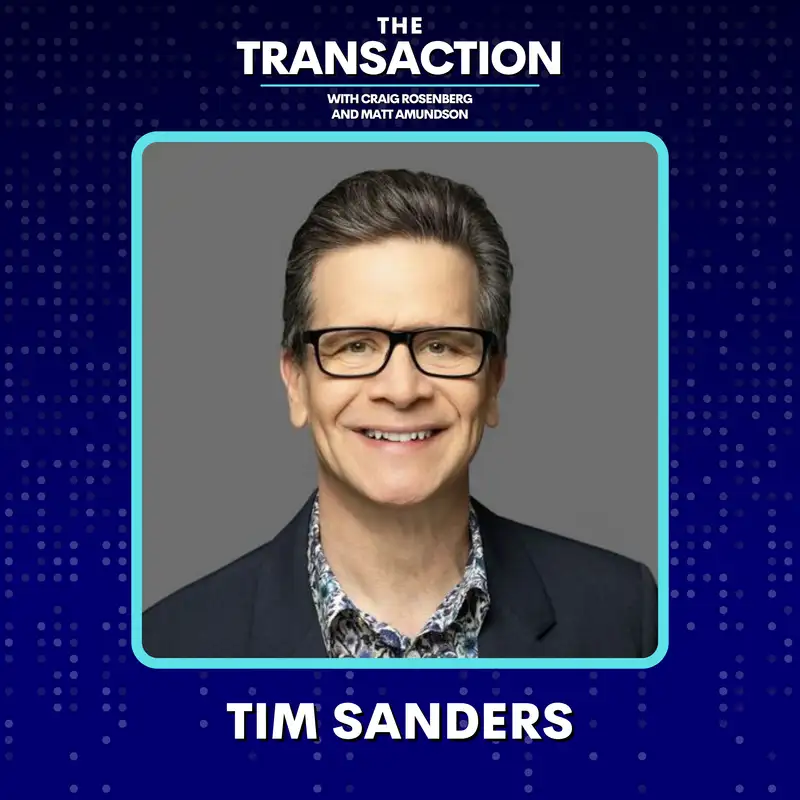
Win the AI Answer, Not Just the Citations with Tim Sanders, Chief Innovation Officer at G2 - Ep 85
TT - 085 - Tim Sanders
===
Tim Sanders: [00:00:00] Sometimes the best Go-To-Market strategy is to unscrew yourself by using expected value and get out [00:00:05] of your own damn way.
Tim Sanders: You have to get away from the addiction that traffic is a meaningful [00:00:10] metric. It's not. Pipeline is the only metric that matters.
Tim Sanders: You're not just getting higher [00:00:15] quality traffic from a closing standpoint,
Tim Sanders: you're getting higher quality ARR. So your website matters, [00:00:20] your traffic statistics don't.
Tim Sanders: When you're using ChatGPT and it gives you [00:00:25] returns, think about what you click on. Which citations do you actually take the time to click on? You click on the [00:00:30] ones where believing the claim would be high risk to you.
Tim Sanders: There is one other like really geeky [00:00:35] but helpful thing that I've been thinking about a lot. And that is the prompt problem.
Tim Sanders: The prompt [00:00:40] problem is the misalignment with the prompts that companies track to measure [00:00:45] their AEO and the actual prompts their prospects are using with the answer engines. [00:00:50] That's a huge problem right now.
Craig Rosenberg: the first thing I will do now that we're recording is mention that, uh, Matt's [00:00:55] late and the only reason, oh, hold on. He's now calling. Please. Let's do this while we're [00:01:00] recording. Hold on one sec. Matt. What's up?
Sam Guertin: We're taking our first caller.
Craig Rosenberg: All [00:01:05] right. It's me, Sam, and Tim. Just between [00:01:10] us on recording. It's the way we like it, right, Sam?
Sam Guertin: Let's do it.
Craig Rosenberg: Alright, [00:01:15] cool. So
Tim Sanders: Let go. In an AI layoff, are you gonna make an announcement that [00:01:20] the structure of our company has changed and we're letting 25% of our staff go [00:01:25] effective immediately? I'm sorry. 33%
Tim Sanders: of our staff go immediately. But we think it's gonna lead to a [00:01:30] stronger, more nimble, agile organization. And
Tim Sanders: then all
Tim Sanders: of Twitter will say [00:01:35] they overhired during COVID.
Sam Guertin: the stock
Craig Rosenberg: Yeah, that is interesting. Why [00:01:40] does it always seem in the AI layoff that everyone's laying off the same percentage, number [00:01:45] of people? Is that like a, or am I just because I see them and they [00:01:50] react to, I mean, yeah. No, thank
Tim Sanders: It's a meme. I think it's a meme, and [00:01:55] then the numbers that go 20% sounds good.
Craig Rosenberg: Yeah, for sure.
Tim Sanders: my my personal [00:02:00] opinion is that, you know, we don't have the forensic vision to actually see who they laid off and how [00:02:05] that lines up to AI displacement. You know, my thesis has been, whether you're talking [00:02:10] Jack Dorsey down to the most recent announcements by Wix or whomever, they all look [00:02:15] like they overhired, they like hoarded people like for the last four years. And this is a really good [00:02:20] time to make it right. So that's what I feel like most of them are because I just don't see a clean [00:02:25] lineup. Between who they let go and what the AI's doing, like what they're doing with [00:02:30] AI doesn't seem to be even.
Craig Rosenberg: Yeah, that, that's probably right. I mean, [00:02:35] you know, our, one of our guys here, his thing is they just, they're laying off [00:02:40] because they're laying off. But AI makes it a good story and, and you [00:02:45] know,
Tim Sanders: kinda get a two for one. Yeah. Yeah, You get a two for one.
Craig Rosenberg: [00:02:50] [00:02:55] [00:03:00] [00:03:05] [00:03:10] So, um,
Introducing Tim Sanders, Chief Innovation Officer at G2
---
Craig Rosenberg: so here, uh, Tim, welcome to the show. I just want to give everyone [00:03:15] some background.
Craig Rosenberg: So this is, uh, this is the transaction. So this is the first time I've [00:03:20] met Tim, except, except that I, um, have [00:03:25] been, uh, exposed to him without him knowing. For a long time because [00:03:30] of, you know, the people around us like Sydney Sloan and Christina McMillan and these folks are [00:03:35] like, you gotta get this dude on the show.
Craig Rosenberg: And I'm like, yeah, we do. I just didn't, you [00:03:40] know. Hold on one sec. God dang it. Um, the, [00:03:45] uh, we just, we just didn't, uh, you know, we, we [00:03:50] just hadn't made it happen, and now we did, and it's like very, it's a very exciting moment for me [00:03:55] because, uh, Tim, I'm gonna have you introduce yourself in a moment, but your work is [00:04:00] fantastic as evidence just by that riff right there.
Craig Rosenberg: Yeah. And, uh, [00:04:05] um, I'm really excited to have you on the show. So, the bef I'm gonna do three things. So [00:04:10] one is I do want you to explain. To, uh, the audience, your background [00:04:15] and what you're doing today 'cause it's amazing. And then second, as you know, we ask you to tell, [00:04:20] you know, a great story. Um, and then third is we want to hear from you, [00:04:25] like, what are the, you know, two or three things that you're seeing really working today from your, uh, point of view.[00:04:30]
Craig Rosenberg: I'm really excited for this. I gotta be honest. So even though we've screwed up everything on the [00:04:35] production side, not Sam, me and Matt, um, it's gonna be a great show. So first we [00:04:40] go. So Tim, tell us, tell the audience more about yourself.
Tim Sanders: [00:04:45] So I, I guess I'm a serial thrill seeker throughout my career, I like to [00:04:50] take technologies that are just on the edge of working and dive in head first, risking it all. [00:04:55] Um, so, uh, my career started in earnest, uh, back [00:05:00] in the 1990s when I went to work, uh, for Mark Cuban in Dallas. [00:05:05] He had a startup. He had just moved from his loft to a warehouse downtown it was called Audio Net. [00:05:10] Uh, before the IPO, we changed the name to broadcast.com. Um, I [00:05:15] was behind, I, I wanna call it a stunt, but we got a really big check for doing it, so I don't think it's [00:05:20] a stunt. Uh, but I was, uh, the producer of the Victoria's Secret Fashion Show. That's the first [00:05:25] time the, the, the actual fashion show was broadcast, and we streamed it on the web, or at [00:05:30] least we did, until it crashed. Um, but that was a real big moment, you know, for the, [00:05:35] the, the size of the audience that could come to a singular web event. I, uh, was at [00:05:40] Yahoo after that. I was their CSO for about five years, uh, right through the Google [00:05:45] disruption. So I always think that. When it comes to topics like, like answer engine [00:05:50] optimization, I feel like I come by it pretty honestly, because I saw SEO before, SEO was [00:05:55] SEO, and I've kind of watched that snake turn for the last, uh, you know, good god, [00:06:00] 25 years now. Um, and then, um, I've written five books. They're [00:06:05] behind me here. Um, most folks that know my books would know Love is the Killer app, which was my first [00:06:10] book. Um, fun fact, I've written five books, the first books, um, sold, uh, you [00:06:15] know, 80% of my total, uh, backlog, which just kind of proves in life, um, you spend your [00:06:20] entire childhood writing, uh, appetite for destruction and then the rest of your career putting out Chinese [00:06:25] democracy.
Tim Sanders: So, um,
Tim Sanders: I, uh, I am now. I [00:06:30] am now. It's just a sad, it's a sad but true story. I tell this to authors all the time. [00:06:35] Yeah. Your first book's gonna be your book, buddy. I'm the Chief Innovation Officer now [00:06:40] at G2. I am very passionate about how [00:06:45] organizations can transform as AI creates new opportunities, new [00:06:50] threats, new channels, new lanes. Um, I'm centered around research on answer engine [00:06:55] optimization and AI agents. The two are going to combine [00:07:00] sometime in the near future. I'm also an executive fellow at Harvard Business School. I have an AI [00:07:05] institute there and, um, I advise them on how they talk to businesses about [00:07:10] artificial intelligence, whether it's from their publications or, or their workshops and others because. [00:07:15] One of the things I spend a lot of time on is how to decode [00:07:20] technical language from an economist point of view for regular old business people so they can [00:07:25] actually think about it in normalized terms.
Craig Rosenberg: [00:07:30] That was like, uh, the best intro. I, I, you know, we don't have guest do intros because [00:07:35] they're mostly boring and they take 20. That was really interesting, by the way. And [00:07:40] Sam, were you aware, let's just see Tim, uh, Sam is old school, like he just reined, [00:07:45] uh, Raiders of the Lost Ark Trilogy. So he does have some, [00:07:50] uh, old school.
Craig Rosenberg: Did you get catch his reference? On [00:07:55] appetite to dis uh, appetite for destruction and, um, Chinese democracy. Do you know what he was talking [00:08:00] about?
Sam Guertin: No, unfortunately I am not as well read, um, as I should [00:08:05] be.
Craig Rosenberg: Well, you don't have to be well read. There's your hint.
Sam Guertin: Oh, then no, [00:08:10] I'm just stupid.
Tim Sanders: No you're not. No, you're not. It's generational. It's, it's,
Tim Sanders: it's generational.
Tim Sanders: [00:08:15] If I make a
Tim Sanders: Nickelodeon reference, I'll forgive you for that one too.
Tim Sanders: It's
Tim Sanders: [00:08:20] okay.
Sam Guertin: Nickson I
Tim Sanders: for Destruction was Guns N Roses first record. It sold
Tim Sanders: like [00:08:25] millions and millions. It's a classic.
Tim Sanders: Chinese democracy was their most regrettable record.
Tim Sanders: It sold [00:08:30] in the thousands.
Craig Rosenberg: I was all excited too, because they were so good. I [00:08:35] mean, when they came out it was amazing, by the way. Fun, uh, fun fact on that. So I was like, you [00:08:40] know, I, I went, I, my kids had me go to a country, uh, concert that [00:08:45] all their friends were at. It was Luke Bryan, or Zach Bryan were one of the two. And it was amazing. And I realized, [00:08:50] I, I realized that my kids exposure to music, um, [00:08:55] by not, like I grew up going to concerts and, and starting in middle school, and it, it [00:09:00] does, you realize what music. Does for you, right? And so I was like, you know what? I'm gonna make these [00:09:05] guys go to some concerts. And so I was looking through and it was, you know, I just asked Claude, I'm [00:09:10] like, what concert, you know, what concerts from these two generations are out there?
Craig Rosenberg: [00:09:15] And you know, the Foo Fighters are going on a big one that could be interesting for them, but like, guns N Roses, I'm like, oh, well [00:09:20] that would be hilarious. Like 65% of the tour is in [00:09:25] Brazil.
Tim Sanders: Mm-hmm.
Craig Rosenberg: I mean, they
Craig Rosenberg: like going,
Craig Rosenberg: [00:09:30] what? I mean they're going to like Fort Za. I mean, they're going to like all the cities there.
Craig Rosenberg: It's [00:09:35] not just going down for a big concert in, in, you know, Sao Paulo or Rio. It's like they're, [00:09:40] they must be really popular in Brazil. I asked my buddies like, well, there's a lot of [00:09:45] rockers here, so I
Tim Sanders: Yeah, there are. I've been to Brazil a lot, so yeah, [00:09:50] there, there are. They love rock.
Craig Rosenberg: That was an incredible
Tim Sanders: don't mind if you sing outta tune [00:09:55] either.
Craig Rosenberg: No, they definitely don't.
Tim Sanders: friends. Just [00:10:00] kidding.
Craig Rosenberg: All right,
Storytime
---
Craig Rosenberg: so you already showed that you're a good storyteller. Um, [00:10:05] we, you know, we do this because we want people to tell stories. We learned this the hard way and the podcast, we [00:10:10] just have people come out of the gate. I don't think I'm gonna have a problem with that with you, but like, do you know, have any [00:10:15] really great, uh, you know, in particular, you're seeing so much transformation and so much [00:10:20] disaster.
Craig Rosenberg: I mean, you've got it all. So I'm looking forward to hearing what you, what your story is for us today,
Tim Sanders: Tell you what, I'll, [00:10:25] I'll tell you two quick stories. How about
Tim Sanders: that.
Tim Sanders: I'll tell you one story 'cause we're building on this. Okay. [00:10:30] I'll tell you one story about a band I was in and a Go-To-Market strategy that worked and [00:10:35] I've never forgotten about it for the rest of my life. Okay? I had to paint the picture for you. Um, [00:10:40] the year is, um, [00:10:45] 1991. That's who I was in 1991. [00:10:50] Okay. So this is, this is an industrial rock
Tim Sanders: band I was in and we had [00:10:55] a record release party, um, downtown Dallas at a club called Trees. The [00:11:00] cover charge was $1. I had a mailing list, had 535 people on it. We [00:11:05] absolutely wanted to pack the club, so I took all our money outta savings.
Tim Sanders: Got it. In [00:11:10] ones I took $535 in ones, and [00:11:15] I mailed $1 to everybody on our mailing list with a flyer that says. [00:11:20] We've bet the farm on packing the house. Here's your free ticket. You [00:11:25] have to come. 800 people showed up.
Tim Sanders: By the way.
Tim Sanders: that was the only time [00:11:30] 800 people ever showed up for one of our shows. But I never forgot. I never forgot that. And [00:11:35] so over the course of my adult career, I realized the value of what we now [00:11:40] delicately call the marketing penalty. And I always ask myself like, like how [00:11:45] can something that people receive in a message stand out? And I'm telling you, [00:11:50] I've met people years later, like decades later, that came to that show and they [00:11:55] said I had to go. It was what I, I had something else to do, but you sent me a [00:12:00] dollar and obviously you guys don't have any money, so I had to show up. So that's my fun [00:12:05] Go-To-Market story about going all in, um, with a marketing penalty. But lemme give [00:12:10] you one that's more contemporary and this is the one I was prepared to tell you, but you know, we went down the Appetite for [00:12:15] destruction lens, so I wanted to show you that part of me.
Tim Sanders: Um. [00:12:20] So before I joined G2, when I was still dating Godard, [00:12:25] 'cause he and I had all these conversations before I left where I was working and, and joined G2 [00:12:30] for like six months. I'm saying, I'm saying. Don't believe those [00:12:35] fools, uh, uh, I'm not gonna say the names of the company, but the, the, these fools that are releasing these [00:12:40] reports that say no one is defecting from Google to use ChatGPT, this is like early [00:12:45] 2024.
Tim Sanders: I said, don't believe that. Not for your business software. I said, people that buy [00:12:50] software will index heavier on using things like Perplexity and ChatGPT for everything, [00:12:55] especially the crap they don't want to do. You know, like researching software, like who wants to do that? [00:13:00] It's not your job. I said, so they're gonna lean into it. And I said, I make, I'm gonna make a bet that [00:13:05] it's going to be a, a much bigger part of your business in the next few months. So I joined the company six months later, and then [00:13:10] we did our first study, um, later, and it came true. But here's the story. So I [00:13:15] joined the company. I'm only at the company a month, and my, um, market [00:13:20] research analyst comes to me and says, there's this vendor out of Newark called Profound. [00:13:25] And it's just two guys. They're in an empty office, but they have a really nice [00:13:30] dashboard for measuring, um, AI visibility. So I took a call with him and I'm like, oh, this guy James, [00:13:35] he's a storyteller, wall of blue links. Ah, he's validating everything I think. So I said, [00:13:40] Hey, Godard, let's have a call with this startup kid it's Khosla Ventures is behind him. I think this is, [00:13:45] this, this pretty interesting play. He's got a, a former executive from Uber as his CTO, so, [00:13:50] so basically we get on a call. James shows Godard, all the places on G2 [00:13:55] that we had disallowed, robot crawling. And of course our response was, well, [00:14:00] the reason we blocked is because, you know, eventually it's a big check, you know, for it. And then James [00:14:05] challenges us and say, yeah, but have you run expected value on that decision? Meaning have [00:14:10] you really run the calculations for, if you unblock everything and [00:14:15] immediately G2 becomes like the citation source for software, what's the value of that? [00:14:20] Or if you. Hold out, keep blocking it.
Tim Sanders: You're not AI visible [00:14:25] and you're gonna get a check written with whatever propensity that is. What is the value? The hilarious thing [00:14:30] is Godard had just sent me a book and I still have it 'cause it made a big impression on me. [00:14:35] On the edge. Nate Silver, you might know him
Tim Sanders: from 5 38. [00:14:40] Um, but you
Tim Sanders: know, a lot of people in poker know him 'cause he won final Table World Series of Poker. [00:14:45] It was all Ev.
Craig Rosenberg: Is that right?
Tim Sanders: Yeah.
Tim Sanders: Yeah. He, he just took everything he knew about expected [00:14:50] value, brought it to poker. It was like a final table. First year he went to, the first year he went to the [00:14:55] competition.
Tim Sanders: So, so Godard made a very strategic decision, I'm saying within [00:15:00] a month. Yeah, EV, unblock the whole thing. Unblocked the whole thing. [00:15:05] By the beginning of 2025, we're already seeing green chutes. We had literally gotten [00:15:10] out of our own way, and it turned out that ChatGPT was [00:15:15] tuning the purchase recommendation use case, not just for pattern matching, like other use cases like [00:15:20] fact lookup. They were tuning it for third party trust signals.
Tim Sanders: And guess what? G2 gets a [00:15:25] couple of million reviews a year. So when we say these are the best 10 whatevers, and we've got [00:15:30] 50,000 reviews that underlie it, turned out that had the heaviest weight in the models at test time. And [00:15:35] as 2025 rolled along, it all of a sudden became our number one value [00:15:40] proposition.
Tim Sanders: So what I'm saying is that sometimes the best Go-To-Market strategy is to unscrew [00:15:45] yourself by using expected value and get out of your own damn way. As a matter of
Tim Sanders: fact, [00:15:50] as I've talked to so many software companies over the last year and a half, [00:15:55] that's been job one is, hey, you've got analyst relations. [00:16:00] You need LLM relations because they're a bigger influencer now than [00:16:05] analysts. And I
Tim Sanders: think that was a realization that Godard and our team had, and we [00:16:10] recently bought Gartner Digital Markets, which is Capterra software advice, um, as well as GI app. [00:16:15] Gartner, they block. 'cause you know, Gartner, the publisher, [00:16:20] publisher mentality, they probably feel the same way. Um, we unblocked those three after [00:16:25] we purchased them. And the context request from ChatGPT, Gemini, through the roof. [00:16:30] Um, so I guess that's our story. Sometimes Go-To-Market isn't just what you think it is [00:16:35] sometimes it's very fundamental, uh, and it's really about, uh, making the right decisions. I'm not trying to go [00:16:40] six seven here, but it's really about making expected value decisions.
Tim Sanders: And I have to say, [00:16:45] to this day, I'll talk to marketers. Well, I'll run an audit. Of their [00:16:50] website properties for are you easy to work with with a language model? And you'll find that [00:16:55] they gate like the best content that would've been the most sided. And they're gating it [00:17:00] obviously for lead generation. And that's when I say you might wanna run expected value between lead [00:17:05] gen based on actual closed deals and, and the value of each deal and what you would be getting back in [00:17:10] AI visibility.
Tim Sanders: And so that's kind of the lesson that I keep preaching. You know, here we are, you know,
Craig Rosenberg: [00:17:15] Amazing. Well, actually, yeah, like before we go, you do. Well maybe [00:17:20] I, I, I'll leave it to the end. Let's see what you want to talk about, because that's obviously something [00:17:25] you, you weave the story of what's working, um, into your [00:17:30] story, which is great. Uh, I do, I have a million questions for you. I've seen, by the way, a lot of your [00:17:35] data, I used it, uh, I credited Sydney so you can talk to her about [00:17:40] attribution issues.
Tim Sanders: There you go. You should.
Tim Sanders: I worked for her for quite some time. She [00:17:45] was an they created this. Yeah, she, she's amazing speaker. Like, I, [00:17:50] I am so engaged when she and I know her well. I spent three days, you know, as you [00:17:55] do. And I still love when she speaks. Um, okay, so, um, [00:18:00] why don't we, let's just give you the platform here. Like what we, what we really are looking, you know, [00:18:05] just to give you a little historical on the, on the pod.
Craig Rosenberg: Matt was working as a [00:18:10] executive residence here with me, and we were sitting there, this was like four years ago, and [00:18:15] we were just going. Oh man. Like things just changed, [00:18:20] right? And so we were like, we have to learn. So we just started talking to people and we, we would [00:18:25] come into and analyze it. Someone's like, you gotta create a podcast on it.
Craig Rosenberg: It just, you know, as you [00:18:30] go, learn from everyone, do it. Take it all in. By the way, what we like to say is we were learning. [00:18:35] We were learning. And then all of a sudden, what, a year ago we call it, a year and a half ago, holy [00:18:40] crap. Like that we thought we were learning and it was incremental. And now we have to like.
Craig Rosenberg: Or [00:18:45] through the roof, you're in the, through the roof side. So I'm looking forward to this. So we just try to find out, you know, like [00:18:50] what, when in your lens, like what are the, you know, two or three things that you're seeing working out there. [00:18:55] And then, you know, as we have questions or comments along the way, we'll jump in.
Craig Rosenberg: So I'm gonna hand the, hand it [00:19:00] back to you and hear what you have for me.
Answer Engine Optimization & Content Strategy in the AI Age
---
Tim Sanders: Yeah, so let me set up some, some guardrails for my [00:19:05] point of view. So when it comes to answer engine optimization, [00:19:10] I care about one use case and one prompt category. [00:19:15] I care about purchase recommendation, high risk [00:19:20] software. I care about commercial intent prompts. Give me the best [00:19:25] for this or choose between the two. So I care about commercial intent, I care about, [00:19:30] um, software, uh, purchase recommendation. And I say this, and this is the first insight I [00:19:35] want to give you. I say this because not all use cases are tuned. [00:19:40] The same way when it comes to citations are more important, [00:19:45] winning the answer 'cause a citation is not the same thing as winning the answer. So they're all [00:19:50] tuned differently. And so I am absolutely obsessed with the algorithm [00:19:55] at OpenAI and Gemini around how they recommend [00:20:00] something. Now at OpenAI, they call this your money, your life. So when [00:20:05] OpenAI issues, a your money, your Life recommendation, that could be health. That's [00:20:10] cancer. That's not cancer.
Tim Sanders: It could be software by agent force instead of buying UiPath. [00:20:15] They tune differently, and I say tune differently because so many people in AEO, [00:20:20] they, they just, they talk as if all the models are doing is pattern matching. [00:20:25] And for some use cases that's true. So if you went on ChatGPT [00:20:30] and you said is the HBO television series, the pit going to come back for [00:20:35] season three?
Tim Sanders: And if so, it's Dr. Robbie still the lead straight pattern [00:20:40] matching high authority website. Baa bing, baa boom. Yes, it's coming back. And yes, he's back. But [00:20:45] this character's. And
Tim Sanders: all it did was pattern matching based on website authority. But if I said, [00:20:50] give me the best three customer service agents for a medium sized hospital patient [00:20:55] outreach, it has to have a mobile endpoint. There's gonna be some pattern matching to [00:21:00] fix entities, meaning I now have a, a group of entities I could choose from, but it's [00:21:05] fine tuned then to do something called validation layer work. [00:21:10] That's where the neural networks are looking for third party sentiment scale. [00:21:15] At G2, we call it trust signals to gain enough confidence to make the [00:21:20] purchase recommendation. The North Star, at least for OpenAI, is to [00:21:25] avoid regrettable purchase. So when they make a recommendation, the way they think [00:21:30] about it is if you make a regrettable purchase, that will indicate platform health [00:21:35] decline. So that's a fascinating point of view. So with that said, here's a couple of pieces of [00:21:40] advice I'm giving you.
Tim Sanders: The first one, the foundational one. You better be easy for an LLM to work with. [00:21:45] You need to challenge every place you block robots from crawling you during [00:21:50] either training or retrieval. You need to really question whether [00:21:55] you gate content, and then you need to really scrutinize the format of your web [00:22:00] properties, whether you're requiring JavaScript rendering, which is a no-no, whether you're publishing [00:22:05] content and PDF format. Um, very good evidence suggests that [00:22:10] these models, especially for users that aren't paying based on tokens, they're [00:22:15] not going to actually read PDFs at test time. Yes, you can upload one in your prompt and [00:22:20] they'll read it, but they're not reading it during retrieval. We learned this the hard way at G2.
Tim Sanders: Now our [00:22:25] reports were published in flat HTML, but anyway, be easy to work with. Point number [00:22:30] two. If you wanna win the answer, you have to earn trust signals in [00:22:35] places that are AI visible. So I wanna break that down. [00:22:40] Citations are like eyeballs. 25 years ago when I was at Yahoo. Easy to measure [00:22:45] really don't mean anything.
Tim Sanders: Okay? Citations are all we have today. What you are really trying to do, at [00:22:50] least in our category, you're trying to win the answer. Now at G2. Our most recent [00:22:55] study, the AI search survey that just came out in March. Dig this one out of three [00:23:00] first prompts. When a software buyer starts with ChatGPT, half of them do. One outta three of [00:23:05] their first promises. Give me the best of this for that. In other words, they one shot a short list. [00:23:10] So just because a vendor is cited in that return, which increasingly is now [00:23:15] deep research as a tool, just because they're cited doesn't mean they were recommended. In [00:23:20] fact, I've been able to review a lot of synthetic returns. I've seen [00:23:25] vendors, I'll give you an example. I've seen Adobe show up 13 times in citations, but not make the [00:23:30] shortlist at the bottom of the return. Winning. The answer means your [00:23:35] product was recommended at the bottom of the return as one of the three. [00:23:40] And I think that's a fascinating paradigm and you don't win the answer just because you have [00:23:45] content.
Tim Sanders: That pattern matches the prompt that causes you to get cited. You might get [00:23:50] some traffic for that one 10th of 1% click through rate traffic, but really [00:23:55] winning the answer is because you've generated trust signals in places the models can see. [00:24:00] I wanna break that down just a little bit.
Tim Sanders: When I say places, the models can see, as I mentioned [00:24:05] earlier. Until August of 2024, G2 blocked to this day, Gartner's [00:24:10] peer insights blocks. So not every review site is visible to the [00:24:15] models. Let's talk about publishers. Josh Blyk [00:24:20] profound, studied millions of citations and he found out, and this is crazy, [00:24:25] the tier one publications, uh, New York Times, wall Street Journal, AP [00:24:30] Bloomberg, you know those, they only get 3% of the B2B citations.
Tim Sanders: [00:24:35] The other 97% of citations are going to niche publications, regional trades. [00:24:40] Why? Because the tier ones block and the blocks are working. [00:24:45] So I tell people all the time, if you're spending money on earned media to generate [00:24:50] AEO, you should use these AI visibility tools to measure your [00:24:55] targets, not just you.
Tim Sanders: Because a lot of companies, they'll buy a profound Arun, a conductor, a [00:25:00] simr, a prompt watch to monitor their brands, and then they go spend oodles of money chasing a [00:25:05] publication or an analyst firm, Gartner Forrester, IDC, all Block Futurum [00:25:10] has much more AI visibility than all those cats these days. You just have a, have to [00:25:15] sensitivity of not only trust signals, but trust signals that show up for the models. [00:25:20] My third and final piece of advice. Produce fresh [00:25:25] content that is answer shaped. Fresh means [00:25:30] you are answering a question that may not be satisfactory [00:25:35] answered so far. And what I mean by that is, uh, air Ops calls it frontier content. [00:25:40] Imagine a Reddit thread where there's a question somebody's struggling with trying to figure out something about a product and [00:25:45] they weren't satisfied with the results of the thread is still open writing content that [00:25:50] resolves that in publishing it can be outsize in terms of the number of [00:25:55] citations that you get back. And when I talk about the idea that you're producing answer shaped content, [00:26:00] what I mean is that the content reads more like an FAQ than a corporate marketing message. [00:26:05] So, so message shaped content would say like problem, solution, feature, benefits, proof, [00:26:10] call to action, that kind of thing. When the model see that looks like vendor speak doesn't give [00:26:15] them a lot of confidence.
Tim Sanders: Could absolutely lead to a regrettable purchase. But when you see [00:26:20] human beings like you and I having a discussion and conversational tone, then that, and I'm [00:26:25] answering questions. So it's like I'm doing for you now. That resonates more as actual user, [00:26:30] actual owner and is going to get more citations.
Optimizing Your YouTube Videos for AI LLMs to Index & Cite Your Content
---
Tim Sanders: I'll give you one data point to prove this. [00:26:35] I'm sure you've been hearing about YouTube. YouTube is becoming a really, really big source of [00:26:40] citations for all the models, and it's not because they're watching videos, because when the [00:26:45] model goes to YouTube, which considers a very high authority website, it sees the title, [00:26:50] it sees the description, and measures the interaction with the content. Smart B2B [00:26:55] marketers have been putting the transcript for their video conversations [00:27:00] in the description. And that has been a forcing function to get these [00:27:05] marketers to stop talking like corporate marketers and talk like real human beings. And so that's been a breakthrough. So those are [00:27:10] my three pieces of advice.
Craig Rosenberg: That was amazing.
Sam Guertin: That [00:27:15] was incredible.
Craig Rosenberg: So good. Jesus. Holy [00:27:20] moly. God, man. Sam, first of all, dude, I could tell you were going [00:27:25] crazy. That was in, that was the best rant I've ever had on this show. I mean, I [00:27:30] was wrapped. Oh, okay. All right. You want to go, uh, [00:27:35] Sam, by the way, I know you probably have a million questions. First of all, we gotta get our transcripts in the, uh, [00:27:40] Well, I, I have a specific question about that, that might be super tactical, but,
Tim Sanders: [00:27:45] Let's get super tactical.
Sam Guertin: okay.
Tim Sanders: I'm like, Sheldon Cooper over here. Let's go.[00:27:50]
Tim Sanders: Let's talk about flags.
Sam Guertin: So YouTube specifically, you can [00:27:55] upload a transcript, like when you're uploading a video, uh, on the backend so that it'll [00:28:00] use that for the, like closed captioning
Tim Sanders: Sure.
Sam Guertin: on a video.
Tim Sanders: Yep. Doesn't [00:28:05] help.
Sam Guertin: is that being
Tim Sanders: Nope. Nope. Can't. The rocks can't. The rocks can't watch [00:28:10] video. The rocks don't read the captions either. Uh, that's what we call the models. They're rocks. Um, [00:28:15] the rocks read the description. So what you'll see is that in the description, you cut and copy the transcripts. You have [00:28:20] your description, and then you have dot, dot, dot cut and copy transcript.
Tim Sanders: They read that.
Sam Guertin: Okay.
Sam Guertin: [00:28:25] 'cause I know that.
Sam Guertin: the transcripts are limited to, I think, like 5,000 characters or something like that. [00:28:30] Um, but there are, there is a section on the, the [00:28:35] user side of YouTube where you can see that the transcript,
Tim Sanders: Yep.
Sam Guertin: okay. [00:28:40] That's, that's super interesting.
Sam Guertin: Craig, sorry for, for
Craig Rosenberg: No, please, [00:28:45] no wonder I'm not in the LLMs. All right, so, uh, okay. First [00:28:50] one, can I, we gotta do this
Seeding Branded Content into Reddit to Influence the Outputs of LLMs
---
Craig Rosenberg: one. So we have a, a guest host named Scott Albro, [00:28:55] and he's a pretty funny LinkedIn guy, but he's all, you know, he's highly analytical. I'm gonna read [00:29:00] to you a, a LinkedIn post he did that, got tons of action.
Craig Rosenberg: [00:29:05] You can't call him an idiot, you can only call him a unique, uh, bird. [00:29:10]
Craig Rosenberg: So the fact that AEO/GEO is a thing is a bad sign for artificial super [00:29:15] intelligence, you mean to tell me we're building a digital God, but I can trick it by stuffing comments [00:29:20] into Reddit threads and that the SEO Industrial Complex has already morphed [00:29:25] itself into a cabal of consultants and startups that will help me turn the LLMs into marketing spam [00:29:30] landfill.
Craig Rosenberg: Make it make sense your thoughts.
Tim Sanders: So I believe the [00:29:35] models because Reddit, you know, has done their deals with the labs and they give not just the data [00:29:40] that would be crawled, but other signals. I, I think the idea of inorganic [00:29:45] comments being connected to citations has been debunked mostly by
Tim Sanders: research that actually takes a [00:29:50] look at citations that follow. Um, Rob Gage, global Head of Insights at Reddit explains it this [00:29:55] way. Reddit is a dinner party. Okay. You're, you as a [00:30:00] brand are barely invited. You're like, you're like the people serving champagne. Just [00:30:05] serve the champagne. Don't talk. Um, so, so I, I believe that Reddit [00:30:10] has preserved their integrity in these systems knowing people are trying to trick and create false [00:30:15] comments, um, by using upvote systems and authentic Reddit or, uh, [00:30:20] verification to really help
Tim Sanders: signal to the models at a glance the difference between good and not real content.
Tim Sanders: That being said, that [00:30:25] being said, there is a lot of trickery going on, but the models are pretty agile. Just like Larry Page and his [00:30:30] gang has been agile for the last couple of decades at making rug pulls as [00:30:35] what people call it when they lose all their traffic. We like to call it quality updates. So the, the [00:30:40] models are very aggressive about protecting their business, and in particular, ChatGPT [00:30:45] will only reach their valuation based on their fundraising. If they [00:30:50] really build a healthy ads business and make a lot of money on shopping, they've gotta have a [00:30:55] meta meets Amazon multiple. If you think that OpenAI is gonna grow into their [00:31:00] valuation, just selling tokens, are you kidding? As, as Prof G would say, those people are [00:31:05] gonna grow up to have a shitty business like Kroger or Southwest Airlines where they're sexy stocks until they're [00:31:10] not, because there's just no margin in that business.
Tim Sanders: The margin is. [00:31:15] Content that people trust, shopping recommendations that people rely on, and I believe that [00:31:20] ChatGPT. Will be very aggressive in protecting that against, uh, Tom [00:31:25] Foolery, so to speak. And I'll give you a classic example, like markdown language. A lot of companies [00:31:30] have like said, Hmm, we're gonna take all of our pages and publish them in markdown, put 'em out in the edge for the agents [00:31:35] to see. Um, it worked for a minute and then all of a sudden there's been adjustments to make sure that it [00:31:40] doesn't work too much because it actually might pollute, uh, the value of the actual [00:31:45] platform. So. But I could see how that would get a lot of action. I, I can, and, [00:31:50] um, it's good, good sense of humor. He's funny, he obviously didn't
Tim Sanders: use the AI to write that.
Craig Rosenberg: no, he [00:31:55] never does. Uh, you know, what you
Craig Rosenberg: just said is interesting. AI to write my stuff either, by the way.
Craig Rosenberg: Oh, [00:32:00] there's no, yeah, no, I can tell. Yeah, there the, um, yeah, you just, what you just [00:32:05] said. You know, we have a, I have buddy JH Scherck, he's an old SEO guy and you know, he's [00:32:10] looking at AEO and he said, what you said, he said, well, look like anybody who's tricking [00:32:15] the platforms now, he's like, I've been around long enough to know that tech giants do [00:32:20] not like to be tricked, and when they pull the rug, it will hurt.
Craig Rosenberg: And he's like, how many [00:32:25] times on the Google update. Do we see just ABX, you know, an [00:32:30] annihilation of someone's trick. They do not want to be tricked and they that's right. will take care of [00:32:35] that. And this is exactly what you said.
Tim Sanders: Yeah. And
Tim Sanders: I mean, I think the other thing too is that people, they have to have [00:32:40] a goal when it comes to AEO. Like what is your goal? Are you trying to build brand equity by showing up? And people [00:32:45] like, oh, I, I, Craig, I've heard his name. Are you trying to get traffic? Or are you trying to [00:32:50] generate pipeline?
Tim Sanders: And I think the tactics are all different for those three goals, but people like [00:32:55] bring it all together into one and think, I'm just trying to get citations, trying to be sided.
Craig Rosenberg: [00:33:00] Yeah, to, I want to talk more about the citations versus an, so I, another, [00:33:05] I've been, you know, talking to folks and they, similar to the stat you threw out, which is one 10th of [00:33:10] 1%, uh, he said the same thing. He said, look, like I, I just [00:33:15] paraphrase. Um, you know, he said, look, the citations are nice, but they [00:33:20] don't, they don't do it for you.
Craig Rosenberg: I'll get your reaction to that. And he [00:33:25] said, you have to what? You said you gotta win the answer. He said, because, [00:33:30] uh, there is no top of funnel for you anymore. It's out there on a, you [00:33:35] know, and so he's like, you have to, all the blog strategies you did it five years ago are, [00:33:40] are not, you know, he's like, you could do it.
Craig Rosenberg: You need 'em to be on other sites. And if you care about [00:33:45] citations, great. The most important thing we're doing
Tim Sanders: Yeah.
Craig Rosenberg: that people are coming to [00:33:50] you bottom of funnel.
Tim Sanders: That's right.
Tim Sanders: you? need to be helpful and trusted. Helpful
Tim Sanders: and [00:33:55] trusted. So I think, I think that should be the paradigm. But let's talk about [00:34:00] citation. Click through rates. It's something
Tim Sanders: I went down the rabbit hole on last year and I
Tim Sanders: went everywhere. I talked to every [00:34:05] vendor. I've talked to, academic researchers, everywhere I go, I'm getting to the bottom of this.
Tim Sanders: So [00:34:10] there's a difference between an expository citation and a proof citation [00:34:15] for your money, your life claim.
Tim Sanders: Think about it this way, when you're using [00:34:20] ChatGPT and it gives you returns, think about what you click on. Which citations do you [00:34:25] actually take the time to click on? You click on the ones where believing the claim would be high risk to [00:34:30] you.
Tim Sanders: That's what you click on, all the stuff that's low risk you don't care about. So when you look at a return, it's [00:34:35] true.
Tim Sanders: The average click through rate for expository citations, probably one 10th to one third of a [00:34:40] percent, depending on like perplexity, is a little kinder on the click through, um, than, uh, ChatGPT.[00:34:45]
Tim Sanders: However, um, heels, um, spelled GILS at prompt watch reveal [00:34:50] data to me that showed that the click through rate goes up at least 10 x to a [00:34:55] 1% click through rate. When the citation is the proof point of a high risk claim, [00:35:00] that's different. Trust but verify. In fact, research that I've [00:35:05] also seen suggests that that click-through rate could be as high as what we see on SERP first [00:35:10] page, depending on the risk factor of the claim. So this is why if [00:35:15] traffic is your goal in AEO, you should be obsessed with something called [00:35:20] citation position. So you are making a commercial intent prompt and you want to [00:35:25] get a purchase recommendation short list, and you get a return back. Think of the everything at the [00:35:30] top of the return. I ain't gonna click. Think of everything at the bottom where it says it's these three vendors and [00:35:35] the proof behind it. I'm gonna click. Now how do I know this Well at G2. [00:35:40] We've been using CloudFlare data to track traffic from user bot. [00:35:45] Okay?
Tim Sanders: 2025. We had a million human beings come to [00:35:50] us directly from chat. Directly from chat.
Tim Sanders: It was part of how we bent the curve on traffic. [00:35:55] Why? Because we obsessed with G2 citations being related to our best [00:36:00] of software awards and all our best of category content instead of just pattern matching [00:36:05] content. So where G2 tended to show up in our citation counts was at the bottom of every [00:36:10] return as the proof between why they recommended Agent Force over UiPath, over [00:36:15] N eight N. And that's where we were actually able to get meaningful traffic. So if you care about [00:36:20] traffic, you have to care about citation physician. You have to be a trust agent of [00:36:25] sorts, as opposed to being helpful. That's why I said be helpful and trusted. Helpful [00:36:30] if you wanna show up trusted, if you want to have people come see you or have influence, which is what G2's [00:36:35] business is, is to have influence.
Craig Rosenberg: [00:36:40] Okay. That's.
Sam Guertin: This [00:36:45] gonna run outta space on this legal pad.
Craig Rosenberg: these things here. I wrote down [00:36:50] the, um, so, um, [00:36:55] the, I'll, I'll move off the citation. I do think that's interesting.
Does Your Company Website Still Matter in the AI Age?
---
Craig Rosenberg: I do want to get to the [00:37:00] second part of, of, of what, um, he was talking about, which is what [00:37:05] happens to your website? What is it now? [00:37:10] Right, because we, we used to try to have it be everything.
Craig Rosenberg: It was where you would go [00:37:15] and you'd gain your knowledge of what's happening in the world. You would, uh, we wanted you to [00:37:20] be there and cruise, but now web traffic is significantly down. A lot of the work is [00:37:25] being done, by the way, at G2 and at um, on the LLMs.
Tim Sanders: that's a [00:37:30] very good question. So What, what is the purpose of a website? So, um, it again, [00:37:35] depends on the business you're in, depends on the use case you care about. I'll just speak to software companies. So as a [00:37:40] software company, what's your website? Your website is the place that they go when it's [00:37:45] time to get a sales rep and confirm pricing and move forward.
Craig Rosenberg: [00:37:50] Got it.
Tim Sanders: your website becomes a conversion machine at the most fundamental [00:37:55] level. That being said, that being said, you still have an opportunity with [00:38:00] content to be helpful to show up persistently. One of the things we learned in our most recent [00:38:05] study at G2 is that 83% of all buyers think more of [00:38:10] a brand that is mentioned that's different than being cited mentioned. In a [00:38:15] return. So there is brand equity value. Now, the, the reason I [00:38:20] say this is important is because you, you hear all these people, especially in the AEO [00:38:25] consulting world, and they're like, nobody goes to Google anymore. I'm like, it's not true. [00:38:30] GG2's research is, is as crazy as it is. G2's research suggests it's [00:38:35] forked. So about half of all software buyers now start on chat and the other half [00:38:40] start in a search engine. It ain't a hundred percent. So you can't abandon SEO right now. [00:38:45] Okay. It's still half the ball game. In fact, not to get even nerdier here,[00:38:50]
Tim Sanders: uh,
Tim Sanders: first page, Sage released a study back in March where they decoded. [00:38:55] The purchase algorithm for ChatGPT, perplexity and Gemini. It's fascinating. Just go [00:39:00] find it. Um, maybe you'll put it in the show notes. I'll send it to you.
Tim Sanders: And they showed that the [00:39:05] distinction is the ChatGPT purchase recommendation algorithm. [00:39:10] 41% of the algorithm waiting was around authoritative list mentions, but those are [00:39:15] mostly gonna be offsite, not your website. Um, and then around 18% was [00:39:20] going to be award certifications, affiliations. Then about 13, 14% was gonna be [00:39:25] reviews, and then there was gonna be, your content was another 10% and socials was, or UGC was [00:39:30] gonna be another 11%. But Gemini was different. 23% of [00:39:35] the algo for Gemini was website authority. Now are they putting their thumb on the scale?
Tim Sanders: No. [00:39:40] They truly believe that should be taken into account when they cite things. So it's like. [00:39:45] SEO is not just important for the half that still start with search. It's still important over [00:39:50] here as Mike King, uh, the founder of I Pull Rank. He's an amazing speaker, [00:39:55] amazing thinker in, in, in this world. SEO skill sets and AEO [00:40:00] skill sets.
Tim Sanders: They're all vector spaces. They're all vector spaces. I mean, the difference [00:40:05] is when we go to search, we say find something. When we go to an answer engine, we say recommend [00:40:10] something. The difference is we're asking the answer engine to use generative AI to reason [00:40:15] over a lot of data so we don't have to. But that's the difference, so, so I think the [00:40:20] website is still vitally important. It's the metrics you have to divorce yourself from. [00:40:25] You have to get away from the addiction. That traffic is a meaningful metric. It's [00:40:30] not, pipeline is the only metric that matters. And now that's something that's feasible.
Tim Sanders: [00:40:35] I've seen the craziest numbers on
Tim Sanders: closing ratios for leads that come from ChatGPT for these [00:40:40] vendors. I'm hearing that the closing ratio for a lead that came from [00:40:45] chat is 50% higher. Now G2, our numbers are a little more [00:40:50] normal, four to 7%. Those are meaningful, so you're not gonna get as much traffic, [00:40:55] but the pipe addition is going to be meaningful.
Tim Sanders: You're closing ratios better. I'll tell you one last thing to [00:41:00] just thoroughly get on the edge of geekdom here. When a person [00:41:05] uses GPT to compress the cycle, so they got their short list in one prompt instead of seven or eight [00:41:10] hours of hard work, and then they form conviction in one day instead of a month. They're [00:41:15] coming to you later in the process, but fresher in the process. Corporate [00:41:20] executive board did a study, an exhaustive study that guys from Challenger Sale did this. Here's what they [00:41:25] learned about B2B buying. If I spend too much time trying to figure out how [00:41:30] to buy from you and I put all this energy in the buying process, I'm more likely to be dissatisfied with [00:41:35] your product a year later in turn, so you're not just getting higher quality traffic from a closing [00:41:40] standpoint, you're getting higher quality ARR, so your website matters, your traffic [00:41:45] statistics don't.
Tim Sanders: You have to move away from that and start focusing laser focus on revenue [00:41:50] attribution.
Craig Rosenberg: You know, that's, uh, [00:41:55] that's amazing. And uh, I actually wanted to add, you know, we had the Google guys [00:42:00] come on and talk to our portfolio. And um, and what it [00:42:05] was interesting, I'll just give you a tidbit. 'cause there was a lot of data that, you know, basically, you know, [00:42:10] uh, a like almost a hundred percent, you know, even though LLM users still [00:42:15] use Google, but they use it differently because they know more.
Craig Rosenberg: [00:42:20] And so, like an example, a very tactical example that they gave is like, oh no, like [00:42:25] competitor ad buying. You have to do that now. You like [00:42:30] from the get go. That's not a phase two, that's not a phase three. In your Google though, you pay [00:42:35] and pay the price because they're not coming in and saying they're getting their education.
Craig Rosenberg: [00:42:40] Then they're coming in and saying, I wanna learn about profound. Uh, you better be the [00:42:45] top result. Both. 'cause now what you just said is they, you, [00:42:50] you are at bottom of the funnel on Google. So you're going, they're going and doing the research, they're [00:42:55] coming in, they're looking for it, and bam, you want them to, to land and become pipeline and you gotta make [00:43:00] sure you, so that it is just a very specific example that, yeah, it was, [00:43:05] uh, I, I agree.
Craig Rosenberg: I put it in this big deck. I had all these big strategic things. I'm like, guys, I just talked to the Google [00:43:10] guy, like this is. This is an example of how the world's changing. And even [00:43:15] Google is admitting the world's changing, and they're saying that we under, we understand [00:43:20] who's coming in, you know, and
Tim Sanders: Oh, they're pivoting. AI mode is more [00:43:25] visible. They've announced agents for search. They're, they're going there, and I think it's smart. It's [00:43:30] very mature. A lot of other businesses just couldn't do that.
Tim Sanders: Like Yeah. video [00:43:35] couldn't do such a thing, right? Even
Tim Sanders: though they had all the cash in the world to make that pivot, they [00:43:40] could have turned, they had all the Hollywood contracts.
Tim Sanders: They could have turned on video and demand and completely boxed out [00:43:45] Netflix, but they were too stuck believing it was a fad.
Craig Rosenberg: Yeah.
Sam Guertin: They have the chance [00:43:50] to buy Netflix multiple times too.
Tim Sanders: Multiple times. So there is [00:43:55] just to, in, in, in our last few minutes,
The Misaligned Prompt Problem Hurting Your Understanding of Customers & Prospects
---
Tim Sanders: there is one other like [00:44:00] really geeky but helpful thing that I've been thinking about a lot. Um, and that is the [00:44:05] prompt problem. I dunno if you heard about this. So I.
Craig Rosenberg: No, we can't wait.
Tim Sanders: [00:44:10] The prompt problem is the misalignment with the [00:44:15] prompts that companies track to measure their AEO. [00:44:20] And the actual prompts their prospects are using with the answer engines. [00:44:25] Okay?
Tim Sanders: Um, that's a huge problem right now. Why do we know this? Well, because the [00:44:30] Frontier Labs haven't released the prompts. No one knows what's going in. We just guess [00:44:35] typically, an AEO company's like, we're gonna crawl your website, pick up all the terms, create a prompt panel.
Tim Sanders: [00:44:40] We're gonna follow that. Good news. You have all the share of voice. Well, of course you do, fool. You are the [00:44:45] only person that calls it 'AI visual collaboration software', the rest of the real world calls it [00:44:50] 'whiteboards'. Okay, so this is a real problem and, and the reason it's a problem is [00:44:55] because the marketers haven't weighed the source of truth for what [00:45:00] prompts they're gonna track.
Tim Sanders: 'cause I'm gonna tell you something, in 2026, the [00:45:05] alignment between what they're prompting and what you're optimizing for is the [00:45:10] yeast in the bread, okay? If you get it wrong, at best, you get a false [00:45:15] positive and your board can breathe at least for a year. At worst, you get it wrong [00:45:20] in the other direction and you spend a boatload of money on the wrong stuff.
Tim Sanders: So the question [00:45:25] now is, what is the source of truth? Since we don't know what the prompts are, and that's fascinating. So I've been hearing [00:45:30] some really cool things about how companies have approached the prompt problem. Now at G2, [00:45:35] one of the things we learned early from a very smart AEO consultant, genius, [00:45:40] I mentioned him earlier on the call, Josh Lyall.
Craig Rosenberg: Yep.
Tim Sanders: Is that before you [00:45:45] create prompts, you have to create a persona. So you need to know what your ICP persona is. You need to [00:45:50] understand the jobs to be done and how they talk about those jobs to be done. The vocabulary they [00:45:55] use for spaces and categories, you need to understand the constraints they operate under.
Tim Sanders: 'cause it's [00:46:00] usually in the long tail prompt. You need to understand, uh, what their success criteria is. And [00:46:05] once you understand those five elements, then you can approach creating prompts [00:46:10] based on natural language. We use our review data, which is a great place. For us to look [00:46:15] at actual language of users around software, but increasingly companies are [00:46:20] using gong call data.
Tim Sanders: So call transcript data with BDRs is fascinating for you [00:46:25] to understand the vocabulary, the jobs to be done in terms of natural language. I'm seeing [00:46:30] software companies now, and this is brilliant, they'll use the BDRs for inbound, like the BDR will [00:46:35] be like incentivized with like a $50 spiff for every prompt you capture.
Tim Sanders: So the inbound [00:46:40] call comes and the first thing they say is they're like, did you come to us from ChatGPT? Your Gemini? [00:46:45] Yes. Who? Okay. Do you mind sharing the prompt? It would mean a lot to me. In my job, [00:46:50] I'll wait. They're literally going to their browser. They go to their history. They take the prompt, they put [00:46:55] it in the chat.
Tim Sanders: The guy puts it in Salesforce, he gets $50. Why do you do that? Because if [00:47:00] you capture about 200 of those, you have the most meaningful source of truth [00:47:05] to solve the prompt problem because now you know exactly what they did. Now, some of these [00:47:10] providers like Profound and Scrunch and others can go get you panel data and that's good. [00:47:15] But the panel data is noisy compared to the actual inbound call data that is on [00:47:20] point to your product. So I, I've just been talking to marketers a lot of like, take [00:47:25] the prompt problem seriously. It was a huge thing for us at G2 last year [00:47:30] when we stopped using our category naming as the only thing we were tracking prompts for, and [00:47:35] started to really dig into the things I'm talking to you about.
Tim Sanders: Our Gong call data, the natural language and [00:47:40] reviews, et cetera, building personas because the sharper your prompt panel [00:47:45] is. The more value you're gonna see from all the investments you make in content and [00:47:50] trust signal acquisition. And, and so just on that little note, the last little [00:47:55] thread I'll pull here, and this is kind of a new thing I've just learned, but I've learned it from three places, so I believe this is true. [00:48:00] So I want you to imagine the marketer on their website, they make [00:48:05] three claims, claim A, claim B, and claim C. These are about functionality or benefits. Okay? So they make [00:48:10] A, B, and C. The reviews they gather on G2, [00:48:15] validate claim, D and E, which are different than A, B, and [00:48:20] C. So they might be other functionalities, other benefits.
Tim Sanders: Okay? That misalignment [00:48:25] means that the G2 review may lead to winning the answer, but the reviews don't improve the [00:48:30] AEO for the marketer's claims. So right now, not only do you have to align the prompts as a [00:48:35] marketer, you've gotta align the trust signals. You get offsite. To actually [00:48:40] match the claims you make on site for you to actually have AEO value to your own [00:48:45] properties. Now, Sydney Sloan, we mentioned her earlier. One of the things she taught me early in this [00:48:50] process is this concept of consistency, right? You have to consistently be referred to as an [00:48:55] entity across all your properties for AEO. This is an example of that. I tell people [00:49:00] all the time, don't think about driving reviews.
Tim Sanders: You recruit reviews and you want to [00:49:05] recruit reviews from those that have expressed. Yes, I believe the claims your [00:49:10] marketing team, your Go-To-Market team have made, they have come true in our life. That alignment alone [00:49:15] makes a massive difference to your AEO. So let alignment be like my final theme [00:49:20] here.
Tim Sanders: Uh, so important, you know, from prompt to trust signal.
Craig Rosenberg: [00:49:25] This was the most interesting show we've ever done. That say That [00:49:30] to everybody? You know what I'm sad about? I'm sad that, that Matt's [00:49:35] in jail right now. I think he's
Tim Sanders: learned a very valuable lesson about bench warrants and parking [00:49:40] tickets and not just Charlie Sheen on Two and a Half Men. Obviously they will throw you in the [00:49:45] Santa Clara jail, uh, for old parking tickets.
Tim Sanders: So, um, Matt, get well
Tim Sanders: soon, [00:49:50] get well
Tim Sanders: soon, if you
Craig Rosenberg: that. We're going to,
Craig Rosenberg: oh my God.
Sam Guertin: himself so [00:49:55] hard.
Craig Rosenberg: Oh man. This was so good. Uh, Tim. So that, that was [00:50:00] so good. That was the transaction. I thank you for your patience. I'm [00:50:05] so glad we did this show.
Tim Sanders: This is fun. I had a good time with you guys. I'm punchy on Friday, [00:50:10] so you probably wanna catch me on Friday, Monday. I'm
Craig Rosenberg: We're going to, we would shit, you know.
Craig Rosenberg: be [00:50:15] careful. Oh man, that was so good. All right, well, [00:50:20] uh, um, I'm just gonna say, I'm gonna leave it at that. That was the transaction. Thank you for
Tim Sanders: As my [00:50:25] favorite comedian, Mitch Hedberg said it was a fight to the finish and that was a good place to end it. [00:50:30] I love that guy. I love it.
Craig Rosenberg: That is so good. [00:50:35] All right. Thank you. That was so good.
Thanks for joining us for [00:50:40] another episode of the Transaction, Craig, and I really appreciate the fact that you've listened all the way to the [00:50:45] end. What are you actually doing here? For show notes and other episodes, please visit [00:50:50] us@thetransactionpod.com, like and subscribe on Spotify, apple Podcast or [00:50:55] any other place you get your podcast from.[00:51:00]
Either you have walked away from your podcast device. Or this is [00:51:05] playing somewhere in the background. Someone in your house would really like for you to shut this off [00:51:10] [00:51:15] now.
Creators and Guests